 FREE UK SHIPPING OVER £35!
The Spin Doctor Europadisc's Weekly Column
Celebrating Boulez
25th March 2025
25th March 2025
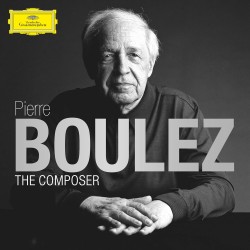 This week, many in the musical world will be marking the centenary of the birth one of the most consequential figures in post-war classical music: Pierre Boulez. He was born on 26 March 1925 in Montbrison, in the Loire department of central France. Over the course of a musical career which lasted from 1945 (the date of his first acknowledged composition, the 12 Notations for solo piano) until a few years before his death on 5 January 2016, he went from being a confrontational enfant terrible and scourge of those composers that he and his student contemporaries deemed insufficiently radical, to a position as elder statesman of European musical modernism in what many regarded as its twilight years. Over the course of that career, through his compositions, writings, lectures and conducting, he transformed the musical scene, particularly in his consistent championing of new music as well as the more radical and neglected works of Schoenberg, Stravinsky, Bartók and Debussy.
Boulez’s years at the helm of the New York Philharmonic and the BBC Symphony Orchestra were not without controversy, but his often radical programming and legendary precision attracted new, younger audiences, with respectable if not always capacity attendances unimaginable today for such music. In his native France, his influence was at its most far-reaching, first in the establishment of the Domaine Musical concert series in 1954, and then in 1977 with the opening of the Institut de recherche et coordination acoustique/musique (IRCAM) at Paris’s Pompidou Centre. The latter focused on Boulez’s quest for thoroughgoing research into acoustics and computer applications in music. For many outsiders, it came to be regarded less as the radical undertaking it aspired to be, more as a stifling new orthodoxy.
Many listeners who know Boulez from his recordings of music from Wagner and Mahler to Stravinsky and Ravel will be less familiar with his own works, yet they remain a cornerstone of post-war classical music. This is despite the fact that Boulez’s mania for revision and attraction to open-ended composition, as well as his busy conducting and organisational schedules, ensured that his output – given the six decades it spans – is relatively slender. To mark the occasion of his centenary, Deutsche Grammophon have just reissued the 13-disc 2013 set (curated by Boulez himself) of his complete works, now titled Pierre Boulez: The Composer.
All the performances, many conducted by the composer, and including items from his Sony (CBS) and Warner (Erato) discographies can be regarded as definitive. The compositions range from the 12 Notations and the Sonatina for flute and piano (1947) to the fabulous late masterpiece sur Incises (1996–98) for three pianos, three harps and three percussionists, as well as his final composition, Une page d’éphémeride for solo piano (2005). Between these extremes are many landmark works of post-war musical modernism: the Second Piano Sonata (1950) and the setting of René Char texts Le Marteau sans maître (1955) for contralto and small ensemble, which between them announced Boulez as a major figure in the mid-century avant garde; the vast (and much-revised) ‘portrait of Mallarmé’ Pli selon pli (1957–89); the immersive sound-world of Répons (1981–85) for large chamber orchestra and live electronics; and the exquisitely-scored Dérive 2 (1988–2006) for 11 instruments, dedicated to Elliott Carter.
Concern for timbre (and its regulation) was a continuing preoccupation for Boulez, whether as composer or conductor, and although the compositional techniques he employed ranged from strict serialism to the deployment of chance and the use of electronics, it is the overarching concern with colour (vocal and instrumental, small-scale and large) that binds his utterly distinctive output together and ensures its coherence. My own favourite among his works (ever since I first heard it in the mid-1980s) has always been the mesmerising, hieratic processional of Rituel – in memoriam Bruno Maderna for orchestra spatially separated into eight groups of varying size. Other highlights include the two early cantatas Le Visage nuptial and Le Soleil des eaux, both of which (like Le Marteau sans maître) set texts by René Char. But just about wherever you choose to start, there is music of fabulous proliferation and beguiling textures, carrying the characteristic Gallic concern with textural and timbral beauty to unexpected extremes.
A necessary adjunct to the 13-disc DG set is a new recording by the Quatuor Diotima of Boulez’s Livre pour quatuor (1948–2012), a work they studied closely with Boulez, now with the hitherto missing fourth movement as completed in 2017 by composer Philippe Manoury. It has been called ‘one of Boulez’s most challenging scores’, yet even at its most spikily pointillist this is an exceptionally compelling score, and the Diotima’s minutely-prepared performance encompasses a staggering range of dynamics, nuance and timbres that repay repeated listening many times over.
Boulez’s reputation as the leading modernist composer of his time has led, even during his later years (when he was plagued by ill health), to a questioning of the whole modernist ‘project’ to which he devoted his life. His centenary, however, is the opportunity for both reassessment and celebration: for those who know little or none of his music, it’s the chance to discover the creative side of one of the 20th century’s true greats.
The Recordings:
Pierre Boulez - The Composer (Boulez et al.) 4847513
Boulez - Livre pour quatuor (Quatuor Diotima) PTC5187360
Further reading:
Caroline Potter, Pierre Boulez: Organised Delirium (Boydell Press, 2024)
Pierre Boulez, Music Lessons: The Collège de France Lectures (Faber & Faber, 2018)
Jonathan Goldman, The Musical Language of Pierre Boulez: Writings and Compositions (Cambridge University Press, 2014)
Latest Posts
Music of the Iberian Peninsula, Part 3: More observations on the Golden Age
16th June 2026
Our last visit to the Iberian peninsula, a fortnight ago, was an insanely ambitious, necessarily broad-brush survey of the Spanish and Portuguese Golden Age, covering vocal and instrumental music, the sacred and the secular. This week, we take a more concise and (I hope) focussed look at a few of the sacred vocal masterpieces which exemplify the particular fervour and intensity of this remarkable period of musical history. They reflect the special place the peninsula had as a bulwark against the Reformation that had taken... read more
read more
Music of the Iberian Peninsula, Part 3: More observations on the Golden Age
16th June 2026
Our last visit to the Iberian peninsula, a fortnight ago, was an insanely ambitious, necessarily broad-brush survey of the Spanish and Portuguese Golden Age, covering vocal and instrumental music, the sacred and the secular. This week, we take a more concise and (I hope) focussed look at a few of the sacred vocal masterpieces which exemplify the particular fervour and intensity of this remarkable period of musical history. They reflect the special place the peninsula had as a bulwark against the Reformation that had taken... read more
read more
Carl Schachter, Arnold Whittall, and why music analysis matters
9th June 2026
Two recent deaths have robbed the world of music analysis of a pair of its most revered figures. Carl Schachter, who has died at the age of 93, was a pupil of (and subsequently collaborator with) Felix Salzer, himself one of Heinrich Schenker’s foremost students. Schachter continued to enrich and broaden the teaching of Schenkerian analysis, including important work on its application to issues of rhythm (which Schenker, focussing on harmonic and contrapuntal matters, largely bypassed). His influence went well beyond the... read more
read more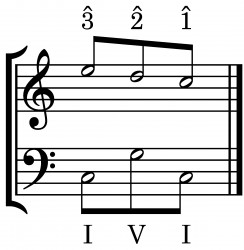
Carl Schachter, Arnold Whittall, and why music analysis matters
9th June 2026
Two recent deaths have robbed the world of music analysis of a pair of its most revered figures. Carl Schachter, who has died at the age of 93, was a pupil of (and subsequently collaborator with) Felix Salzer, himself one of Heinrich Schenker’s foremost students. Schachter continued to enrich and broaden the teaching of Schenkerian analysis, including important work on its application to issues of rhythm (which Schenker, focussing on harmonic and contrapuntal matters, largely bypassed). His influence went well beyond the... read more
read more
Music of the Iberian Peninsula, Part 2: ‘O quam gloriosum’ – The Spanish and Portuguese Golden Age
2nd June 2026
Over the past fortnight, I’ve been bathed in the most glorious, radiant, transformative light. Not the UK’s recent unseasonable heatwave, but the extraordinary vocal polyphony of the Siglo de Oro: the Spanish (and Portuguese) ‘Golden Century’. Extending from the late 15th to the early 17th century, this was a time of remarkable artistic flowering on the Iberian Peninsula, coinciding with the emergence of Spain and Portugal as global imperial powers with extensive colonial territories in the Americas, Africa and Asia. The... read more
read more