 FREE UK SHIPPING OVER £35!
The Spin Doctor Europadisc's Weekly Column
Comfort Listening: Purcell’s Fantazias
5th March 2025
5th March 2025
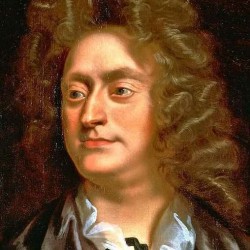 Amid the present highly-charged social and political times, one could be forgiven for being perpetually exercised by the daily deluge of alarming news. Whether or not one has an interest in current affairs, no area of life seems to be untouched, from the cost of living to the arts (most recently, both Washington DC’s Kennedy Center and the likely closure of Cardiff University’s excellent Department of Music have made the headlines). The church – which historically many have turned to in turbulent times – also seems to be in a state of permanent crisis. This could easily turn into a polemical rant or a rose-tinted nostalgia trip to supposedly less troubled eras. Yet there’s no turning back, and the hard-won progress of recent years on a number of fronts needs to be fiercely defended.
There is for all of us, however, sometimes a need for solace: a soothing balm to comfort the spirits. This is where I’ve found myself recently, and I’m surely not alone. For reading, I’ve turned to Kafka, whose remarkable short stories seem less crazy (and a good deal more pertinent!) than they might have just a few years ago. Where music is concerned, chamber works seem to offer an ever safer haven: Haydn, Schubert and Brahms rarely miss the mark, but lately it’s been Henry Purcell’s miraculous Fantazias for viol consort that have provided most relief.
Less celebrated than Dido’s ubiquitous Lament from Dido and Aeneas, less widely performed than Purcell’s choral music, the Fantazias are nevertheless among the greatest masterpieces, not just within their composer’s output but of the entire Baroque era. Once thought to have been composed for instruments of the violin family, more recent study has confirmed that they were written for viols, of the sort that were already outdated by the time these works were penned. There are three Fantazias for three-part consort, nine for four parts (composed in the summer of 1680), a single five-part ‘Fantazia upon One Note’, and two ‘In Nomines‘’ (one in six, the other in seven part). The latter two works revived the archaic genre of works based on a cantus firmus from the Benedictus of John Taverner’s early-16th-century Missa ‘Gloria tibi Trinitas’.
It would have been difficult for Purcell to gather forces for performing these viol pieces even within his immediate circle. One theory that has found favour is that he wrote them primarily as composition exercises, and in the main manuscript source (British Library Add. MS 30930) they progress steadily in scale from the three-part works to the seven-part In Nomine. There are additional suggestions that further works were planned, progressing up to eight parts. If they were written as exercises, they certainly show Purcell’s awareness and absorption of earlier models: Orlando Gibbons in the three-part works, Matthew Locke and John Jenkins in the four-part Fantazias, and Tudor forebears in the In Nomines. But the particular thoroughness with which Purcell explores contrapuntal possibilities, as well as the often dazzling harmonic progressions and clashes, are entirely his own, and (for this listener) a perpetual source of delight and wonder.
Even if they originated as ‘mere’ composition exercises, the Fantazias are eminently performable, and have become cornerstones of the modern viol consort repertoire. There have been several successful recordings over the years, among which some of my own favourites (Phantasm on the Simax label, and two from Fretwork on Virgin Classics and Harmonia Mundi) are currently out of the catalogue. Still, among currently available discs there are such fine ones as Jordi Savall’s Hesperion XX consort on Alia Vox, and the Chelys Consort of Viols (who add a few other works, including the famous Chacony in G minor, into the mix) on BIS. There’s a particular satisfaction to listening to the Fantazias in order as they grow in dimensions, but however you choose to listen – whether dipping in or all in one go, closely following the many musical intricacies or as a soothing balm – these are works that will afford a lifetime of pleasure.
If you don’t already know Purcell’s Fantazias, do give them a try. They offer a mixture of technical mastery, exquisite textural balance, harmonic surprises and vivid inventiveness that may prove a welcome refuge from the craziness of the world around!
The Recordings:
Purcell - Fantasias for the Viols (Hesperion XX) AVSA9859
Purcell - Fantazias (Chelys Consort of Viols) BIS2583
Latest Posts
Music of the Iberian Peninsula, Part 3: More observations on the Golden Age
16th June 2026
Our last visit to the Iberian peninsula, a fortnight ago, was an insanely ambitious, necessarily broad-brush survey of the Spanish and Portuguese Golden Age, covering vocal and instrumental music, the sacred and the secular. This week, we take a more concise and (I hope) focussed look at a few of the sacred vocal masterpieces which exemplify the particular fervour and intensity of this remarkable period of musical history. They reflect the special place the peninsula had as a bulwark against the Reformation that had taken... read more
read more
Music of the Iberian Peninsula, Part 3: More observations on the Golden Age
16th June 2026
Our last visit to the Iberian peninsula, a fortnight ago, was an insanely ambitious, necessarily broad-brush survey of the Spanish and Portuguese Golden Age, covering vocal and instrumental music, the sacred and the secular. This week, we take a more concise and (I hope) focussed look at a few of the sacred vocal masterpieces which exemplify the particular fervour and intensity of this remarkable period of musical history. They reflect the special place the peninsula had as a bulwark against the Reformation that had taken... read more
read more
Carl Schachter, Arnold Whittall, and why music analysis matters
9th June 2026
Two recent deaths have robbed the world of music analysis of a pair of its most revered figures. Carl Schachter, who has died at the age of 93, was a pupil of (and subsequently collaborator with) Felix Salzer, himself one of Heinrich Schenker’s foremost students. Schachter continued to enrich and broaden the teaching of Schenkerian analysis, including important work on its application to issues of rhythm (which Schenker, focussing on harmonic and contrapuntal matters, largely bypassed). His influence went well beyond the... read more
read more
Carl Schachter, Arnold Whittall, and why music analysis matters
9th June 2026
Two recent deaths have robbed the world of music analysis of a pair of its most revered figures. Carl Schachter, who has died at the age of 93, was a pupil of (and subsequently collaborator with) Felix Salzer, himself one of Heinrich Schenker’s foremost students. Schachter continued to enrich and broaden the teaching of Schenkerian analysis, including important work on its application to issues of rhythm (which Schenker, focussing on harmonic and contrapuntal matters, largely bypassed). His influence went well beyond the... read more
read more
Music of the Iberian Peninsula, Part 2: ‘O quam gloriosum’ – The Spanish and Portuguese Golden Age
2nd June 2026
Over the past fortnight, I’ve been bathed in the most glorious, radiant, transformative light. Not the UK’s recent unseasonable heatwave, but the extraordinary vocal polyphony of the Siglo de Oro: the Spanish (and Portuguese) ‘Golden Century’. Extending from the late 15th to the early 17th century, this was a time of remarkable artistic flowering on the Iberian Peninsula, coinciding with the emergence of Spain and Portugal as global imperial powers with extensive colonial territories in the Americas, Africa and Asia. The... read more
read more