 FREE UK SHIPPING OVER £35!
The Spin Doctor Europadisc's Weekly Column
Exquisite Dissonance
25th February 2025
25th February 2025
 Dissonance, the dictionary tells us, is ‘a lack of agreement or harmony between people or things’, but also, in its more strictly musical sense, ‘a lack of harmony among musical notes’ or ‘a mingling of sounds that strike the ear harshly’. Dissonance is typically regarded in a dichotomous relationship with ‘consonance’, and the consonance-dissonance pairing is often equated with beautiful-ugly or agreeable-disagreeable. Yet what constitutes these opposed qualities shifts over time. In the middle ages, the consonant intervals were held to be those that were closest to the ‘purity’ of the harmonic series (the simplest divisions of a resonating string): octave, fifth, fourth and unison. The major and minor thirds were regarded as ‘imperfect consonances’, and were deployed – like the dissonances of seconds, sevenths and tritones – only occasionally and incidentally.
All that changed with the ‘contenance angloise’ (English manner) as practised by John Dunstable, Walter Frye and others in the early 15th century, when the increasing use of ‘sweet’ thirds and sixths was increasingly influential on continental composers at the Burgundian court. The rich harmonies of Dunstable’s music are also an early instance of that phenomenon immortalised in Thomas Beecham’s witticism: ‘The English may not like music, but they absolutely love the noise it makes.’ But the increased acceptance of sounds once regarded as ‘impure’ and less agreeable nevertheless alerts us to the fact that perceptions of what is dissonant can change over time.
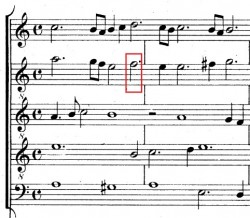
The harsh clashes introduced by so-called ‘false relations’ – a ‘chromatic contradiction’ between the natural and sharp or flat forms of a certain pitch – are what gives music of the late Tudor period much of its compelling beauty. A particularly stunning example is the approach to the final cadence in Thomas Tallis’s short motet O nata lux (published in the Cantiones sacrae of 1575): proof that such imperfections (caused by the independent rules governing separate melodic lines) can also be a thing of great beauty. One of my own favourite fleeting dissonances comes near the beginning of Elizabethan composer John Dowland’s Lachrime Tristes, one of his Lachrimae, or Seven Teares of 1604 (see illustration), where an exquisitely mournful diminished 7th chord is created by the F in the secondo part, the result of a neighbour-note inflection (E-F-E).
During the Baroque period, the use of dissonances in the form of suspensions, chromatic scales and neighbour-notes, became yet more widespread. Even as harmonically ‘pure’ a work as the C major Prelude in the first book of J.S. Bach’s Well-Tempered Clavier owes much of its beguiling beauty to the tension-and-release of a series of dissonant harmonic suspensions. In the Classical period, the probing chromaticism of the slow introduction to Mozart’s C major String Quartet, K465 (1785), has earned it the nickname the ‘Dissonance’, its tension sublimely released by the ensuing sunny Allegro. Beethoven adopted a more bullish attitude to dissonance in the slow introduction to his own C major Quartet, op.53 no.3 (1808), but he had already started pushing the boundaries in 1800 with the very first chord of his First Symphony (also in C major), where and added flattened seventh (B flat) immediately seems to direct the music away to F major. In 1824, he went even further, launching the finale of his Ninth Symphony with a famous dissonance by adding a flattened sixth to a second inversion tonic chord that startles the listener to the core.
Just over three decades later, Wagner famously shook the foundations of diatonic tonality with the saturated chromaticism of Tristan und Isolde, particularly with the initial ‘Tristan chord’, whose technical aspects have been endlessly discussed, yet whose effect remains scarcely diminished as a result. (The chord itself had cropped up occasionally in music by earlier composers, including Beethoven, but here the context and voicing are everything.) In the opening Adagio of his final, unfinished Symphony (no.10), Mahler seemed to push tonality firmly aside with the famous climactic 9-pitch chord, in which the entire orchestra is pitted against a valiant solo trumpet, before sinking balmily back into the movement’s closing pages.
Still in Vienna, the so-called Second Viennese School (Schoenberg, Berg and Webern) soon established notoriety for its complete emancipation of dissonance in its atonal and serial (12-tone) music. Schoenberg had already cast off many of the shackles of tonality in his pre-atonal, post-Wagnerian works such as his string sextet Verklärte Nacht (1899), in which the appearance of a glowing D major in the section marked ‘Sehr breit und langsam’ has all the more impact as a result. Alban Berg’s 1910 Piano Sonata – notionally cast in B minor – is as even more remarkable for its seductive use of dissonance which, with beguiling chromaticism infusing its musical language from the very first bar.
Austro-German composers, however, didn’t have a monopoly on such sensual deployment of dissonant tonality. The first movement of Alexander Scriabin’s marvellously pithy Piano Sonata no.4 in F sharp anticipates Berg’s ravishing chromaticism by a good seven years, while the first book of Claude Debussy’s Préludes (another masterpiece from 1910) is another work which, from its very opening bars, depends on the skillful use of dissonance to create a uniquely haunting and mesmerisingly beautiful soundworld. Debussy’s handling of dissonance throughout his oeuvre should give pause for thought to anyone who still equates musical dissonance with ugliness!
These are just a few instances (barely the tip of an iceberg) of some of our favourite ‘exquisite dissonances’. They may encourage you to explore further, or to reflect on this fascinating subject, and question your own prejudices; meanwhile, we’d love to hear what your own personal favourites are!
Latest Posts
Music of the Iberian Peninsula, Part 3: More observations on the Golden Age
16th June 2026
Our last visit to the Iberian peninsula, a fortnight ago, was an insanely ambitious, necessarily broad-brush survey of the Spanish and Portuguese Golden Age, covering vocal and instrumental music, the sacred and the secular. This week, we take a more concise and (I hope) focussed look at a few of the sacred vocal masterpieces which exemplify the particular fervour and intensity of this remarkable period of musical history. They reflect the special place the peninsula had as a bulwark against the Reformation that had taken... read more
read more
Music of the Iberian Peninsula, Part 3: More observations on the Golden Age
16th June 2026
Our last visit to the Iberian peninsula, a fortnight ago, was an insanely ambitious, necessarily broad-brush survey of the Spanish and Portuguese Golden Age, covering vocal and instrumental music, the sacred and the secular. This week, we take a more concise and (I hope) focussed look at a few of the sacred vocal masterpieces which exemplify the particular fervour and intensity of this remarkable period of musical history. They reflect the special place the peninsula had as a bulwark against the Reformation that had taken... read more
read more
Carl Schachter, Arnold Whittall, and why music analysis matters
9th June 2026
Two recent deaths have robbed the world of music analysis of a pair of its most revered figures. Carl Schachter, who has died at the age of 93, was a pupil of (and subsequently collaborator with) Felix Salzer, himself one of Heinrich Schenker’s foremost students. Schachter continued to enrich and broaden the teaching of Schenkerian analysis, including important work on its application to issues of rhythm (which Schenker, focussing on harmonic and contrapuntal matters, largely bypassed). His influence went well beyond the... read more
read more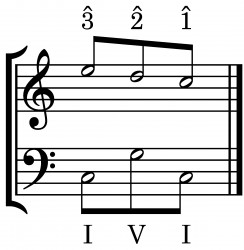
Carl Schachter, Arnold Whittall, and why music analysis matters
9th June 2026
Two recent deaths have robbed the world of music analysis of a pair of its most revered figures. Carl Schachter, who has died at the age of 93, was a pupil of (and subsequently collaborator with) Felix Salzer, himself one of Heinrich Schenker’s foremost students. Schachter continued to enrich and broaden the teaching of Schenkerian analysis, including important work on its application to issues of rhythm (which Schenker, focussing on harmonic and contrapuntal matters, largely bypassed). His influence went well beyond the... read more
read more
Music of the Iberian Peninsula, Part 2: ‘O quam gloriosum’ – The Spanish and Portuguese Golden Age
2nd June 2026
Over the past fortnight, I’ve been bathed in the most glorious, radiant, transformative light. Not the UK’s recent unseasonable heatwave, but the extraordinary vocal polyphony of the Siglo de Oro: the Spanish (and Portuguese) ‘Golden Century’. Extending from the late 15th to the early 17th century, this was a time of remarkable artistic flowering on the Iberian Peninsula, coinciding with the emergence of Spain and Portugal as global imperial powers with extensive colonial territories in the Americas, Africa and Asia. The... read more
read more