 FREE UK SHIPPING OVER £35!
The Spin Doctor Europadisc's Weekly Column
Celebrating Machaut
5th February 2025
5th February 2025
 Over the years there has been a steadily growing number of recognised landmark recording projects: Solti’s Ring would stand near the top of most lists, as would the Harnoncourt/Leonhardt cycle of Bach cantatas. The CBS/Sony Stravinsky Edition ranks high for many, as does BIS’s complete Sibelius Edition. Others worth mentioning are Doráti's set of Haydn’s complete symphonies, Scott Ross’s marvellous survey of Domenico Scarlatti’s keyboard sonatas, and Mackerras’s series of Janáček operas on Decca. Hyperion’s vast set of Schubert Lieder and its (still ongoing!) series of Romantic Piano Concertos are also significant cornerstones of the catalogue.
Now Hyperion have achieved another hugely important recording landmark: the complete polyphonic songs and motets of Guillaume de Machaut (c.1300–1377). For those less familiar with his output, Machaut was arguably the first great composer to leave a substantial and verified corpus of music (sacred and secular) that was disseminated widely in his own lifetime and beyond. He widely regarded as the culmination of the French ars nova style, which replaced the earlier ars antiqua typified by the Notre Dame school of polyphony. We owe the continued existence of his music to his combined activities as poet, composer and cleric (he was a canon of Reims Cathedral), as well as a certain degree of self-awareness in building up and preserving an unprecedentedly substantial list of works. Most celebrated today is his Messe de Nostre Dame, the earliest surviving complete setting of the Ordinary of the Mass, of which there are many fine recordings. In the 14th century, however, he was probably most famous as a poet. From 1323 to 1346 he was also secretary to John I of Luxembourg and Bohemia.
There have been a number of recordings of Machaut’s works in the past, notably from such groups as the Hilliard Ensemble and Gothic Voices, as well as a growing number of European ensembles. What marks out the Hyperion cycle – sung with vibrant communicativeness by the Orlando Consort – is its comprehensive nature. All the two-dozen motets are here, as well as the works composed in the formes fixes (‘fixed forms’) of ballade (over 40 examples), rondeau (22) and virelai (33), as well as the polyphonic lais. This is, by the standards of the time (and even of ours), a huge output, and the Orlandos’ performances are remarkable for their consistency and sense of vivid engagement not just with Machaut’s music but with his texts too. They have also had the support of the very latest research into these works by scholars working on the new complete edition of Machaut’s works (the last, edited by Leo Schrade, dates back to the mid-1950s).
The eleventh and final disc in the Orlandos’ series, just released, is entitled ‘A Lover’s Death’, and contains works with the recurring theme of the torment of love (a recurring topos in secular art music of the time). The four motets are all early pieces, dating from before 1350 (i.e. the best part of a staggering seven centuries ago). Multi-texted works for three voices, grounded by the slow recurring rhythmic patterns of the plainsong tenor, they were composed for the entertainment and appreciation of connoisseurs, yet what is remarkable about these performances is how animated they are (as in the opening panic-stricken Hareu, hareu! le feu), bringing to life words and music across the centuries.
Adopting the voices-only approach that has been common currency since Christopher Page’s groundbreaking research in the mid 1980s, the untexted lines of some pieces are vocalised wordlessly, lending a haunting air to the ballade Je ne cuit pas. The monophonic virelais such as Diex, Biauté, Douceur, Nature and Liement me deport have catchy refrains that will have even 21st-century toes tapping, while the two-voice rondeau Ce qui soustient moy is mesmerisingly lilting and the three-voice Quant je ne voy contains some entertaining wordplay.
As ever, full texts and translations are given (crucial for a poet-composer such as Machaut), and the booklet notes by experts Anne Stone and Jacques Boogaart explain even more arcane matters with commendable clarity. The recording – made in the Church of St John the Baptist, Loughton, is focused enough that the intricacies of the vocal interplay can be fully appreciated. The Orlando Consort, founded in 1988 and with an enviable discography to its name, disbanded last year after an illustrious career. This Machaut series stands as one of its most important achievements, and for lovers of medieval music it is simply indispensable. And happily this final release coincides with the centenary of the great English Machaut scholar, Gilbert Reaney (1924–2008), who did so much to deepen our understanding and appreciation of this great composer from the early days of the western canon.
The Recordings:
Machaut - A Lover’s Death CDA68430
Machaut - Orlando Consort Series (special offer)
Further reading:
Gilbert Reaney, Guillaume de Machaut [Oxford Studies of Composer, vol.9] (London: Oxford University Press, 1971)
Latest Posts
Music of the Iberian Peninsula, Part 3: More observations on the Golden Age
16th June 2026
Our last visit to the Iberian peninsula, a fortnight ago, was an insanely ambitious, necessarily broad-brush survey of the Spanish and Portuguese Golden Age, covering vocal and instrumental music, the sacred and the secular. This week, we take a more concise and (I hope) focussed look at a few of the sacred vocal masterpieces which exemplify the particular fervour and intensity of this remarkable period of musical history. They reflect the special place the peninsula had as a bulwark against the Reformation that had taken... read more
read more
Music of the Iberian Peninsula, Part 3: More observations on the Golden Age
16th June 2026
Our last visit to the Iberian peninsula, a fortnight ago, was an insanely ambitious, necessarily broad-brush survey of the Spanish and Portuguese Golden Age, covering vocal and instrumental music, the sacred and the secular. This week, we take a more concise and (I hope) focussed look at a few of the sacred vocal masterpieces which exemplify the particular fervour and intensity of this remarkable period of musical history. They reflect the special place the peninsula had as a bulwark against the Reformation that had taken... read more
read more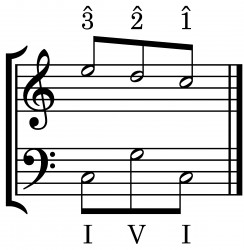
Carl Schachter, Arnold Whittall, and why music analysis matters
9th June 2026
Two recent deaths have robbed the world of music analysis of a pair of its most revered figures. Carl Schachter, who has died at the age of 93, was a pupil of (and subsequently collaborator with) Felix Salzer, himself one of Heinrich Schenker’s foremost students. Schachter continued to enrich and broaden the teaching of Schenkerian analysis, including important work on its application to issues of rhythm (which Schenker, focussing on harmonic and contrapuntal matters, largely bypassed). His influence went well beyond the... read more
read more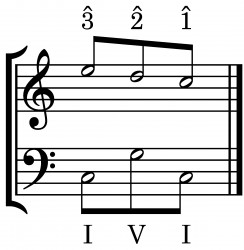
Carl Schachter, Arnold Whittall, and why music analysis matters
9th June 2026
Two recent deaths have robbed the world of music analysis of a pair of its most revered figures. Carl Schachter, who has died at the age of 93, was a pupil of (and subsequently collaborator with) Felix Salzer, himself one of Heinrich Schenker’s foremost students. Schachter continued to enrich and broaden the teaching of Schenkerian analysis, including important work on its application to issues of rhythm (which Schenker, focussing on harmonic and contrapuntal matters, largely bypassed). His influence went well beyond the... read more
read more
Music of the Iberian Peninsula, Part 2: ‘O quam gloriosum’ – The Spanish and Portuguese Golden Age
2nd June 2026
Over the past fortnight, I’ve been bathed in the most glorious, radiant, transformative light. Not the UK’s recent unseasonable heatwave, but the extraordinary vocal polyphony of the Siglo de Oro: the Spanish (and Portuguese) ‘Golden Century’. Extending from the late 15th to the early 17th century, this was a time of remarkable artistic flowering on the Iberian Peninsula, coinciding with the emergence of Spain and Portugal as global imperial powers with extensive colonial territories in the Americas, Africa and Asia. The... read more
read more