 FREE UK SHIPPING OVER £35!
The Spin Doctor Europadisc's Weekly Column
The Year Ahead: 2025 Anniversaries
14th January 2025
14th January 2025
 Take a look at Wikipedia’s homepage on any given date and you’ll find under the section headed ‘On this day’ a clutch of anniversaries, often musical. Any year is, of course, replete with them, but there’s something about the multiples of 100 and 50 in particular that acts like a honeypot (moneypot?) to concert diary planners and record company executives. Most of us (mathematical geniuses apart) like dealing with round numbers: they make life so much simpler, even if most (unlike the late Jimmy Carter, or the recently departed supercentenarian Tomiko Itooka) won’t be around for the partying on our 100th birthdays. But marking such milestones is part and parcel of human experience, and in an age which seems determined not to learn lessons from history, any connection – however fleeting – with the past should no doubt be encouraged.
2024 was a year notable for its ‘big number’ classical music anniversaries – not least for three central figures of the core repertoire in Bruckner, Smetana and Faure – and in many ways 2025 is set to be no less remarkable. In this case, the ‘central’ anniversaries for many music-lovers will be Johann Strauss II’s bicentenary on 25 October (amply flagged up in Vienna’s New Year’s Day Concert), the 150th anniversary of Ravel’s birth (7 March) and the 150th of Bizet’s death (3 June). Could it be time for Naxos to reissue their ambitious Strauss Edition in a bumper box? Might operettas other than Die Fledermaus get more of an airing?
The Ravel anniversary received an early boost with Aparte’s release last November of ‘The Complete Works with Piano’ performed by François-Xavier Poizat: not just the solo piano works and concertos, but also chamber works and the numerous songs. As an overview of the sheer range of Ravel’s musical inventiveness and polish, it’s an engrossing experience. Bizet’s evergreen Carmen is sure to be generously represented (Bru Zane’s recreation of its 1875 staging has already scored a success), but might some of the other operas (La Jolie Fille de Perth, Djamileh or the once enormously popular Les Pêcheurs de perles) return to the limelight?
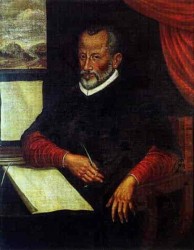
If Strauss, Ravel and Bizet are likely to be this year’s headline acts, the real interest for some will be at the wider ends of the chronological spectrum. Although his exact date of birth is unknown, 2025 marks Palestrina’s quincentenary: his position as the greatest representative of the late Renaissance Italian school is unassailable thanks to not just his more than 100 mass settings and 250 motets, but also his status as an exemplar for post-Tridentine Catholic church music. Two releases have already placed his music front and centre for the New Year: ‘Palestrina Revealed’ from the Choir of Clare College, Cambridge, places his masses and motets alongside the music of his English contemporaries Byrd, Mundy and White (Harmonia Mundi). Meanwhile, Stile Antico’s concluding volume in their ‘Golden Renaissance’ trilogy centres on his iconic Missa Papae Marcelli (which quickly achieved archetypal status), along with several motets from Palestrina’s period as maestro di cappella of the Julian Chapel at St Peter’s, Rome.
This year also marks the early demise (at the age of 41, on 5 June 1625) of Orlando Gibbons, a key late figure in the English virginalist and madrigal schools. Discs devoted to Gibbons’s music are rare compared with such figures as Tallis and Byrd (exceptions are ‘In Chains of Gold’ on the Signum label and ‘The Woods So Wild’ on Linn), but we must hope that this year will see more of his vocal, chamber and keyboard works receive attention.
Finally (for now), 2025 brings with it the centenaries of two giants of postwar modernism: Pierre Boulez (b. 26 March 1925) and Luciano Berio (b. 24 October 1925). Together with Karlheinz Stockhausen (1928–2007) they formed the great triumvirate of musical enfants terribles in the 1950s and 60s. Most music-lovers are more likely to be more familiar with Boulez’s work as a conductor (particularly in the US and UK) than his music, but he left a legacy which spans such early masterpieces as the chamber cantata Le Marteau sans maître and the Second Piano Sonata and the beguiling soundworld of the late sur Incises for three pianos, three harps and three percussionists (1996–98). Berio’s music is generally judged more ‘approachable’ (whatever that means) than Boulez’s, yet it encompasses a fierce intelligence and a postmodernist interrogation of music-as-object with roots in Italian semiotics. Berio’s unique take on Folk Songs is among his most popular works, but his series of Sequenzas (1958–2002) for solo performers and his magnificently immersive Sinfonia (1968) are among his greatest compositions, and deserve the widest possible currency.
These and other anniversaries (Alessandro Scarlatti, Coleridge-Taylor, Satie...) we hope to focus on in more depth over the coming year. For the time being, here are some ‘tasters’ to whet your appetite. Happy listening!
Recordings:
New Year’s Concert 2025 (Muti) 19802875582
Palestrina Revealed (Choir of Clare College, Cambridge) HMM905375
The Golden Renaissance: Palestrina (Stile Antico) 4870791
Gibbons - In Chains of Gold: Complete Consort Anthems SIGCD511
Gibbons - The Woods So Wild (John Toll) BKD125
Berio - Sinfonia; Boulez - Notations; Ravel - La Valse (Seattle Symphony) SSM1018
Latest Posts
Music of the Iberian Peninsula, Part 3: More observations on the Golden Age
16th June 2026
Our last visit to the Iberian peninsula, a fortnight ago, was an insanely ambitious, necessarily broad-brush survey of the Spanish and Portuguese Golden Age, covering vocal and instrumental music, the sacred and the secular. This week, we take a more concise and (I hope) focussed look at a few of the sacred vocal masterpieces which exemplify the particular fervour and intensity of this remarkable period of musical history. They reflect the special place the peninsula had as a bulwark against the Reformation that had taken... read more
read more
Music of the Iberian Peninsula, Part 3: More observations on the Golden Age
16th June 2026
Our last visit to the Iberian peninsula, a fortnight ago, was an insanely ambitious, necessarily broad-brush survey of the Spanish and Portuguese Golden Age, covering vocal and instrumental music, the sacred and the secular. This week, we take a more concise and (I hope) focussed look at a few of the sacred vocal masterpieces which exemplify the particular fervour and intensity of this remarkable period of musical history. They reflect the special place the peninsula had as a bulwark against the Reformation that had taken... read more
read more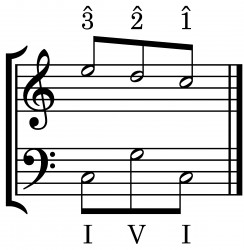
Carl Schachter, Arnold Whittall, and why music analysis matters
9th June 2026
Two recent deaths have robbed the world of music analysis of a pair of its most revered figures. Carl Schachter, who has died at the age of 93, was a pupil of (and subsequently collaborator with) Felix Salzer, himself one of Heinrich Schenker’s foremost students. Schachter continued to enrich and broaden the teaching of Schenkerian analysis, including important work on its application to issues of rhythm (which Schenker, focussing on harmonic and contrapuntal matters, largely bypassed). His influence went well beyond the... read more
read more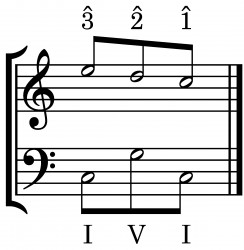
Carl Schachter, Arnold Whittall, and why music analysis matters
9th June 2026
Two recent deaths have robbed the world of music analysis of a pair of its most revered figures. Carl Schachter, who has died at the age of 93, was a pupil of (and subsequently collaborator with) Felix Salzer, himself one of Heinrich Schenker’s foremost students. Schachter continued to enrich and broaden the teaching of Schenkerian analysis, including important work on its application to issues of rhythm (which Schenker, focussing on harmonic and contrapuntal matters, largely bypassed). His influence went well beyond the... read more
read more
Music of the Iberian Peninsula, Part 2: ‘O quam gloriosum’ – The Spanish and Portuguese Golden Age
2nd June 2026
Over the past fortnight, I’ve been bathed in the most glorious, radiant, transformative light. Not the UK’s recent unseasonable heatwave, but the extraordinary vocal polyphony of the Siglo de Oro: the Spanish (and Portuguese) ‘Golden Century’. Extending from the late 15th to the early 17th century, this was a time of remarkable artistic flowering on the Iberian Peninsula, coinciding with the emergence of Spain and Portugal as global imperial powers with extensive colonial territories in the Americas, Africa and Asia. The... read more
read more