 FREE UK SHIPPING OVER £35!
The Spin Doctor Europadisc's Weekly Column
The Good, the Bad, the Beautiful and the Ugly
7th January 2025
7th January 2025
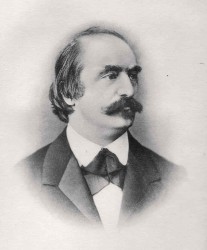 For some, it is an article of faith. Music should be judged and appreciated not according to whether it is good or bad according to academic criteria, but whether or not it is beautiful. Ignore the academics and analysts, ignore the composer (their morals or lack thereof, their political opinions, their private lives, their public compromises): is their music beautiful? (Beauty, of course, being in the eye of the beholder.) It has been a powerful argument in the arts since the Enlightenment, although aesthetics (the philosophy of artistic perception) came relatively late to music, initially regarding purely instrumental music as trivial and beyond consideration. By the dawn of the 19th century, that dismissiveness was giving way to a marked reversal, with symphonic, chamber and instrumental music increasingly regarded as the apex of the art form – what became known as ‘absolute music’. By the time the Viennese music critic Eduard Hanslick (pictured) penned his celebrated 1854 treatise Vom Musikalisch-Schönen (On the Musically Beautiful), that position looked to some unassailable, but was robustly challenged by the New German School of Liszt and Wagner, with its revival of programme music and Wagner’s visionary musicdramas.
Although the field of music aesthetics was mainly a Germanic phenomenon, its legacy has been a profound one. The idea of musical beauty has influenced everything from performing styles to concert formats and recording techniques. The results may be a far cry from Hanslick’s still controversial arguments, but the notion that music should above all be beautiful has shaped the very way we listen to classical music: in reverential silence in the concert hall and opera house, applauding only at commonly acceptable moments, or even in the more mundane ritual of opening a newly-purchased disc and placing it in the player. ‘Beautiful’ music has become a catch-all term for everything we like, ‘ugly’ music everything we don’t. From Stravinsky’s Rite of Spring to Birtwistle’s Panic, and even Stalin’s notorious reaction to Shostakovich’s Lady Macbeth of Mtsensk, ‘ugly’ and such related terms as ‘chaos’ and ‘muddle’ have been used to damn works that fell foul of popular or official opinion.
These days, however, the epithet ‘elitist’ is as likely to be deployed, particularly by those who can’t even be bothered to turn up to performances of the art form they’re criticising. And it may be that this glib response is a sign of a more general shift in criteria by which art music is judged. Before the 18th-century emergence of music aesthetics, music was judged not primarily by how beautiful it was, but whether or not it fulfilled its function – usually the glorification of God (in a liturgical or devotional context) or the bolstering of royal or aristocratic reputations (in the court). Appreciation of the finer musical points was left to the specialists: the musicians themselves, who were very often composers too. Early musical treatises are aimed at fellow practitioners, while works ranging from Josquin Despez’s Nymphes des bois on the death of Ockeghem to the tombeaux of the French clavecinistes demonstrate the appreciation and high regard many musicians had for the achievements of their contemporaries.
Over the course of the 20th century, another shift occurred: away from gratification of public taste or even the majority of musicians themselves, and opening up music to ever wider ranges of ideas, from bare-bones functionality to the transcendent, genre-defying modernism of Stockhausen. Whether or not the whole modernist phenomenon was a failure or not is still far to early to tell (give it another century or so), and the same could be said for minimalism. Today’s composers are far more likely than their predecessors to address environmental concerns rather than issues of beauty or even political matters. Among pioneers of this trend, one of the most notable is the Australian composer Edward Cowie, whose music has been profoundly influenced by his contact with the natural world, seeping deep into even his works in supposedly conventional genres.
The increasing number of composers who are addressing what must surely be the defining issue of our times may exasperate traditionalists, still in search of beauty, solace or just entertainment. But the proliferation of interdisciplinary projects, installations, the harnessing of natural sounds (while we still have them!), and the expression of anxieties over climate change deserve to be taken seriously, not scoffed at. This cultural shift (if that is what it is) might even attract new audiences to an artform that, to many, seems hopelessly outdated, with many of its customs (like the instruments it uses) fundamentally rooted in the 19th century. There will still be need for the beautiful and the transcendent. But, just as music has in the past been used as a propaganda tool by the bad as well as the good, so its potential as a force for the wider good, and to tackle widespread concerns that will affect future generations, should be explored fearlessly. Otherwise classical music runs the risk of becoming increasingly irrelevant to coming generations.
Recommended recordings:
- Josquin the Undead: Laments, Deplorations and Dances of Death (Grandelavoix) GCDP32117
- Gesangbuch: Choral Works by Edward Cowie (BBC Singers) SIGCD331
- Cowie - Bird Portraits (Skærved, Chadwick) MSV28619
Latest Posts
Music of the Iberian Peninsula, Part 3: More observations on the Golden Age
16th June 2026
Our last visit to the Iberian peninsula, a fortnight ago, was an insanely ambitious, necessarily broad-brush survey of the Spanish and Portuguese Golden Age, covering vocal and instrumental music, the sacred and the secular. This week, we take a more concise and (I hope) focussed look at a few of the sacred vocal masterpieces which exemplify the particular fervour and intensity of this remarkable period of musical history. They reflect the special place the peninsula had as a bulwark against the Reformation that had taken... read more
read more
Music of the Iberian Peninsula, Part 3: More observations on the Golden Age
16th June 2026
Our last visit to the Iberian peninsula, a fortnight ago, was an insanely ambitious, necessarily broad-brush survey of the Spanish and Portuguese Golden Age, covering vocal and instrumental music, the sacred and the secular. This week, we take a more concise and (I hope) focussed look at a few of the sacred vocal masterpieces which exemplify the particular fervour and intensity of this remarkable period of musical history. They reflect the special place the peninsula had as a bulwark against the Reformation that had taken... read more
read more
Carl Schachter, Arnold Whittall, and why music analysis matters
9th June 2026
Two recent deaths have robbed the world of music analysis of a pair of its most revered figures. Carl Schachter, who has died at the age of 93, was a pupil of (and subsequently collaborator with) Felix Salzer, himself one of Heinrich Schenker’s foremost students. Schachter continued to enrich and broaden the teaching of Schenkerian analysis, including important work on its application to issues of rhythm (which Schenker, focussing on harmonic and contrapuntal matters, largely bypassed). His influence went well beyond the... read more
read more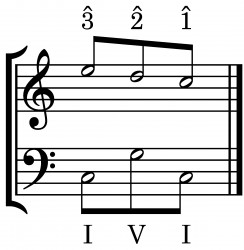
Carl Schachter, Arnold Whittall, and why music analysis matters
9th June 2026
Two recent deaths have robbed the world of music analysis of a pair of its most revered figures. Carl Schachter, who has died at the age of 93, was a pupil of (and subsequently collaborator with) Felix Salzer, himself one of Heinrich Schenker’s foremost students. Schachter continued to enrich and broaden the teaching of Schenkerian analysis, including important work on its application to issues of rhythm (which Schenker, focussing on harmonic and contrapuntal matters, largely bypassed). His influence went well beyond the... read more
read more
Music of the Iberian Peninsula, Part 2: ‘O quam gloriosum’ – The Spanish and Portuguese Golden Age
2nd June 2026
Over the past fortnight, I’ve been bathed in the most glorious, radiant, transformative light. Not the UK’s recent unseasonable heatwave, but the extraordinary vocal polyphony of the Siglo de Oro: the Spanish (and Portuguese) ‘Golden Century’. Extending from the late 15th to the early 17th century, this was a time of remarkable artistic flowering on the Iberian Peninsula, coinciding with the emergence of Spain and Portugal as global imperial powers with extensive colonial territories in the Americas, Africa and Asia. The... read more
read more