 FREE UK SHIPPING OVER £35!
The Spin Doctor Europadisc's Weekly Column
Late-Romanticism’s Final Flowering: Franz Schmidt
17th December 2024
17th December 2024
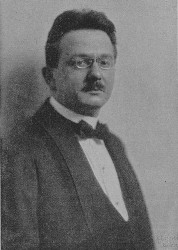 In a year rich with anniversaries, one of the last and most overlooked comes in the shape of an Austrian composer little-hailed outside his native land, but whose works – particularly the symphonies – are finding increasing acceptance in the recording studios, if not yet in the concert hall. A generation or so ago, that might have described another of this year’s anniversary composers, Anton Bruckner; but this coming weekend (22 December) marks the 150th birthday of Franz Schmidt (1874–1939). Born in Pressburg (present-day Bratislava) into a German-speaking Hungarian family, he began his musical studies with piano lessons from his mother, and his later teachers included Theodor Leschetitzky. Schmidt’s gifts as a pianist and cellist of considerable talent were honed at the Vienna Conservatory, where he briefly studied with Bruckner before the latter’s retirement.
From 1896 to 1911 Schmidt was cellist at the Court Opera and in the Vienna Philharmonic, where he was frequently called on by Mahler to play cello solos (although his remuneration remained that of a rank-and-file player). His piano playing was just as remarkable (earning the praise of no less a figure than Godowsky). The first of Schmidt’s symphonies dates from the late 1890s: an engaging four-movement work in the late-Romantic tradition of Brahms, with notable wind writing, not least for horns. From the turn of the century he was increasingly active as a teacher at the Conservatory, and by 1911 he was active enough as a pedagogue to retire from his orchestral posts. Although his own conservative musical idiom was closest to Brahms and Reger (with nods towards a Schubertian lyricism), he forged friendships with Schreker and even the young Schoenberg, whose Pierrot lunaire he conducted to the composer’s enthusiastic endorsement.
From 1925–27 Schmidt was director of the Vienna Conservatory (renamed the Hochschule), and its rector from 1927–31. For a musician who had been exposed to some of the great performances of the Mahler era at the Vienna Opera, Schmidt’s own to contributions to the genre – Notre Dame (1904–06) and Fredigundis (1916–21) – were notable for their lack of success. Much of the music for the former (including the famous, Hungarian-tinged Intermezzo) was actually composed before the libretto, while the latter failed perhaps not so much because of its bloodthirsty take on medieval Frankish history as because of its mismatch with Schmidt’s essentially reflective, refined musical language.
Schmidt had greater success in the choral idiom with his oratorio on the biblical Apocalypse, Das Buch mit sieben Siegeln (The Book with Seven Seals, 1937). Indeed, it was this work – enthusiastically taken up by Austrian choirs – that for many years kept Schmidt’s otherwise forgotten name alive. Though rarely performed by non-German-speaking choruses, its demanding vocal writing (including a particularly challenging solo tenor role), incisive orchestral textures and the uplifting crowning Hallelujah! create an overwhelming impact across the work’s almost two-hour duration.
While Das Buch is a late work, Schmidt had developed his large-scale skills in the orchestral idiom across a number of years. The three-movement Second Symphony (in E flat, 1913) is particularly opulent, employing a huge orchestra and with echoes of both Reger and Richard Strauss. The Third Symphony (in A, 1928) is altogether sunnier, with a Schubertian hue and an essentially cheerful demeanour. Another of his brighter orchestral works (albeit still with searching passages that had become a stylistic hallmark) is the Variations on a Hussar’s Song (1930), which again deploys the Hungarian flavours inherited from Liszt and Brahms. But his orchestral masterpiece, from just two years later, is the Fourth Symphony (in C), composed in memory of his daughter, who had died in childbirth. The chromatic inflections of its opening trumpet solo and the soulful cello of its Adagio second movement help to create a work which, while bending tonality to its limits, never ventures beyond them. Instead, Schmidt’s music seems to inherit a richly Brahmsian introspection which is subtly coloured with sounds of the new century. Ever since the celebrated 1971 Decca recording by Zubin Mehta and Schmidt’s old orchestra, the Vienna Philharmonic, the Fourth has been rightly prized by the composer’s admirers.
Recommended recordings:
Fredigundis (ORF / Märzendorfer) C380012
Das Buch mit sieben Siegeln (K Järvi) CHSA50612
Quintet in A major (Linos Ensemble) 5550262
Latest Posts
Music of the Iberian Peninsula, Part 3: More observations on the Golden Age
16th June 2026
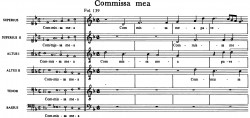
Our last visit to the Iberian peninsula, a fortnight ago, was an insanely ambitious, necessarily broad-brush survey of the Spanish and Portuguese Golden Age, covering vocal and instrumental music, the sacred and the secular. This week, we take a more concise and (I hope) focussed look at a few of the sacred vocal masterpieces which exemplify the particular fervour and intensity of this remarkable period of musical history. They reflect the special place the peninsula had as a bulwark against the Reformation that had taken... read more
read more
Music of the Iberian Peninsula, Part 3: More observations on the Golden Age
16th June 2026
Our last visit to the Iberian peninsula, a fortnight ago, was an insanely ambitious, necessarily broad-brush survey of the Spanish and Portuguese Golden Age, covering vocal and instrumental music, the sacred and the secular. This week, we take a more concise and (I hope) focussed look at a few of the sacred vocal masterpieces which exemplify the particular fervour and intensity of this remarkable period of musical history. They reflect the special place the peninsula had as a bulwark against the Reformation that had taken... read more
read more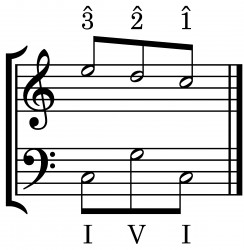
Carl Schachter, Arnold Whittall, and why music analysis matters
9th June 2026
Two recent deaths have robbed the world of music analysis of a pair of its most revered figures. Carl Schachter, who has died at the age of 93, was a pupil of (and subsequently collaborator with) Felix Salzer, himself one of Heinrich Schenker’s foremost students. Schachter continued to enrich and broaden the teaching of Schenkerian analysis, including important work on its application to issues of rhythm (which Schenker, focussing on harmonic and contrapuntal matters, largely bypassed). His influence went well beyond the... read more
read more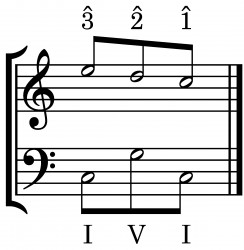
Carl Schachter, Arnold Whittall, and why music analysis matters
9th June 2026
Two recent deaths have robbed the world of music analysis of a pair of its most revered figures. Carl Schachter, who has died at the age of 93, was a pupil of (and subsequently collaborator with) Felix Salzer, himself one of Heinrich Schenker’s foremost students. Schachter continued to enrich and broaden the teaching of Schenkerian analysis, including important work on its application to issues of rhythm (which Schenker, focussing on harmonic and contrapuntal matters, largely bypassed). His influence went well beyond the... read more
read more
Music of the Iberian Peninsula, Part 2: ‘O quam gloriosum’ – The Spanish and Portuguese Golden Age
2nd June 2026
Over the past fortnight, I’ve been bathed in the most glorious, radiant, transformative light. Not the UK’s recent unseasonable heatwave, but the extraordinary vocal polyphony of the Siglo de Oro: the Spanish (and Portuguese) ‘Golden Century’. Extending from the late 15th to the early 17th century, this was a time of remarkable artistic flowering on the Iberian Peninsula, coinciding with the emergence of Spain and Portugal as global imperial powers with extensive colonial territories in the Americas, Africa and Asia. The... read more
read more