 FREE UK SHIPPING OVER £35!
The Spin Doctor Europadisc's Weekly Column
A Seasonal Selection
10th December 2024
10th December 2024
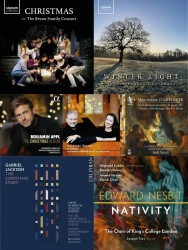 Towards the end of every year the record companies add to the vast catalogue of Christmas- and winter-themed albums, tapping into the market for music to play during the season of long dark nights and festive lights. What continues to impress us every year is the sheer variety of music on offer, from seasoned choral favourites (carols and larger-scale works associated with Christmas) to a seemingly limitless supply of early music and new compositions. This year is no exception, and here we highlight a few of the releases that have caught our ears in the run-up to Yuletide 2024.
Back in May 2023 the many musical talents of the Bevan family (of whom the best known are star sopranos Mary and Sophie) released ‘Vidi speciosam: Sacred Choral Music’, with the Bevan Family Consort under the direction of Graham Ross. With Tomás Luis de Victoria’s Missa Vidi speciosam, such was that disc’s success that the Consort now return with a festive album. It’s a wide-ranging selection, from works by Victoria, Handl and Weelkes, via such favourites as The Holly and the Ivy and Harold Darke’s In the Bleak Midwinter to music by John Ireland, Peter Warlock and John Joubert, as well as Lute-book Lullaby by David Bevan. Once again, there’s a thread running through the disc, this time in the shape of Palestrina’s Missa sine nomine (a nod toward next year’s anniversary celebrations), but the overall atmosphere is one of joyous family intimacy with more than a hint of Christmas jumpers.
Another family affair – also, as it happens, on the Signum label – is Winter’s Light, focussing on seasonal works by ‘crossover’ choral composer Joanna Forbes L’Estrange, alongside items by (and collaborations with) her husband, Alexander L’Estrange. There is even a setting by their son, Harry, of the Christmas Eve antiphon, O virgo virginum – lovingly performed by the London Voices under Ben Parry. There’s a distinctly euphonious, feelgood to the album as a whole, and several pieces are jazzily infectious. The title track, setting a reflective seasonal text by Angier Brock, is wonderfully haunting; at the other end of the spectrum, Green Christmas is seductively jazzy, and the album closes with an arrangement of Auld Lang Syne whose dreamy backing inflections have unmistakable echoes of showtime.
A different kind of luxuriance is on display in baritone Benjamin Appl’s Christmas Album. In partnership with the legendary choristers of Regensburg Cathedral (the so-called Domspatzen, or ‘cathedral sparrows’) and the Munich Radio Orchestra under Florian Helgath, he serves up a sumptuous feast of works ranging from Bach, Praetorius and Hammerschmidt to Mendelssohn, Humperdinck and Rutter. The tonal richness of the performances has a markedly Bavarian imprint, something underscored by the inclusion of two items by Bavarian-born Max Reger, and it even colours such items as Gustav Nordqvist’s setting of Jul, jul, strålande jul and John Rutter’s arrangement of Have Yourself a Merry Little Christmas. Opening with a multi-lingual performance (Latin, English and German) of David Willcocks’s arrangement of O come, all ye faithful, and closing with an equally lavish though more dynamically restrained account of Franz Xaver Gruber’s Stille Nacht, heilige Nacht, this Alpha Classics release is for those who associate Yuletide with high calories.
Christmas can be a testing time of year for those with an antipathy to the human voice, but help is at hand thanks to the wife-and-husband piano team of Duo Pleyel (Alexandra Nepomnyashchaya and Richard Egarr). Performing on a Chris Maene straight-strung concert grand, they open their ‘Yuletide Treats’ (Linn Records) with three captivating movements from Liszt’s Weihnachtsbaum. Things become more animated with two movements from Handel’s Messiah (‘For unto us’ and ‘Hallelujah’) in bracing arrangements by Carl Czerny, before moving to a Viennese New Year with Johann Strauss II’s Blue Danube and his father’s Radetzky March. The mood of festive cheer culminates in a delightfully poised rendition of Eduard Langer’s piano duet arrangements of Tchaikovsky’s Nutcracker Suite, its dances exquisitely characterised, including the atmospheric addition of a tambourine in the Arabian Dance.
Apart from a new recording of Heinrich Schütz’s Weihnachtshistorie (our current Disc of the Week), pick of the period recordings this Christmas comes from Jordi Savall and his ensembles La Capella Reial de Catalunya and Le Concert des Nations. Their disc of seasonal music by Marc-Antoine Charpentier is recorded in the familiar, generous acoustics of the collegial church of Cardona Castle in Catalonia. This accentuates the built-in flamboyance of Charpentier’s music even in the more luminous parts of the Pastorale sur la naissance de N.S.J.C., while the limpid scoring of the celebrated Messe de minuit pour Noël has plenty of space in which to work its magic.
An increasing trend in recent years has been for Christmas monograph albums: discs focussing on seasonal-themed music by just one composer. Two such releases come from the Edinburg-based Delphian label. The first features Gabriel Jackson’s The Christmas Story, a surprisingly wide-ranging work organised in four parts (Advent, Christmas, Epiphany and Candlemas) whose texts combine the gospel narrative with traditional liturgical texts and contemporary texts. While the vocal writing owes much to the post-Britten tradition, the scoring is wonderfully colourful, ranging from solo organ to spiky contributions from the Oxford Contemporary Sinfonia (not least a soulful saxophone), atmospheric percussion, and radiant singing from the Girl Choristers and Choir of Merton College, Oxford. Under the direction of Benjamin Nicholas, The Christmas Story vividly demonstrates why Jackson is one of the most performed of contemporary choral composers, challenging yet constantly engaging.
On the surface more orthodox in its sonorities, Nativity collects together several multi-movement seasonal works by Edward Nesbit, with texts from the 14th to the 17th century. All are sympathetically set and beautifully sung by the Choir of King’s College London, together with mezzo-soprano Angharad Lyddon and baritone Benedict Nelson, conducted by Joseph Fort. Nesbit’s musical style bridges the chronological gap between his texts and the present day most effectively, and three interludes for solo harp (Anneke Hodnett) collectively titled Drop down, ye heavens, loosely based on the Advent Prose provide moments for reflection. If a more contemplative approach to the festive season has its attractions, this is a disc well worth hearing.
Something, then, for just about everyone, we hope, and wish you a year’s end of happy listening, whatever the music!
The Recordings:
Christmas with the Bevan Family Consort SIGCD909
Forbes L’Estrange - Winter Light (London Voices) SIGCD873
Benjamin Appl: The Christmas Album (Appl, Regensburg Domspatzen) ALPHA1079
Yuletide Treats: Liszt, Handel, Strauss, Tchaikovsky (Duo Pleyel) CKD757
Charpentier - Baroque Christmas at the time of Louis XIV (Savall) AVSA9961
Gabriel Jackson - The Christmas Story (Choir of Merton College) DCD34331
Edward Nesbit - Nativity (Choir of KCL) DCD34267
Latest Posts
Music of the Iberian Peninsula, Part 3: More observations on the Golden Age
16th June 2026
Our last visit to the Iberian peninsula, a fortnight ago, was an insanely ambitious, necessarily broad-brush survey of the Spanish and Portuguese Golden Age, covering vocal and instrumental music, the sacred and the secular. This week, we take a more concise and (I hope) focussed look at a few of the sacred vocal masterpieces which exemplify the particular fervour and intensity of this remarkable period of musical history. They reflect the special place the peninsula had as a bulwark against the Reformation that had taken... read more
read more
Music of the Iberian Peninsula, Part 3: More observations on the Golden Age
16th June 2026
Our last visit to the Iberian peninsula, a fortnight ago, was an insanely ambitious, necessarily broad-brush survey of the Spanish and Portuguese Golden Age, covering vocal and instrumental music, the sacred and the secular. This week, we take a more concise and (I hope) focussed look at a few of the sacred vocal masterpieces which exemplify the particular fervour and intensity of this remarkable period of musical history. They reflect the special place the peninsula had as a bulwark against the Reformation that had taken... read more
read more
Carl Schachter, Arnold Whittall, and why music analysis matters
9th June 2026
Two recent deaths have robbed the world of music analysis of a pair of its most revered figures. Carl Schachter, who has died at the age of 93, was a pupil of (and subsequently collaborator with) Felix Salzer, himself one of Heinrich Schenker’s foremost students. Schachter continued to enrich and broaden the teaching of Schenkerian analysis, including important work on its application to issues of rhythm (which Schenker, focussing on harmonic and contrapuntal matters, largely bypassed). His influence went well beyond the... read more
read more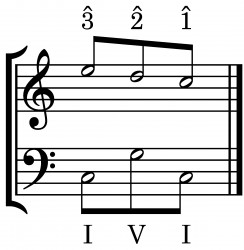
Carl Schachter, Arnold Whittall, and why music analysis matters
9th June 2026
Two recent deaths have robbed the world of music analysis of a pair of its most revered figures. Carl Schachter, who has died at the age of 93, was a pupil of (and subsequently collaborator with) Felix Salzer, himself one of Heinrich Schenker’s foremost students. Schachter continued to enrich and broaden the teaching of Schenkerian analysis, including important work on its application to issues of rhythm (which Schenker, focussing on harmonic and contrapuntal matters, largely bypassed). His influence went well beyond the... read more
read more
Music of the Iberian Peninsula, Part 2: ‘O quam gloriosum’ – The Spanish and Portuguese Golden Age
2nd June 2026
Over the past fortnight, I’ve been bathed in the most glorious, radiant, transformative light. Not the UK’s recent unseasonable heatwave, but the extraordinary vocal polyphony of the Siglo de Oro: the Spanish (and Portuguese) ‘Golden Century’. Extending from the late 15th to the early 17th century, this was a time of remarkable artistic flowering on the Iberian Peninsula, coinciding with the emergence of Spain and Portugal as global imperial powers with extensive colonial territories in the Americas, Africa and Asia. The... read more
read more