 FREE UK SHIPPING OVER £35!
The Spin Doctor Europadisc's Weekly Column
Celebrating MTT at 80
3rd December 2024
3rd December 2024
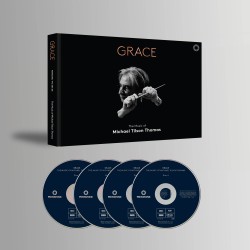 Perhaps it is a consequence of his trim, perpetual youthful demeanour, or his ever-questing, pliant artistry that Michael Tilson Thomas – who on 21 December will mark his 80th birthday – has never been regarded as the ‘grand old man’ of American music, despite a career that spans some six decades. Yet his recent battle with an aggressive form of brain cancer, which has done little to lessen his appetite for continued musical challenges, has prompted an outpouring of affection and admiration which illustrates the high regard in which he is held by both fellow musicians and audiences. Born in Los Angeles as the only child of a family with strong roots in Yiddish theatre, Tilson Thomas – universally known as MTT – showed musical talent from an early age. He rubbed shoulders with such greats of California’s emigré community as Stravinsky, Schoenberg and Korngold, accompanied Heifetz and Piatigorsky in masterclasses, and became one of Leonard Bernstein’s most celebrated and devoted protégés. Yet, steeped as he was in such a vibrantly varied melting-pot of traditions, MTT soon became the very embodiment of a new type of conductor, more collegial, questioning and challenging the status quo without ever falling into the trap of being constricted by new orthodoxies.
After studies at the University of Southern California with Ingolf Dahl and John Crown, and a stint as assistant to Friedelind Wagner at Bayreuth in the mid-1960s, MTT’ baptism of fire came when, as assistant conductor of the Boston Symphony Orchestra, he took over a New York concert from the ailing William Steinberg in October 1969. His first recordings with the BSO for Deutsche Grammophon soon followed, and they set a kind of pattern: familiar names, but in unexpected works – Tchaikovsky’s then rarely recorded First Symphony, and Debussy’s complete orchestral Images, in wonderfully transparent accounts which still sound fresh today. A starry career with leading American and European orchestras could have beckoned, but instead MTT became music director of the Buffalo Philharmonic Orchestra, and there he was able to put in place the sort of enterprising programming – centring on such personal favourites as Copland, Ives, Cowell and Ruggles – that became his trademark.
In the early 1980s MTT was principal guest conductor of the Los Angeles Philharmonic, and in 1988 he commenced a seven-year tenure as principal conductor of the London Symphony Orchestra, attracting new, younger audiences and introducing the orchestra to a broader range of transatlantic repertoire. Even more consequential was his founding of the Miami Beach-based New World Symphony, a training orchestra for young musicians which continues to prepare future professionals at the start of their career.
The partnership for which MTT is best known, however, is that with the San Francisco Symphony, of which he was music director from 1995 to 2020 – a particularly illustrious chapter in the orchestra’s distinguished history. His first concert with the orchestra had been in January 1974, in a performance of Mahler’s Ninth Symphony, and alongside his adventurous programming of American repertoire, his Mahler performances – ever-changing, probing and beautifully shaped – became a touchstone of his San Francisco years. His Mahler cycle for the orchestra’s own label, less showy than Bernstein, less gritty than Klemperer, have nevertheless become greatly valued by critics and music lovers, as has his inclusion of less familiar works like Das klagende Lied (recorded in 1995, and subsequently reissued on SFS Media).
If orchestral music has been the genre in which MTT has excelled, he has given opera a wide berth, confessing to an impatience with the complex mechanics of opera production. This did not, however, stand in the way of a number of notable semi-staged concert performances, including Beethoven’s Fidelio, Wagner’s Der fliegende Holländer, and Rimsky-Korsakov’s rarely-performed opera-ballet Mlada. Another significant aspect of MTT’s career has been his passion as a communicator, whether addressing the audience informally or as part of his PBS television series Keeping Score (with several episodes now available on DVD), showing him as a passionate and consistently engaging inheritor of Bernstein’s mantle.
As a conductor, MTT has embraced both core repertoire and rarities, American as well as European classics (from Gershwin to Ruggles, Beethoven to Janáček), as well as consistently championing new music, from early engagement with Stravinsky and Boulez to such figures as Lou Harrison, Steve Reich, Oliver Knussen and Robin Holloway. If his own music has often taken a back seat, a new 4-disc set from Pentatone entitled simply ‘Grace’ redresses the balance, ranging from jazzy, Broadway-influenced items to the emotionally hard-hitting From the Diary of Anne Frank for narrator and orchestra, and compelling settings of Whitman, Dickinson and Rilke. These, along with bumper anniversary sets from Sony and Eloquence (the latter including his complete DG and Argo recordings), are essential listening for anyone wanting a window on the constantly evolving legacy of this most fascinating of American conductors. And, after a bumpy ride in recent years, it’s a creative output that’s eminently worth celebrating!
Michael Tilson Thomas: Complete Deutsche Grammophon & Argo Recordings ELQ4846836
Grace: The Music of Michael Tilson Thomas PTC5187355
Latest Posts
Music of the Iberian Peninsula, Part 3: More observations on the Golden Age
16th June 2026
Our last visit to the Iberian peninsula, a fortnight ago, was an insanely ambitious, necessarily broad-brush survey of the Spanish and Portuguese Golden Age, covering vocal and instrumental music, the sacred and the secular. This week, we take a more concise and (I hope) focussed look at a few of the sacred vocal masterpieces which exemplify the particular fervour and intensity of this remarkable period of musical history. They reflect the special place the peninsula had as a bulwark against the Reformation that had taken... read more
read more
Music of the Iberian Peninsula, Part 3: More observations on the Golden Age
16th June 2026
Our last visit to the Iberian peninsula, a fortnight ago, was an insanely ambitious, necessarily broad-brush survey of the Spanish and Portuguese Golden Age, covering vocal and instrumental music, the sacred and the secular. This week, we take a more concise and (I hope) focussed look at a few of the sacred vocal masterpieces which exemplify the particular fervour and intensity of this remarkable period of musical history. They reflect the special place the peninsula had as a bulwark against the Reformation that had taken... read more
read more
Carl Schachter, Arnold Whittall, and why music analysis matters
9th June 2026
Two recent deaths have robbed the world of music analysis of a pair of its most revered figures. Carl Schachter, who has died at the age of 93, was a pupil of (and subsequently collaborator with) Felix Salzer, himself one of Heinrich Schenker’s foremost students. Schachter continued to enrich and broaden the teaching of Schenkerian analysis, including important work on its application to issues of rhythm (which Schenker, focussing on harmonic and contrapuntal matters, largely bypassed). His influence went well beyond the... read more
read more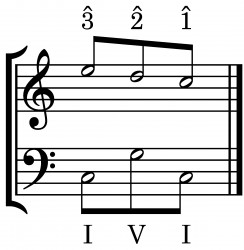
Carl Schachter, Arnold Whittall, and why music analysis matters
9th June 2026
Two recent deaths have robbed the world of music analysis of a pair of its most revered figures. Carl Schachter, who has died at the age of 93, was a pupil of (and subsequently collaborator with) Felix Salzer, himself one of Heinrich Schenker’s foremost students. Schachter continued to enrich and broaden the teaching of Schenkerian analysis, including important work on its application to issues of rhythm (which Schenker, focussing on harmonic and contrapuntal matters, largely bypassed). His influence went well beyond the... read more
read more
Music of the Iberian Peninsula, Part 2: ‘O quam gloriosum’ – The Spanish and Portuguese Golden Age
2nd June 2026
Over the past fortnight, I’ve been bathed in the most glorious, radiant, transformative light. Not the UK’s recent unseasonable heatwave, but the extraordinary vocal polyphony of the Siglo de Oro: the Spanish (and Portuguese) ‘Golden Century’. Extending from the late 15th to the early 17th century, this was a time of remarkable artistic flowering on the Iberian Peninsula, coinciding with the emergence of Spain and Portugal as global imperial powers with extensive colonial territories in the Americas, Africa and Asia. The... read more
read more