 FREE UK SHIPPING OVER £35!
The Spin Doctor Europadisc's Weekly Column
A Year of Anniversaries: The One That Almost Got Away
26th November 2024
26th November 2024
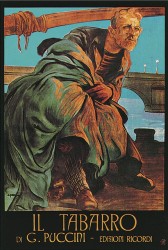 In a year that’s had more than its fair share of musical anniversaries – Bruckner, Busoni, Faure, Holst, Schoenberg, Smetana – arguably one of the biggest is now upon us. Yet it’s a composer whose music has always eluded me. And, even though his output is admired by several friends whose opinions I otherwise respect, my musical synapses resolutely refuse to make a connection. This is a problem for a music critic, who is expected to maintain a certain degree of objectivity and even-handedness. Yet I’ve always thought of myself more as a music-lover than a critic, and no sort of love can be forced or coerced where there is none. It’s true that some music-lovers have more wide-ranging and catholic tastes than others, but I’ve always tried to concentrate on the positives, on the music – from the early middle ages to the present day – that really engages me, while remaining as open as possible to new experiences and discoveries.
There can’t be many music-lovers who don’t have at least a few deaf-spots, though a lucky few seem to have hardly any at all, or at the very least keep them to themselves. Plenty of listeners and even critics are quite open in their dismissiveness of musical modernism and the 20th-century avant garde, music which I have always found both fascinating and enriching. (The ‘open season’ on modernism seems to have taken root since the moment Pierre Boulez passed away in 2016. One wonders how widely and enthusiastically his centenary will be marked next year.) So, why should I feel coy about admitting that the music of Giacomo Puccini (who died on 29 November 1924) does nothing for me at all? The great musicologist and critic Joseph Kerman once notoriously branded Puccini’s Tosca as ‘that shabby little shocker’: a judgement I’d be happy to extend to the composer’s entire oeuvre.
Widely regarded as one of the 20th century’s greatest opera composers – and certainly among its most enduringly popular – Puccini was the leading creator of Italian opera in the generation after Verdi. Many of his works have remained firm fixtures in the core operatic repertoire of the last 100 years, and are often judged ideal introductions to the genre for newcomers. My own exposure to Puccini’s music came during my student years, while working as an usher at the Coliseum for English National Opera. Those were the ‘powerhouse years’ of the Elder-Pountney-Jonas triumvirate, but while many of the productions made a deep and lasting impression, even then (when I was open to all sorts of works that subsequently led me up blind alleys), Puccini’s operas failed to work any magic.
Perhaps part of the reason is this: some years later, when discussing with friends another of my musical bêtes noires, I pronounced the music ‘too manipulative’ for my liking. ‘But isn’t all music manipulative?’ was the prompt response. To which I equally promptly replied that I was drawn more to music which manipulates ideas and motifs (Bach, Haydn, Beethoven, Debussy) than that which manipulates the listener’s emotions. And there’s the rub: in my view, Puccini sold out (a bit like the post-Elektra Richard Strauss) to cheap emotional tricks, with a tendency to over-egg every climax, put everything into the big tune, but with none of the sardonic wit or devastating underlying critique of Mahler. (Had Mahler written an opera, or engaged with the fashionable turn-of-the-century taste for operatic naturalism, I’d certainly give it a hearing.)
As it is, Puccini’s (to me, inexplicable) dominance of the 20th-century operatic landscape (and his more recent rehabilitation by the academy) casts a long shadow over musical tastes and expectations. Thank heavens for Berg, Bartók and the belated discovery of Janáček, all of whom made more dramatically and musically radical contributions to the development of the genre, and who continue to attract a committed following, albeit never on the popular level of Puccini. (Then again, do sales figures alone determine what is a great newspaper? If so, heaven help us...)
However, in the spirit of seasonal generosity, if I had to choose one Puccini opera I had to see again, it would probably be one of the operas from Il trittico: Il tabarro (1918). This bleak contemporary tale set on the banks of the Seine in Paris has the considerable merit of brevity, but it is also a far more dramatically successful and compelling deployment of dark orchestral and vocal colouring than the OTT costume drama of Tosca. If in theatrical terms it inhabits the world of literary naturalism (closely related to operatic verismo), the music itself frequently takes on an almost impressionistic dimension and economy of means, even if not entirely free of a tendency to sensationalist surges. Musical themes which, in Madama Butterfly, have an orientalist flavour, are here applied to create a more subtle exoticism, at times even approaching a Stravinskian sardonicism.
Il tabarro is a comparative rarity in the opera house, though that has changed in recent decades, and it has been successful on disc, the catalogue still dominated by the 1955 EMI recording starring the great Tito Gobbi as the barge-owner Michele. Those wanting something in more modern sound would do well to invest in Antonio Pappano’s recording of Il trittico, in which Il tabarro features Carlo Guelfi, Maria Guleghina and Neil Shicoff. Meanwhile the DVD listings are headed by the same conductor’s Gramophone award-winning 2011 Royal Opera House Il trittico, where Lucio Gallo, Eva-Maria Westbroek and Aleksandrs Antonenko are the stars. All these recordings are at least as compelling as any number of high-profile Butterflies, Toscas and Turandots.
So there you are: you’ve finally wrung out of me some Puccini anniversary recommendations. Happy listening!
Il tabarro: Recommended Recordings
- Il tabarro (Gobbi et al.) 8111307 🔗
- Il trittico (Pappano) 9029590063 🔗
- Il trittico (Pappano) OA1070D (DVD) 🔗 / OABD7102D (Blu-ray) 🔗
Latest Posts
Music of the Iberian Peninsula, Part 3: More observations on the Golden Age
16th June 2026
Our last visit to the Iberian peninsula, a fortnight ago, was an insanely ambitious, necessarily broad-brush survey of the Spanish and Portuguese Golden Age, covering vocal and instrumental music, the sacred and the secular. This week, we take a more concise and (I hope) focussed look at a few of the sacred vocal masterpieces which exemplify the particular fervour and intensity of this remarkable period of musical history. They reflect the special place the peninsula had as a bulwark against the Reformation that had taken... read more
read more
Music of the Iberian Peninsula, Part 3: More observations on the Golden Age
16th June 2026
Our last visit to the Iberian peninsula, a fortnight ago, was an insanely ambitious, necessarily broad-brush survey of the Spanish and Portuguese Golden Age, covering vocal and instrumental music, the sacred and the secular. This week, we take a more concise and (I hope) focussed look at a few of the sacred vocal masterpieces which exemplify the particular fervour and intensity of this remarkable period of musical history. They reflect the special place the peninsula had as a bulwark against the Reformation that had taken... read more
read more
Carl Schachter, Arnold Whittall, and why music analysis matters
9th June 2026
Two recent deaths have robbed the world of music analysis of a pair of its most revered figures. Carl Schachter, who has died at the age of 93, was a pupil of (and subsequently collaborator with) Felix Salzer, himself one of Heinrich Schenker’s foremost students. Schachter continued to enrich and broaden the teaching of Schenkerian analysis, including important work on its application to issues of rhythm (which Schenker, focussing on harmonic and contrapuntal matters, largely bypassed). His influence went well beyond the... read more
read more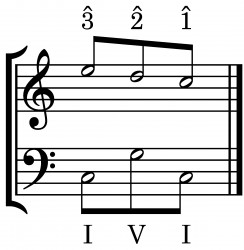
Carl Schachter, Arnold Whittall, and why music analysis matters
9th June 2026
Two recent deaths have robbed the world of music analysis of a pair of its most revered figures. Carl Schachter, who has died at the age of 93, was a pupil of (and subsequently collaborator with) Felix Salzer, himself one of Heinrich Schenker’s foremost students. Schachter continued to enrich and broaden the teaching of Schenkerian analysis, including important work on its application to issues of rhythm (which Schenker, focussing on harmonic and contrapuntal matters, largely bypassed). His influence went well beyond the... read more
read more
Music of the Iberian Peninsula, Part 2: ‘O quam gloriosum’ – The Spanish and Portuguese Golden Age
2nd June 2026
Over the past fortnight, I’ve been bathed in the most glorious, radiant, transformative light. Not the UK’s recent unseasonable heatwave, but the extraordinary vocal polyphony of the Siglo de Oro: the Spanish (and Portuguese) ‘Golden Century’. Extending from the late 15th to the early 17th century, this was a time of remarkable artistic flowering on the Iberian Peninsula, coinciding with the emergence of Spain and Portugal as global imperial powers with extensive colonial territories in the Americas, Africa and Asia. The... read more
read more