FREE UK SHIPPING OVER £35!

The Spin Doctor Europadisc's Weekly Column

Works in Focus: Smetana’s String Quartet no.1 ‘From My Life’

  19th November 2024

19th November 2024
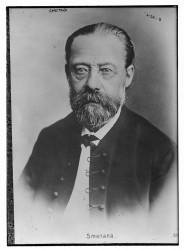

This year’s Smetana bicentenary may have been overshadowed somewhat – at least outside the Czech Lands themselves – by that of Bruckner, but there have been several notable performances and recordings of the major orchestral works and operas, including a bumper Supraphon reissue of the complete operas. One curious omission by the major record companies has been the chamber music, not least the string quartets. If Má vlast and the epic operas project a very public face, focussed on the Czech nation’s history and aspirations to independence, the quartets show a very different Smetana, in which personal joys are mixed with tragedy and suffering. Yet as much as any of his large-scale works, they are founded on a deep attachment to the Czech soil, and this is particularly true of his String Quartet no.1 in E minor.

Subtitled ‘Z mého života’ (‘From My Life’), it was written in the wake of the onset of Smetana’s total deafness from tinnitus in the autumn and winter of 1876. Smetana was in the midst of the composition of the cycle of six symphonic poems Má vlast ‘My Homeland’, and the quartet’s title can be seen as a direct, personal counterpart to the orchestral work. In Má vlast, Smetana had focused on the founding myths, history, present and future of the Czech nation. If the quartet’s world is smaller in scale, it is no less involving or impactful. Each of the movements is devoted to an aspect of the composer’s life: the first paints a picture of his life as a young artist, the second (an infectious Polka) his love of folk music and dance, the third a tribute to his first wife (and ‘first love’) Kateřina, who had died in April 1859. The finale starts in the confident high spirits of maturity, but the edifice collapses with the appearance of a piercing high E on the first violin, against turbulent tremolos from the other instruments, vividly illustrating the onset of tinnitus. The coda eventually finds some sort of inner peace as the work winds down to its conclusion, but it might be the peace of an exhausted soul.

This sort of programmatic writing was well-nigh unprecedented in the ‘pure’ musical world of the string quartet. Certainly there are autobiographical elements in (for example) Beethoven’s late quartets, but nothing quite so openly narrative in its unfolding. Smetana does not altogether forsake the Austro-German quartet genre: the work is cast in the conventional four movements, with the outer ones framing a central ‘scherzo’ and slow movement (an ordering that was used frequently by the founder of the genre, Haydn). But the incorporation of such overtly personal elements points to the influence of Liszt and the ‘New German’ school, though in a completely different genre and – in the toe-tapping dance passages of the Polka and the finale – a distinctly Czech flavour.

Smetana’s quartet can be seen as uncoupling the genre from the burdens of academic purism, and surely paved the way for such works as Janáček’s two great essays in the form, particularly the second (‘Intimate Letters’). And both composers gave their quartets a punchy conciseness that is far removed from many of their Germanic counterparts, as well as feeling very ‘modern’ (consider the similarly pithy quartets of Debussy and Ravel).

There have been many great recordings of Smetana’s quartets, the First in particular, and by no means all of them have been by Czech groups. The Lindsay Quartet made an acclaimed recording in 1991 (currently unavailable), and more recently the 2014 performance by the Takács Quartet on Hyperion has won many admirers. Yet undoubtedly the greatest Czech quartets bring a special feel to this music, not just the poise and abandon of the dance episodes but the sheer ebullience of much of the music, and the intensity of the Largo as well as the final devastating pages of the finale. This is certainly true of the 1962 recording by the eponymous Smetana Quartet on Supraphon (again, regrettably unavailable at present), even if the reverberant recording takes some getting used to.

Personally, I wouldn’t want to be without the classic 1928 recording by the Bohemian (Czech) Quartet, with Josef Suk on second violin. Replete with portamento, and a helter-skelter performance of the Polka that is nothing less than hair-raising, it’s the sort of playing that wouldn’t survive today’s appetite for perfectionism and precision, and more’s the pity. But among recent recordings, the Pavel Haas Quartet’s 2014 account is a clear first choice, full-blooded yet transparent, and as emotionally committed as the music demands, but married with superb technique to create a performance worthy of the spirit and anguish Smetana poured into this music.

Beyond the First Quartet, you might venture to the composer’s great G minor Piano Trio, dedicated to the memory of his young daughter (also named Kateřina), though without such an explicit programme. And then there’s the astonishing D minor String Quartet no.2, composed by Smetana in 1882–83 against the orders of his doctors and in the grip of mental illness. In it he explores darker realms than those of the First Quartet, but no-one who loves the First Quartet should fail to investigate its passionately intense world.

As always, happy listening!

Recommended recordings:

Latest Posts


Music of the Iberian Peninsula, Part 3: More observations on the Golden Age

16th June 2026

Our last visit to the Iberian peninsula, a fortnight ago, was an insanely ambitious, necessarily broad-brush survey of the Spanish and Portuguese Golden Age, covering vocal and instrumental music, the sacred and the secular. This week, we take a more concise and (I hope) focussed look at a few of the sacred vocal masterpieces which exemplify the particular fervour and intensity of this remarkable period of musical history. They reflect the special place the peninsula had as a bulwark against the Reformation that had taken... read more

read more
Music of the Iberian Peninsula, Part 3: More observations on the Golden Age

16th June 2026

Our last visit to the Iberian peninsula, a fortnight ago, was an insanely ambitious, necessarily broad-brush survey of the Spanish and Portuguese Golden Age, covering vocal and instrumental music, the sacred and the secular. This week, we take a more concise and (I hope) focussed look at a few of the sacred vocal masterpieces which exemplify the particular fervour and intensity of this remarkable period of musical history. They reflect the special place the peninsula had as a bulwark against the Reformation that had taken... read more

read more
Carl Schachter, Arnold Whittall, and why music analysis matters

9th June 2026

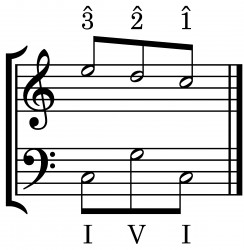
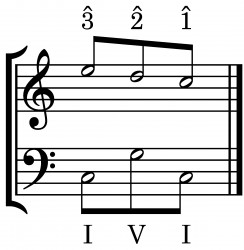
Two recent deaths have robbed the world of music analysis of a pair of its most revered figures. Carl Schachter, who has died at the age of 93, was a pupil of (and subsequently collaborator with) Felix Salzer, himself one of Heinrich Schenker’s foremost students. Schachter continued to enrich and broaden the teaching of Schenkerian analysis, including important work on its application to issues of rhythm (which Schenker, focussing on harmonic and contrapuntal matters, largely bypassed). His influence went well beyond the... read more

read more
Carl Schachter, Arnold Whittall, and why music analysis matters

9th June 2026

Two recent deaths have robbed the world of music analysis of a pair of its most revered figures. Carl Schachter, who has died at the age of 93, was a pupil of (and subsequently collaborator with) Felix Salzer, himself one of Heinrich Schenker’s foremost students. Schachter continued to enrich and broaden the teaching of Schenkerian analysis, including important work on its application to issues of rhythm (which Schenker, focussing on harmonic and contrapuntal matters, largely bypassed). His influence went well beyond the... read more

read more
Music of the Iberian Peninsula, Part 2: ‘O quam gloriosum’ – The Spanish and Portuguese Golden Age

2nd June 2026

Over the past fortnight, I’ve been bathed in the most glorious, radiant, transformative light. Not the UK’s recent unseasonable heatwave, but the extraordinary vocal polyphony of the Siglo de Oro: the Spanish (and Portuguese) ‘Golden Century’. Extending from the late 15th to the early 17th century, this was a time of remarkable artistic flowering on the Iberian Peninsula, coinciding with the emergence of Spain and Portugal as global imperial powers with extensive colonial territories in the Americas, Africa and Asia. The... read more

read more
View Full Archive