 FREE UK SHIPPING OVER £35!
The Spin Doctor Europadisc's Weekly Column
Shakespeare à la Mendelssohn
12th November 2024
12th November 2024
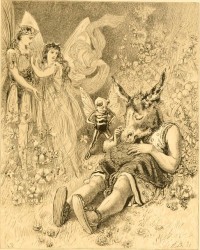
Following its public premiere in Stettin in 1827, the Midsummer Night’s Dream Overture enjoyed a sensational success. Shakespeare’s mixture of a natural setting and the supernatural chimed in perfectly with themes in early Romanticism, and the magical opening chords followed by fleet-footed elfin scurrying of the pianissimo violins soon came to be regarded as the epitome of ‘fairy music’. The joyous orchestral tuttis and the braying evocations of the donkey-headed Bottom enhance the music’s feeling of sparkling comedy, while the return of the opening chords at the very close is a stroke of genius, the perfect framing for a work that is ‘but a dream’.
Although the appeal of Mendelssohn’s Overture was durable, the vogue for fairy subject-matter among creative artists soon passed. Other Shakepearean subjects did not appeal to the composer nearly as much, even if his knowledge of the other plays was wide. But in 1843, now at the height of his fame and Kapellmeister to Friedrich Wilhelm IV of Prussia, he received a commission from the monarch to provide incidental music for a celebratory performance of Ein Sommernachtstraum in Potsdam. Schlegel’s translation was further modified and abridged by his collaborator Ludwig Tieck, although someone forgot to tell Mendelssohn about some of the cuts, so that a couple of his entr'actes are left hanging in the air.
What’s remarkable about the incidental music composed nearly two decades after the Overture is the ease with which Mendelssohn steps back into Shakespeare’s enchanted world, with a freshness that belies the passing of the years. This is true as much of the newly-composed items like the Scherzo, Nocturne and Wedding March (which is now the composer’s single best-known piece) as of the spoken melodramas (many peppered with quotes from the original Overture). The purely orchestral numbers soon became hugely popular in their own right, and have been frequently recorded.
Discs of the complete incidental music including the two vocal numbers ‘You spotted snakes’ and ‘Through this house give glimm’ring light’, have become highlights of the catalogue, from Klemperer and Previn to more recent albums from the like of Gardiner, Iván Fischer and Thomas Dausgaard. Really complete performances, with substantial passages of dialogue giving the shorter musical numbers valuable context, are rarer. (A notable exception was a 2001 Virgin Classics recording conducted by John Nelson with members of The Oxford and Cambridge Society.)
Now, however, Jordi Savall – acclaimed for his recent forays into the orchestral music of Schubert and Beethoven – gives us what is surely the most complete recording of Mendelssohn’s A Midsummer Night’s Dream yet attempted. With a cast of international actors, he has released a sumptuous four-disc set on his Alia Vox label. The first disc contains the complete incidental music with an abridged version of the play in English: there’s no Act 1 (Mendelssohn wrote no music for it, and it was probably omitted in Potsdam), and the framing Athens narrative is somewhat truncated. But the machination of Oberon, king of the fairies, his sidekick the magical spirit Puck, the rude mechanicals and the pairs of lovers are all there.
The centrepiece is the 15-minute melodrama of the mechanicals’ theatrical rehearsal, Bottom’s monstrous transformation (vividly realised by Gavi Singh Chera), and the amorous spell cast on Oberon’s queen Titania (Wendy Morgan). But the real magic about this performance (which runs to a generous 83 minutes) is the way in which the expanded context transforms such numbers as the Intermezzo (embodying the vulnerability of the desperate Hermia), the dreamily gorgeous Nocturne, and the mock Funeral March. From the vivid timpani thwacks and braying ophicleide of the Overture onwards, Savall’s players (Le Concert des Nations, who include young musicians from his ambitious Academies programme) throw themselves into the score with barely-contained glee and wonderful stylishness. The singers of La Capella Nacional de Catalunya, too, are marvellously sensitive, with elfin-like purity of tone.
And the other three discs? The second contains, again, the abridged play, this time in the Schlegel-Tieck translation which Mendelssohn originally set. Discs 3 and 4 contain just the self-contained numbers of the instrumental music, the first with the two choral numbers sung in English, the second in German. This might seem extravagant, but if you’re pressed for time or allergic to the spoken voice, you’ll find them handy. For the vast majority of listeners, however, the versions with dialogue are the ones to really immerse yourself in. Despite the slightly reverberant acoustic, the sheer magic of Shakespeare and Mendelssohn’s joint creation has never been so compellingly captured. With supporting articles and complete texts, lavishly presented as a glossy hardback book, this is a release to gladden the hearts of Mendelssohnians everywhere.
The Recording:
Latest Posts
Music of the Iberian Peninsula, Part 3: More observations on the Golden Age
16th June 2026
Our last visit to the Iberian peninsula, a fortnight ago, was an insanely ambitious, necessarily broad-brush survey of the Spanish and Portuguese Golden Age, covering vocal and instrumental music, the sacred and the secular. This week, we take a more concise and (I hope) focussed look at a few of the sacred vocal masterpieces which exemplify the particular fervour and intensity of this remarkable period of musical history. They reflect the special place the peninsula had as a bulwark against the Reformation that had taken... read more
read more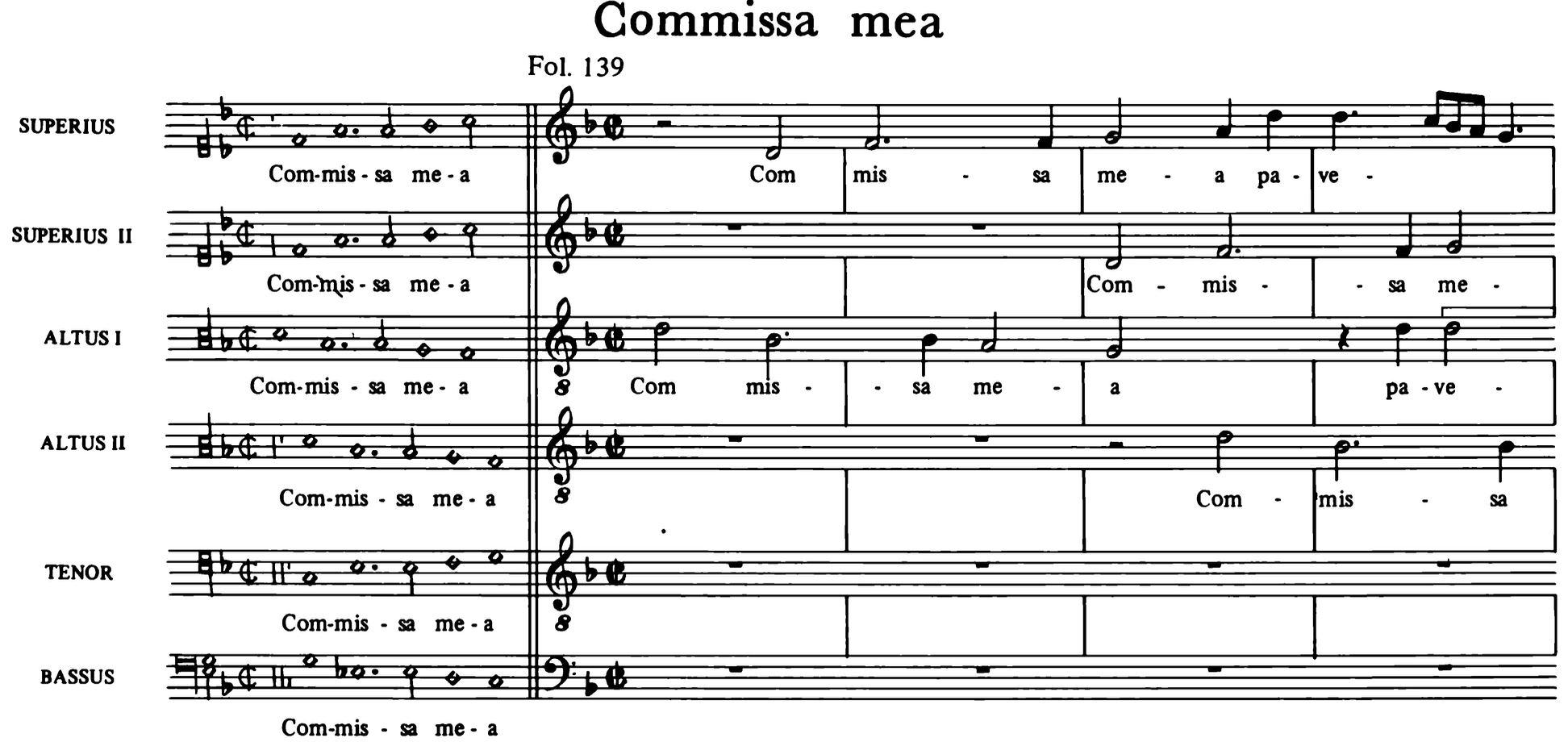
Music of the Iberian Peninsula, Part 3: More observations on the Golden Age
16th June 2026
Our last visit to the Iberian peninsula, a fortnight ago, was an insanely ambitious, necessarily broad-brush survey of the Spanish and Portuguese Golden Age, covering vocal and instrumental music, the sacred and the secular. This week, we take a more concise and (I hope) focussed look at a few of the sacred vocal masterpieces which exemplify the particular fervour and intensity of this remarkable period of musical history. They reflect the special place the peninsula had as a bulwark against the Reformation that had taken... read more
read more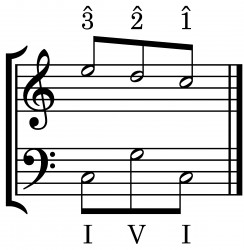
Carl Schachter, Arnold Whittall, and why music analysis matters
9th June 2026
Two recent deaths have robbed the world of music analysis of a pair of its most revered figures. Carl Schachter, who has died at the age of 93, was a pupil of (and subsequently collaborator with) Felix Salzer, himself one of Heinrich Schenker’s foremost students. Schachter continued to enrich and broaden the teaching of Schenkerian analysis, including important work on its application to issues of rhythm (which Schenker, focussing on harmonic and contrapuntal matters, largely bypassed). His influence went well beyond the... read more
read more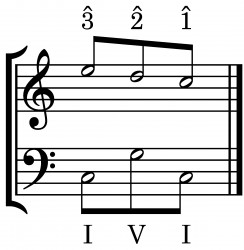
Carl Schachter, Arnold Whittall, and why music analysis matters
9th June 2026
Two recent deaths have robbed the world of music analysis of a pair of its most revered figures. Carl Schachter, who has died at the age of 93, was a pupil of (and subsequently collaborator with) Felix Salzer, himself one of Heinrich Schenker’s foremost students. Schachter continued to enrich and broaden the teaching of Schenkerian analysis, including important work on its application to issues of rhythm (which Schenker, focussing on harmonic and contrapuntal matters, largely bypassed). His influence went well beyond the... read more
read more
Music of the Iberian Peninsula, Part 2: ‘O quam gloriosum’ – The Spanish and Portuguese Golden Age
2nd June 2026
Over the past fortnight, I’ve been bathed in the most glorious, radiant, transformative light. Not the UK’s recent unseasonable heatwave, but the extraordinary vocal polyphony of the Siglo de Oro: the Spanish (and Portuguese) ‘Golden Century’. Extending from the late 15th to the early 17th century, this was a time of remarkable artistic flowering on the Iberian Peninsula, coinciding with the emergence of Spain and Portugal as global imperial powers with extensive colonial territories in the Americas, Africa and Asia. The... read more
read more