 FREE UK SHIPPING OVER £35!
The Spin Doctor Europadisc's Weekly Column
March of the Women
6th November 2024
6th November 2024
 When the history of classical music in the first quarter of the 21st century comes to be written, commentators will surely note the sudden upsurge of interest in music by women composers. Boosted by – among other things – the #MeToo movement of 2017 which sought to give abused women a voice, the increased attention has been evident both in the concert hall and in the recording studio. Creative voices long silenced by institutionalised male prejudice are at last being rediscovered, and now not a month goes past without significant releases of music by both historic and contemporary figures. While the weight of history means that it will be a long time before we can talk of a level playing field, the enthusiasm with which these releases have been received by critics and audiences alike suggests that we’re witnessing a period of fundamental change in perceptions, one which might yet come to the rescue of the beleaguered classical music world.
Alongside such relatively familiar names as Imogen Holst (see our review of ‘Discovering Imogen’ on the NMC label, 6 September 2024) and Grażyna Bacewicz (whose music continues to be explored on the Chandos and CPO labels), a host of other names are emerging from obscurity. One such is Augusta Holmès (1847–1903), born in Paris to Irish and English parents, who became a naturalised French citizen whereupon she added the grave accent to her father’s surname. Her 1889 Ode triomphale, composed for the centenary of the French Revolution, prompted ecstatic praise from no less a figure than Saint-Saëns, and although she was denied a place at the Paris Conservatoire on account of her non-French parentage, she became a member of César Franck’s inner circle.
Through Franck, Holmès absorbed a broadly Wagnerian musical language, as well as an enthusiasm for the genre of the symphonic poem. Four such works feature on a new disc from CPO, including the three-movement symphony Roland furieux (1875–76). Based on Ariosto’s classic narrative poem Orlando furioso, this early work already demonstrates a confident handling of the orchestra (as in the ‘galloping’ figuration of the opening movement) as well as an engaging inventiveness, but more characteristic are two works from the following decade, both of which champion downtrodden nationalist causes: her own ancestral homeland of Ireland in Irlande (1881) and Poland in Pologne (1883), complete with authentic-sounding mazurka. Both works successfully combine passion with a clear-headed sense of musical architecture, but perhaps most engaging is the classical-themed Andromède (1898–99), based on a tale from Ovid’s Metamorphoses, and cut from a similar cloth to works by both Franck and Saint-Saëns. Together with the symphonic intermezzo from her 1887 ‘ode symphony’ Ludus pro patria, all are persuasively performed by the Staatsphilharmonie Rheinland-Pfalz under the direction of Michael Francis.
Unless you’re a film buff, you are unlikely to be familiar with the figure of Adèle Hugo (1830–1915), daughter of the great French Romantic writer Victor Hugo. Her unhappy life was blighted by schizophrenic episodes, and was the subject of François Truffaut’s 1975 film The Story of Adèle H., yet until recently her musical output – dominated by settings of her father’s poetry – was effectively unknown. All that is set to change with a new release on Alpha of her songs, skilfully and stylishly orchestrated by Richard Dubugnon and performed by the Orchestre Victor Hugo of Besançon under Jean-François Verdier. The singers include such stars as Karine Deshayes and Sandrine Piau, and the disc also includes several of Adèle Hugo’s songs without words for melody instruments with piano. While perhaps lacking the striking individuality of a mature composer, all the music on the disc – which ranges from the salonesque to far grander ambitions – suggests that, given happier and more stable life circumstances, Hugo might have been a genuine force to be reckoned with in late French Romantic music.
Born just a decade after Holmès, Ethel Smyth is one of the best-known of British women composers, although many of her most successful works were premiered in Germany where she spent her formative musical years. Two of her solo piano works – the Sonata no.2 in C sharp minor and the Variations on an Original Theme (of an Exceeding Dismal Nature) – form the basis of Hanni Liang’s new Delphian release ‘Voices for solo piano’, and their Brahmsian and Elgarian debts are obvious, but the playing has such urgent commitment as to silence all doubts. Despite their title, the Variations have moments of sparkling wit, vividly brought to life in this performance. The rest of the programme is devoted to more contemporary women’s voices (all the composers were born in the 1940s and 50s). I Wouldn’t Normally Say is an amusing, jazzy miniature by the newly-appointed Master of the Kings Music, Errollyn Wallen. More substantial are Chen Yi’s Variations on ‘Awariguli’, based on a Uyghur folk song but scored with impressionistic deftness.
Eleanor Alberga’s Cwicseolfor also has its impressionistic moments, combined with an insistent minimalism and some spiky harmonies and demanding passagework. It all adds up to a substantial 12-minute work which Liang brings off with dazzling virtuosity. To these ears, however, Sally Beamish’s Night Dances, which builds from a ghostly, barely-etched opening through a devilish climax to a return of the haunting opening, is – by a pinch! – the most arresting work on the disc. Appropriately, it forms the centrepiece, and cements Beamish’s reputation as one of the outstanding composers of her generation, never mind the gender.
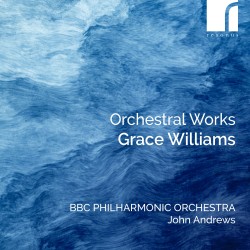
We have yet to hear the latest release from the enterprising La Boîte à Pépites label, devoted to orchestral works by Rita Strohl, although by all accounts it’s an engrossing album. But we can’t conclude this brief catch-up without mentioning a new disc from Resonus of orchestral music by Welsh composer Grace Williams (1906–1977). Williams was a member (like Elizabeth Maconchy and Elisabeth Lutyens) of that generation of women composers who were able to take some advantage of the early barriers broken down by Smyth, although they had far from an easy ride. Although her music betrays the influence of her teacher Vaughan Williams, its incorporation of distinctively Welsh elements, as well as a degree of modernist edginess courtesy of her Vienna studies with Egon Wellesz, results in music of genuine distinctiveness.
Most familiar will be the 1944 Sea Sketches for string orchestra, but the earlier Four Illustrations for the Legend of Rhiannon are just as engaging, with extremely inventive scoring and distinct echoes of Sibelius. Castell Caernarfon (1969), composed for the investiture of the Prince of Wales, is a marvellous antidote to the usual ceremonial fare, and demonstrates Williams’s gift for the slow, determined processional, with gritty inflections. From the previous year, the four Ballads include another example with the Alla marcia solenne second movement, again bristling with inventive touches of scoring. Framed by two urgent fast movements, the Ballads are a highlight of a superbly played disc on Resonus from the BBC Philharmonic Orchestra under John Andrews. It’s another release demonstrating the label’s ongoing commitment to works by women composers, and strongly recommended.
The Recordings:
Augusta Holmès - Symphonic Poems 5555932 🔗
Adèle Hugo - Songs on Poems by Victor Hugo ALPHA1086 🔗
Voices for Solo Piano (Hanni Liang) DCD34326 🔗
Grace Williams - Orchestral Works RES10349 🔗
Latest Posts
Music of the Iberian Peninsula, Part 3: More observations on the Golden Age
16th June 2026
Our last visit to the Iberian peninsula, a fortnight ago, was an insanely ambitious, necessarily broad-brush survey of the Spanish and Portuguese Golden Age, covering vocal and instrumental music, the sacred and the secular. This week, we take a more concise and (I hope) focussed look at a few of the sacred vocal masterpieces which exemplify the particular fervour and intensity of this remarkable period of musical history. They reflect the special place the peninsula had as a bulwark against the Reformation that had taken... read more
read more
Music of the Iberian Peninsula, Part 3: More observations on the Golden Age
16th June 2026
Our last visit to the Iberian peninsula, a fortnight ago, was an insanely ambitious, necessarily broad-brush survey of the Spanish and Portuguese Golden Age, covering vocal and instrumental music, the sacred and the secular. This week, we take a more concise and (I hope) focussed look at a few of the sacred vocal masterpieces which exemplify the particular fervour and intensity of this remarkable period of musical history. They reflect the special place the peninsula had as a bulwark against the Reformation that had taken... read more
read more
Carl Schachter, Arnold Whittall, and why music analysis matters
9th June 2026
Two recent deaths have robbed the world of music analysis of a pair of its most revered figures. Carl Schachter, who has died at the age of 93, was a pupil of (and subsequently collaborator with) Felix Salzer, himself one of Heinrich Schenker’s foremost students. Schachter continued to enrich and broaden the teaching of Schenkerian analysis, including important work on its application to issues of rhythm (which Schenker, focussing on harmonic and contrapuntal matters, largely bypassed). His influence went well beyond the... read more
read more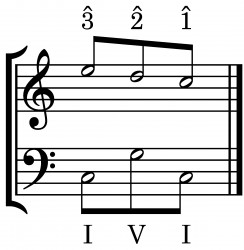
Carl Schachter, Arnold Whittall, and why music analysis matters
9th June 2026
Two recent deaths have robbed the world of music analysis of a pair of its most revered figures. Carl Schachter, who has died at the age of 93, was a pupil of (and subsequently collaborator with) Felix Salzer, himself one of Heinrich Schenker’s foremost students. Schachter continued to enrich and broaden the teaching of Schenkerian analysis, including important work on its application to issues of rhythm (which Schenker, focussing on harmonic and contrapuntal matters, largely bypassed). His influence went well beyond the... read more
read more
Music of the Iberian Peninsula, Part 2: ‘O quam gloriosum’ – The Spanish and Portuguese Golden Age
2nd June 2026
Over the past fortnight, I’ve been bathed in the most glorious, radiant, transformative light. Not the UK’s recent unseasonable heatwave, but the extraordinary vocal polyphony of the Siglo de Oro: the Spanish (and Portuguese) ‘Golden Century’. Extending from the late 15th to the early 17th century, this was a time of remarkable artistic flowering on the Iberian Peninsula, coinciding with the emergence of Spain and Portugal as global imperial powers with extensive colonial territories in the Americas, Africa and Asia. The... read more
read more