 FREE UK SHIPPING OVER £35!
The Spin Doctor Europadisc's Weekly Column
Music Education: For the Many or the Few?
22nd October 2024
22nd October 2024
 We have written before in this column about the lack of diversity of appeal in classical music, and in particular the older demographic which tends to make up both live audiences and purchasers of recordings. Many performing musicians have spoken out against funding cuts which they see as posing unprecedented dangers to the art form. Quick fixes in box-ticking such as community-based projects are often prioritised over the long-term survival of those very organisations which are best placed to deliver such ‘outreach’: ask anyone in the East of England, or in the Glyndebourne Touring and Welsh National Opera catchment areas, all of which have seen funding slashed or withdrawn altogether.
While many of you have evidently shared the general alarm felt by performers, some are more sanguine, pointing out that the arts have weathered such storms in the past, and that in any event people tend to turn to classical music in their later years. That may be so, but in order to keep the art form truly alive it needs a constant supply of young blood in the form of musicians trained from an early age to a high standard. If not, the audiences of the future will have few live performers to listen to, and will have to find what succour they can from recordings (some of you clearly feel that we are in such a situation already!). Almost all respondents to our previous musings have agreed that adequate education in the arts is fundamental, and recent cuts – coupled with the ever deafening clamour of celebrity-driven popular culture – have made the delivery of such training increasingly patchy, particularly to the less well-off.
In the past, it is true, art music was the privilege of the wealthy: sovereigns (such as Elizabeth I and Louis XIV), princes sacred and secular (such as kept Monteverdi and Mozart in employment), but widening over time to the lower-ranking nobility (with whom Beethoven had such an uneasy but productive relationship). The 19th century saw the consumers of art music widen still further to take in the burgeoning middle classes, and the foundation of many musical organisations which continue to this day (the Vienna Singverein, the Royal Philharmonic Society). In Britain, long-established choral foundations with their roots in the Tudor period, attached to great seats of learning, still attract both talent and money.
Things took a more egalitarian route over the course of the 20th century, and not just in those countries which embraced communism and other left-wing ideologies. The advent of recorded music and of broadcasting widened access to classical music as never before, and not all of it was driven by the commercial mores that made figures like Caruso and Toscanini household names. The introduction of factory concerts wasn’t by any means confined to countries of the old Soviet bloc; although the decline of old-fashioned manual-powered mass production has seen their demise, a modern-day equivalent can be seen in the multi-storey car park performance, that wonderful urban answer to the privilege’n’penguin suits of the country-house opera.
If the long-term direction of accessibility to ‘classical music’ has been towards ever wider accessibility, it’s hard to see how such recent gimmicks as allowing drinks into performances or filming on mobile phones are going to have similarly far-reaching effects. If anything, they seem to prioritise the individual experience (‘Look at me! I’ve gone classical!’) over the collective – as indeed does the playlist/catch-up culture when compared to the days when there was just one classical radio station and you either shared that experience simultaneously with thousands of others or not at all.
Returning to the subject of education, however, the 2024 BBC Young Musician competition highlighted a very worrying trend. Aside from the usual flurry of complaints about presentation, judges and lack of broadcast exposure, what was overlooked by many was the fact that not one of the finalists was state educated. All were privately educated, and while social-background profiling of individual contestants is certainly not the way to go, it paints a sorry picture of state music education in the 21st century that the only ones to make the cut in a competition once seen as a world leader are privately educated. For, although audiences for art music have historically been well-heeled, the artists themselves – singers, instrumentalists and composers – have usually represented far more diverse strata of society, on a par with tradesmen and craftsmen, and often organised into guilds or drawn from certain ‘clans’.
To be sure, the current situation is not unique to classical music (established working-class actors regularly bemoan the lack of opportunity for their younger equivalents). But it paints a sorry picture of a culture where musical education is so undervalued that many teachers feel forced out of state schools and seek jobs in the private sector, while those that remain are seconded into teaching subjects in which they are not specialised, because their main area of expertise has been edged out of the curriculum. We must hope that those in power see sense before it is too late. Already, we run the risk of a lost generation for all but the lucky few.
As always, we welcome your thoughts on this pressing subject!
Latest Posts
Music of the Iberian Peninsula, Part 3: More observations on the Golden Age
16th June 2026
Our last visit to the Iberian peninsula, a fortnight ago, was an insanely ambitious, necessarily broad-brush survey of the Spanish and Portuguese Golden Age, covering vocal and instrumental music, the sacred and the secular. This week, we take a more concise and (I hope) focussed look at a few of the sacred vocal masterpieces which exemplify the particular fervour and intensity of this remarkable period of musical history. They reflect the special place the peninsula had as a bulwark against the Reformation that had taken... read more
read more
Music of the Iberian Peninsula, Part 3: More observations on the Golden Age
16th June 2026
Our last visit to the Iberian peninsula, a fortnight ago, was an insanely ambitious, necessarily broad-brush survey of the Spanish and Portuguese Golden Age, covering vocal and instrumental music, the sacred and the secular. This week, we take a more concise and (I hope) focussed look at a few of the sacred vocal masterpieces which exemplify the particular fervour and intensity of this remarkable period of musical history. They reflect the special place the peninsula had as a bulwark against the Reformation that had taken... read more
read more
Carl Schachter, Arnold Whittall, and why music analysis matters
9th June 2026
Two recent deaths have robbed the world of music analysis of a pair of its most revered figures. Carl Schachter, who has died at the age of 93, was a pupil of (and subsequently collaborator with) Felix Salzer, himself one of Heinrich Schenker’s foremost students. Schachter continued to enrich and broaden the teaching of Schenkerian analysis, including important work on its application to issues of rhythm (which Schenker, focussing on harmonic and contrapuntal matters, largely bypassed). His influence went well beyond the... read more
read more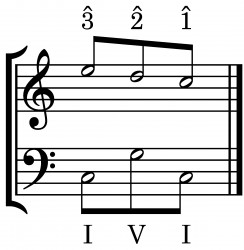
Carl Schachter, Arnold Whittall, and why music analysis matters
9th June 2026
Two recent deaths have robbed the world of music analysis of a pair of its most revered figures. Carl Schachter, who has died at the age of 93, was a pupil of (and subsequently collaborator with) Felix Salzer, himself one of Heinrich Schenker’s foremost students. Schachter continued to enrich and broaden the teaching of Schenkerian analysis, including important work on its application to issues of rhythm (which Schenker, focussing on harmonic and contrapuntal matters, largely bypassed). His influence went well beyond the... read more
read more
Music of the Iberian Peninsula, Part 2: ‘O quam gloriosum’ – The Spanish and Portuguese Golden Age
2nd June 2026
Over the past fortnight, I’ve been bathed in the most glorious, radiant, transformative light. Not the UK’s recent unseasonable heatwave, but the extraordinary vocal polyphony of the Siglo de Oro: the Spanish (and Portuguese) ‘Golden Century’. Extending from the late 15th to the early 17th century, this was a time of remarkable artistic flowering on the Iberian Peninsula, coinciding with the emergence of Spain and Portugal as global imperial powers with extensive colonial territories in the Americas, Africa and Asia. The... read more
read more