 FREE UK SHIPPING OVER £35!
The Spin Doctor Europadisc's Weekly Column
Leif Segerstam (1944–2024)
15th October 2024
15th October 2024
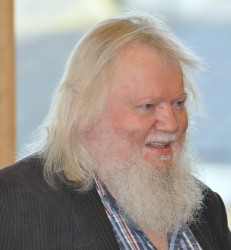 The Finnish conductor and composer Leif Segerstam, who died last week at the age of 80, was in every sense a larger than life figure. When he first emerged on the musical scene in the 1960s, as a trained violinist and pianist as well as composer, he was (alarmingly for those who only got to know him in later years) a clean-shaven though never exactly lean youngster, but he soon took on the hirsute appearance of an archetypal Scandinavian shaman.
He was born on 2 March 1944 in Vaasa, on Finland’s west coast, into a musical family. In 1947 the family moved to Helsinki, where he played violin and viola with the Helsinki Youth Orchestra. At the Sibelius Academy he studied violin, piano and conducting, and further studies in the latter took him to the Juilliard School in New York, where he was taught by Jean Morel. From the late 1960s he occupied a series of increasingly high-profile conducting posts, first in Finland and Sweden, and then further afield: at Berlin’s Deutsche Oper, and then from 1975 to 1982 as head of the ORF Symphony Orchestra in Vienna, as well as a decade at the Finnish Radio Symphony Orchestra (1977–87). From 1989–95 he took on the equivalent post at the Danish RSO.
Segerstam was also active as an opera conductor, appearing at venues including La Scala, Covent Garden and the New York Met, as well as music director of the Finnish National Opera (1973–74). His gifts as an opera conductor are less well represented on disc than other areas of his activity, but a well-regarded recording of Berg’s Wozzeck, as well as Tristan und Isolde and Korngold’s Die tote Stadt (all on Naxos, with the Royal Swedish Opera), give some idea of his gifts as a direct interpreter with a sure sense of drive and dramatic purpose.
As a violinist, Segerstam had his own quartet, and a series of some 30 string quartets form a significant part of his compositional output. As a composer he will remain best known, however, as one of the ‘super-symphonists’: he penned no fewer than 371 symphonies, most of them single-movement works under 25 minutes in length, but dwarfing Nikolai Myaskovsky’s meagre total of 27 and even Haydn’s 107. Starting in a post-Expressionist idiom, he soon developed a technique of ‘free pulsation’: a personal form of aleatoric (chance) music which enabled him to compose quickly (and prolifically!) with blocks of sound, often dispensing with the need for a conductor. His symhonies feature such instruments as the ondes Martenot, as well as a wide range of percussion instruments, and sometimes the human voice too.
Yet, remarkably for such an extensive symphonic corpus, none make any concessions to ‘easy listening’, and the best have an elemental force and granitic presence which reflect Segerstam’s wider fascination with the natural world. In this respect, he can be seen as an inheritor of the late Sibelian mantle. To date, most of his symphonies are unperformed, fewer still recorded, but that will surely change with time. Is it fanciful to imagine, a few generations hence, some brave, enterprising soul undertaking a complete cycle?
The elemental nature of Segerstam’s music can also be felt in his recordings as a conductor, which are surprisingly wide-ranging, including a Brahms symphony cycle (on the Alba label) which coupled the German master’s music with his own. Symphonies by Mahler, Nørgård and Pettersson also feature, as does the music of his compatriot Einojuhani Rautavaara, of which Segerstam was an ardent champion. Perhaps his greatest achievements on disc are in the music of Sibelius: a cycle of the symphonies on the Ondine label with the Helsinki Philharmonic Orchestra (of which he was chief conductor from 1995 to 2007), as well as one of the finest accounts of Tapiola ever recorded, tapping into the terrifying evocations of natural forces as few others have done. After his Helsinki years he was principal conductor of the Turku Philharmonic (2012–19), with whom he recorded a benchmark series of discs of Sibelius’s incidental music for Naxos.
Among the many tributes coming in the wake of Segerstam’s death, one of the most striking is from harpsichordist Mahan Esfahani, who declared that ‘He was the single greatest genius I have ever known, without a doubt.’ That is praise indeed, and reflects Segerstam’s uncompromisingly questing mind as well as his wide-ranging musical talents. He held strong opinions on the place of music in the modern world, and was, admittedly, frequently outspoken – a quality which occasionally landed him in trouble. But no-one could doubt the strength of his convictions or of his musicmaking, and that is something that will continue to mark both his own music and his recordings. We are unlikely to see his like again.
Recommended recordings:
Berg - Wozzeck (Royal Opera Stockholm) 866007677 🔗
Segerstam - String Quartet no.7, etc. (Segerstam Quartet) BISCD039 🔗
Segerstam - Symphonies 11 & 14 (Finnish RSO, Swedish RSO) BISCD483 🔗
Segerstam - Symphonies 81, 162 & 181 (Bergen PO) ODE11722 🔗
Sibelius - Lemminkainen Suite, Tapiola (Helsinki PO) ODE8522 🔗
Sibelius - Incidental Music (Turku PO et al.) 8506032 🔗
Latest Posts
Music of the Iberian Peninsula, Part 3: More observations on the Golden Age
16th June 2026
Our last visit to the Iberian peninsula, a fortnight ago, was an insanely ambitious, necessarily broad-brush survey of the Spanish and Portuguese Golden Age, covering vocal and instrumental music, the sacred and the secular. This week, we take a more concise and (I hope) focussed look at a few of the sacred vocal masterpieces which exemplify the particular fervour and intensity of this remarkable period of musical history. They reflect the special place the peninsula had as a bulwark against the Reformation that had taken... read more
read more
Music of the Iberian Peninsula, Part 3: More observations on the Golden Age
16th June 2026
Our last visit to the Iberian peninsula, a fortnight ago, was an insanely ambitious, necessarily broad-brush survey of the Spanish and Portuguese Golden Age, covering vocal and instrumental music, the sacred and the secular. This week, we take a more concise and (I hope) focussed look at a few of the sacred vocal masterpieces which exemplify the particular fervour and intensity of this remarkable period of musical history. They reflect the special place the peninsula had as a bulwark against the Reformation that had taken... read more
read more
Carl Schachter, Arnold Whittall, and why music analysis matters
9th June 2026
Two recent deaths have robbed the world of music analysis of a pair of its most revered figures. Carl Schachter, who has died at the age of 93, was a pupil of (and subsequently collaborator with) Felix Salzer, himself one of Heinrich Schenker’s foremost students. Schachter continued to enrich and broaden the teaching of Schenkerian analysis, including important work on its application to issues of rhythm (which Schenker, focussing on harmonic and contrapuntal matters, largely bypassed). His influence went well beyond the... read more
read more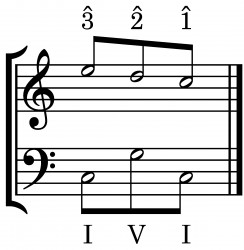
Carl Schachter, Arnold Whittall, and why music analysis matters
9th June 2026
Two recent deaths have robbed the world of music analysis of a pair of its most revered figures. Carl Schachter, who has died at the age of 93, was a pupil of (and subsequently collaborator with) Felix Salzer, himself one of Heinrich Schenker’s foremost students. Schachter continued to enrich and broaden the teaching of Schenkerian analysis, including important work on its application to issues of rhythm (which Schenker, focussing on harmonic and contrapuntal matters, largely bypassed). His influence went well beyond the... read more
read more
Music of the Iberian Peninsula, Part 2: ‘O quam gloriosum’ – The Spanish and Portuguese Golden Age
2nd June 2026
Over the past fortnight, I’ve been bathed in the most glorious, radiant, transformative light. Not the UK’s recent unseasonable heatwave, but the extraordinary vocal polyphony of the Siglo de Oro: the Spanish (and Portuguese) ‘Golden Century’. Extending from the late 15th to the early 17th century, this was a time of remarkable artistic flowering on the Iberian Peninsula, coinciding with the emergence of Spain and Portugal as global imperial powers with extensive colonial territories in the Americas, Africa and Asia. The... read more
read more