 FREE UK SHIPPING OVER £35!
The Spin Doctor Europadisc's Weekly Column
Celebrating the Czech Philharmonic
8th October 2024
8th October 2024
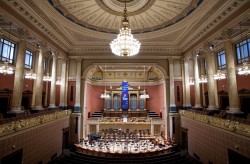 It’s a particular pleasure to be able to congratulate the Czech Philharmonic on their Gramophone award of ‘Orchestra of the Year’ in this Year of Czech Music – a year, moreover, which marks the bicentenary of Bedřich Smetana’s birth. Like Smetana, the Czech Philharmonic is central to the musical life of the Czech nation, although its origins are more recent. It can trace its origins back to 4 January 1896, when musicians from Prague’s National Theatre – a focal point in the Czech nation-building project – gave a concert in aid of their pension fund of music by that other icon of Czech music, Antonín Dvořák, under the composer’s baton. Although billed on that occasion as the ‘Czech Philharmonic Orchestra’, it was to be another five years before it became an independent musical body in it own right.
The orchestra’s founding conductor (1901–02) was Ludvík Čelanský (1870–1931), who established the ensemble with striking musicians from the National Theatre, before furthering his international career in Kyiv, Warsaw, Paris and (during World War I) New York. Following Čelanský’s surprise resignation, Oskar Nedbal (1874–1930) led the orchestra on its first significant tour, to England (May and June 1902), but declined to take on the role of permanent conductor. Instead that job went to Vilém Zemánek (1875–1922), under whose direction (1904–18) the orchestra established the practice of giving regular subscription concerts. As well as premiering works by Czech-speaking composers such as Janáček, Suk and Novák, in September 1908 the orchestra gave the first performance of Gustav Mahler’s Seventh Symphony, with Mahler himself conducting. Given the composer’s own Bohemian roots, it is unsurprising that the Czech Philharmonic went on to build an enviable reputation in Mahler’s music which continues to this day.
After the end of World War I, Czechoslovakia finally achieved independence, and a new chapter began in the Czech Philharmonic’s life too. In 1918 the young Václav Talich (a violinist who had played in the Berlin Philharmonic under Nikisch) had conducted the orchestra in Josef Suk’s ambitious orchestral work Zrání (‘Ripening’). The following year he became its chief conductor, serving in that post until 1941 and ushering in a golden era for the ensemble. As well as being a champion of living composers, Talich was a superb orchestral trainer, and it was under his direction that the Czech Philharmonic developed elements of its trademark style that are still discernible today, including a sweet style of string playing founded on a rich Czech tradition of violin playing, and palpably ‘woody’ wind tone. These characteristics are evident in Talich’s earliest recordings, including his first recording of Smetana’s Má vlast (1929), while the distinctive clarinet vibrato seems to have been a post-World War II development.
In 1942, Rafael Kubelík – himself the son of the great violinist Jan Kubelík – became Talich’s successor, and between them they established the first post-war Prague Spring Festival in 1946. The communist takeover in 1948 spelled disaster for both men: Kubelík fled to the west, vowing not to return until communism was overthrown, while Talich was deemed a Nazi collaborator (in fact he was nothing of the kind), although he was allowed to make some recordings with the orchestra up until 1956. The orchestra’s own choice to replace Kubelík was one of their own: bass player Karel Šejna (1896–1982), whose recordings – combining the richness of Talich with a certain muscularity – are rightly prized by collectors.
Instead, in 1950 the regime imposed the Auschwitz survivor Karel Ančerl (1908–1973), whose relationship with the orchestra was initially a tense one, but whose taut, disciplined and rhythmically incisive approach ushered in another golden era for the ensemble. Inevitably, Ančerl’s taste in ‘contemporary’ music was more up-to-date than Talich’s had been. In addition to buoyant, superbly inflected accounts of the classics, and a bitingly vivid way with Janáček and Martinů, his recordings of such 20th-century masters as Stravinsky, Shostakovich and Bartók have rarely been equalled, let alone surpassed, and he raised the orchestra to new heights of excellence which further bolstered its international reputation.
The brutal Soviet suppression of the 1968 Prague Spring led in turn to Ančerl’s departure (he eventually settled in Toronto, never to return to his homeland). His replacement was violinist-turned-conductor Václav Neumann (1920–1995), a less radical figure than Ančerl who nevertheless kept standards sufficiently high to undertake the orchestra’s first recorded cycle of the Mahler symphonies. Furthermore, the practice of inviting distinguished guest conductors – of the calibre of Szell, Böhm and Kletzki – continued. One of the most stalwart of these would become the former Talich pupil, Charles Mackerras, whose Indian summer of post-Velvet Revolution performances with the orchestra is happily well-documented on disc, as is Kubelík’s triumphant 1990 return to his homeland in a now legendary performance of Má vlast at that year’s Prague Spring Festival.
Neumann’s successor as chief conductor was Jiří Bělohlávek (1946–2017), but he resigned after just two years, infuriated by the orchestra’s decision to opt for Gerd Albrecht as his replacement, supposedly because a more ‘international’ figure would bring greater commercial opportunities. That ugly episode ushered in a succession of chief conductors – Albrecht, Ashkenazy, Mácal and Inbal – none of whom stayed for long or made a lasting impact, before Bělohlávek returned for a second term, of five years (2012–17) which brought a measure of stability and renewed success with a series of recordings of Czech classics on Decca.
Bělohlávek’s untimely death in May 2017 was widely mourned. Already his successor, Semyon Bychkov, had started forging close ties with the orchestra as guest conductor with the first volume of the (now deleted) Tchaikovsky Project for Decca. In the past few years, Bychkov and the orchestra have forged a strong new commercial partnership with the Pentatone label, with their still ongoing Mahler cycle (the Czech Philharmonic’s first since Neumann) earning consistent praise, and this year’s Má vlast – the latest in a very long line by the orchestra! – garnering superlatives across the board.
Over two decades ago, at the turn of the millennium, the Czech Philharmonic just squeezed into Gramophone’s list of Top 20 international recordings. No-one who has heard any of their recent recordings, or who witnessed the blazing intensity and commitment of this year’s Proms appearances under permanent guest conductor Jakub Hrůša, would be in any doubt that their current place would certainly be in the Top 10, and quite possibly the Top 5. One of the few international orchestras still to retain a distinctive and identifiable individual style of playing, they are worthy winners of this year’s poll. Gratulujeme vám!
Photo: Dvořák Hall of the Rudolfinum, Prague (the Czech Philharmonic’s home)
Selected Czech Philharmonic recordings now on special offer:
www.europadisc.co.uk/offer/3342/Czech_Philharmonic.htm 🔗
Latest Posts
Music of the Iberian Peninsula, Part 3: More observations on the Golden Age
16th June 2026
Our last visit to the Iberian peninsula, a fortnight ago, was an insanely ambitious, necessarily broad-brush survey of the Spanish and Portuguese Golden Age, covering vocal and instrumental music, the sacred and the secular. This week, we take a more concise and (I hope) focussed look at a few of the sacred vocal masterpieces which exemplify the particular fervour and intensity of this remarkable period of musical history. They reflect the special place the peninsula had as a bulwark against the Reformation that had taken... read more
read more
Music of the Iberian Peninsula, Part 3: More observations on the Golden Age
16th June 2026
Our last visit to the Iberian peninsula, a fortnight ago, was an insanely ambitious, necessarily broad-brush survey of the Spanish and Portuguese Golden Age, covering vocal and instrumental music, the sacred and the secular. This week, we take a more concise and (I hope) focussed look at a few of the sacred vocal masterpieces which exemplify the particular fervour and intensity of this remarkable period of musical history. They reflect the special place the peninsula had as a bulwark against the Reformation that had taken... read more
read more
Carl Schachter, Arnold Whittall, and why music analysis matters
9th June 2026
Two recent deaths have robbed the world of music analysis of a pair of its most revered figures. Carl Schachter, who has died at the age of 93, was a pupil of (and subsequently collaborator with) Felix Salzer, himself one of Heinrich Schenker’s foremost students. Schachter continued to enrich and broaden the teaching of Schenkerian analysis, including important work on its application to issues of rhythm (which Schenker, focussing on harmonic and contrapuntal matters, largely bypassed). His influence went well beyond the... read more
read more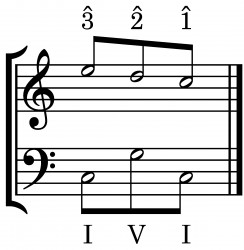
Carl Schachter, Arnold Whittall, and why music analysis matters
9th June 2026
Two recent deaths have robbed the world of music analysis of a pair of its most revered figures. Carl Schachter, who has died at the age of 93, was a pupil of (and subsequently collaborator with) Felix Salzer, himself one of Heinrich Schenker’s foremost students. Schachter continued to enrich and broaden the teaching of Schenkerian analysis, including important work on its application to issues of rhythm (which Schenker, focussing on harmonic and contrapuntal matters, largely bypassed). His influence went well beyond the... read more
read more
Music of the Iberian Peninsula, Part 2: ‘O quam gloriosum’ – The Spanish and Portuguese Golden Age
2nd June 2026
Over the past fortnight, I’ve been bathed in the most glorious, radiant, transformative light. Not the UK’s recent unseasonable heatwave, but the extraordinary vocal polyphony of the Siglo de Oro: the Spanish (and Portuguese) ‘Golden Century’. Extending from the late 15th to the early 17th century, this was a time of remarkable artistic flowering on the Iberian Peninsula, coinciding with the emergence of Spain and Portugal as global imperial powers with extensive colonial territories in the Americas, Africa and Asia. The... read more
read more