 FREE UK SHIPPING OVER £35!
The Spin Doctor Europadisc's Weekly Column
Two Operas from the French Golden Age
1st October 2024
1st October 2024
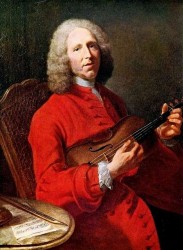 What do you think of at the mention of ‘French opera’? Bizet’s Carmen, perhaps? Debussy’s Pelléas et Mélisande? The operas of Berlioz and Massenet? The grand oparas of Meyerbeer, the opéras comiques of Auber or the operettas of Offenbach? Yet the French operatic tradition is almost as old and certainly as impressive as that of Italy. And there are many who would argue that its ‘golden age’ came as early as the 18th century, with the generation of composers who followed the pioneering works of Jean-Baptiste Lully (1632–1687), building on the achievements of his tragédies en musique to create works which combined opulence and refinement, that beguiling mixture of passion, grace and colour which is still considered to be the hallmark of French musical style.
Chief among the generations who immediately followed Lully was Jean-Philippe Rameau (1683–1764), still most familiar to musicians and listeners for his important contributions to the keyboard repertoire with the keyboard works of his pièces de clavecin. For the last three decades of his life, however, Rameau made a hugely important contribution to rejuvenating the genre of the Lullian tragédie en musique, a feat that has come into sharper focus through the gradual revival of his operas over the last sixty years. The dramatic intensity, musical imagination, harmonic richness and boldness of expression characteristic of such works as Hippolyte et Aricie (1733), Castor et Pollux (1737) and Dardanus (1739, revised 1744) were revolutionary at the time, provoking the conservative devotees of Lully to dismiss Rameau’s music as ‘baroque’ (in the original sense of being deformed). Yet by his later years Rameau himself was regarded as the embodiment of the establishment he had once challenged so boldly.
However, as proved by his last completed opera – unperformed in his lifetime – the same striking originality that characterised his earlier works in the genre still burned bright. Les Boréades (1763) has, since its modern revival in the 1960s, won increasing admiration. Its slender plot, centred around the plight of the Queen Alphise, doomed to marry a descendant of Boreas (the god of the north wind) but in love with the foreigner Abaris, may seem formulaic, its human characters mere agents of the gods. But the sheer vitality which Rameau brings to the subject, not least in the music depicting the natural and supernatural forces, sweeps all before it.
There are few performers today better qualified today to bringing this music vividly to light than conductor György Vashegyi with his Purcell Choir and Orfeo Orchestra. They have already recorded five of Rameau’s operas on the Glossa label (including Les Indes galantes and Dardanus). Now, for the French-based Erato label, they turn their attention to Les Boréades, and the results are exceptionally fine. The excellent cast is headed by soprano Sabine Devieilhe and tenor Reinoud Van Mechelen, and the pinpoint clarity as well as the stylishness of their phrasing and shaping are characteristic of the production as a whole.
The supporting cast includes baritone Tassis Christoyannis as Adamas and an authoritative Apollo, and only Benedikt Kristjánsson sounds at times challenged by the ungratefully high-lying tenor role of Calisis. Both choir and orchestra have much to do – the latter particularly in the many dance numbers that were de rigueur in French Baroque opera – and their accumulated expertise is everywhere evident. Wind machines are of course a feature of this colourful score (the storm that inevitably breaks in Act 3 continues into Act 4), but it is the softer, more reflective music that really reveals this performance’s real class. The ‘Entrée des Muses, des Zéphirs, des Saisons, des Heures et des Arts’ in Act 4 is one of the most magical moments in all Baroque opera, with limpid flutes doubled by violins, and underpinned by characterful bassoons. As a whole, this recording boosts Rameau’s credentials as one of the most essential opera composers of the Baroque era.
Christoph Willibald Gluck (1714–1787) was barely a generation younger than Rameau, but by the time he moved to Paris in the early 1770s he had already introduced a number of operatic ‘reforms’ based on his mixed response to Italian opera as well as an expressive directness and artistic simplicity characteristic of one born in central Europe. As the first of his Parisian operas, Iphigénie en Aulide (1774) had to make certain concessions to local taste, but Gluck nevertheless achieved a remarkable degree of individual characterisation in this classical subject. Although for a revival the following he felt obliged to introduce a deus ex machina, the original version has a directness and sense of psychological depth that perfectly complements its formal conciseness (three acts rather than the still customary five), and it feels in many respects worlds away from the atmosphere of Rameau and the operatic late Baroque, much closer to the opera seria tradition of (for example) Mozart’s Idomeneo yet without the Italianate prescriptive formality.
Although overshadowed in modern estimation by Gluck’s subsequent Iphigénie en Tauride (1779), Iphigénie en Aulide won many admirers in the 19th century, chief among them Richard Wagner who created a German-language version of his own which was later revived by Mahler in Vienna. The overture, which anticipates both the mood an the themes of the following action, is one of Gluck’s finest, and became a popular concert piece in its own right with Wagner’s concert ending. The degree of individual characterisation for the four principals (Iphigenia, Achilles, Agamemnon and Clytemnestra) was tailored to the specific strengths of the original cast, and surviving accounts suggest that Gluck was not afraid to browbeat the singers and players of the Paris Opéra in pursuit of his highly-focussed musico-dramatic vision.
The Recordings:
Rameau - Les Boréades (Vashegyi) 2173237273
Latest Posts
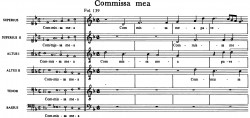
Music of the Iberian Peninsula, Part 3: More observations on the Golden Age
16th June 2026
Our last visit to the Iberian peninsula, a fortnight ago, was an insanely ambitious, necessarily broad-brush survey of the Spanish and Portuguese Golden Age, covering vocal and instrumental music, the sacred and the secular. This week, we take a more concise and (I hope) focussed look at a few of the sacred vocal masterpieces which exemplify the particular fervour and intensity of this remarkable period of musical history. They reflect the special place the peninsula had as a bulwark against the Reformation that had taken... read more
read more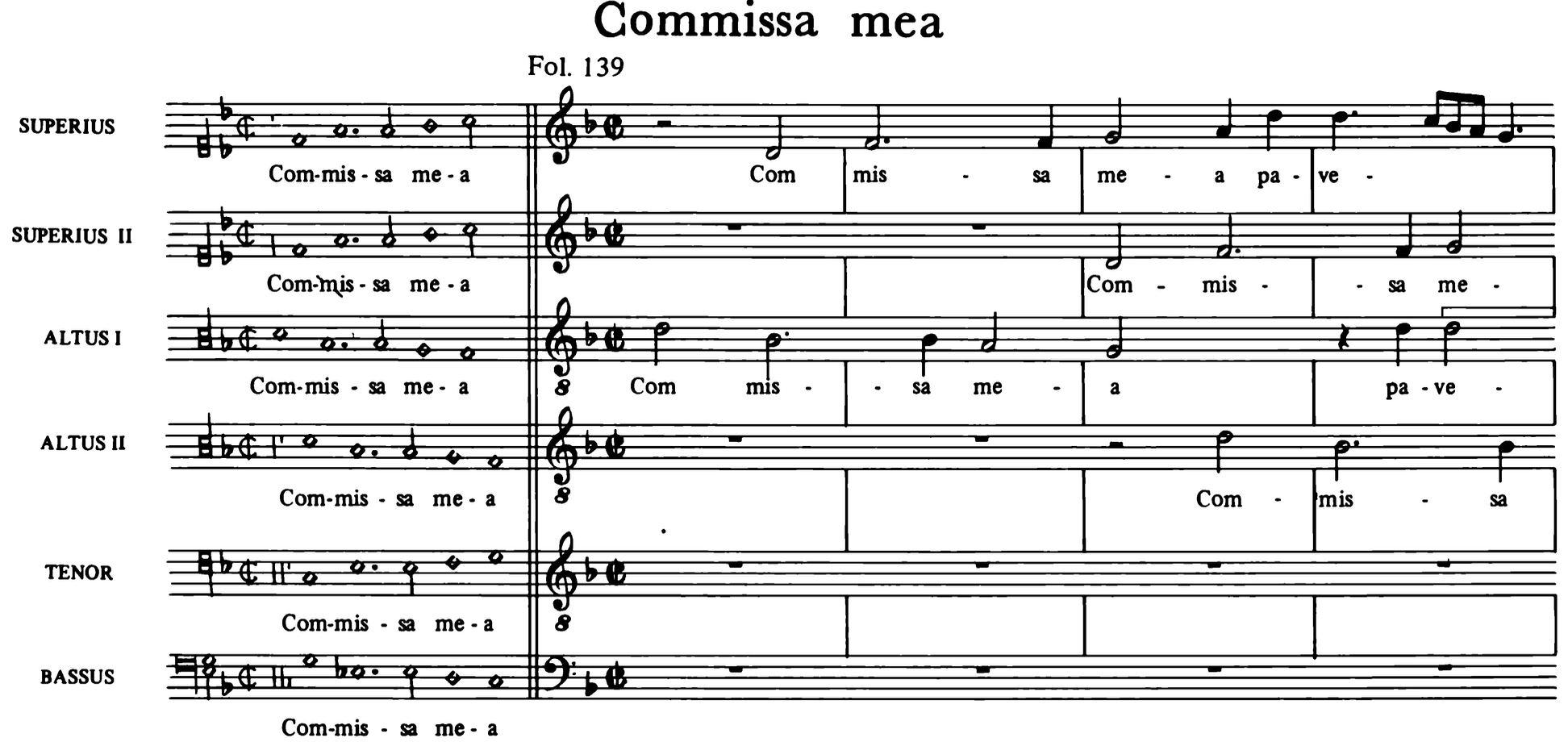
Music of the Iberian Peninsula, Part 3: More observations on the Golden Age
16th June 2026
Our last visit to the Iberian peninsula, a fortnight ago, was an insanely ambitious, necessarily broad-brush survey of the Spanish and Portuguese Golden Age, covering vocal and instrumental music, the sacred and the secular. This week, we take a more concise and (I hope) focussed look at a few of the sacred vocal masterpieces which exemplify the particular fervour and intensity of this remarkable period of musical history. They reflect the special place the peninsula had as a bulwark against the Reformation that had taken... read more
read more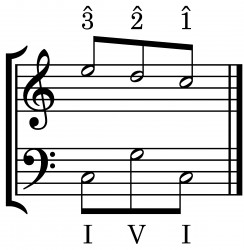
Carl Schachter, Arnold Whittall, and why music analysis matters
9th June 2026
Two recent deaths have robbed the world of music analysis of a pair of its most revered figures. Carl Schachter, who has died at the age of 93, was a pupil of (and subsequently collaborator with) Felix Salzer, himself one of Heinrich Schenker’s foremost students. Schachter continued to enrich and broaden the teaching of Schenkerian analysis, including important work on its application to issues of rhythm (which Schenker, focussing on harmonic and contrapuntal matters, largely bypassed). His influence went well beyond the... read more
read more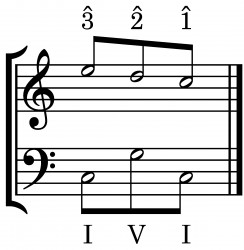
Carl Schachter, Arnold Whittall, and why music analysis matters
9th June 2026
Two recent deaths have robbed the world of music analysis of a pair of its most revered figures. Carl Schachter, who has died at the age of 93, was a pupil of (and subsequently collaborator with) Felix Salzer, himself one of Heinrich Schenker’s foremost students. Schachter continued to enrich and broaden the teaching of Schenkerian analysis, including important work on its application to issues of rhythm (which Schenker, focussing on harmonic and contrapuntal matters, largely bypassed). His influence went well beyond the... read more
read more
Music of the Iberian Peninsula, Part 2: ‘O quam gloriosum’ – The Spanish and Portuguese Golden Age
2nd June 2026
Over the past fortnight, I’ve been bathed in the most glorious, radiant, transformative light. Not the UK’s recent unseasonable heatwave, but the extraordinary vocal polyphony of the Siglo de Oro: the Spanish (and Portuguese) ‘Golden Century’. Extending from the late 15th to the early 17th century, this was a time of remarkable artistic flowering on the Iberian Peninsula, coinciding with the emergence of Spain and Portugal as global imperial powers with extensive colonial territories in the Americas, Africa and Asia. The... read more
read more