 FREE UK SHIPPING OVER £35!
The Spin Doctor Europadisc's Weekly Column
The Other Schoenberg
11th September 2024
11th September 2024
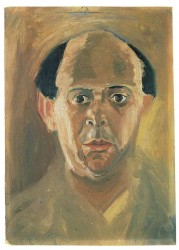 This week marks the sesquicentenary of the birth of Arnold Schoenberg (1874–1951), one of the most radically consequential composers of the 20th century and a key figure in the development of musical modernism. To many music-lovers he is still a modernist bogeyman, one of the main culprits who knocked music off-course by dragging it, kicking and screaming, into the realms of atonality and serialism. During this anniversary year, even his musical champions have tended to celebrate the occasion with the more 'listener-friendly' music of his pre-atonal period: works such as Verklarte Nacht, Gurrelieder and Pelleas und Melisande, which stretch and densen but do not essentially break with the late-Romantic tonality of Wagner and Mahler.
If, 150 years since the his birth, Schoenberg's music can still be forbidding to many, his legacy is still a considerable one: not just as composer, but as teacher, theorist, performer and champion of the music of others (notably the fellow members of the 'Second Viennese School', his pupils Alban Berg and Anton Webern). These activities took up most of his energies in his extraordinary prolific life, but there was another string to his bow which has been less remarked upon but is no less fascinating: his activities as a painter and artist. In this field, Schoenberg regarded himself essentially as an amateur (most of his creations he dubbed 'finger exercises'), yet a significant proportion of his extensive output as an artist - that executed in oil, largely on board rather than canvas - he valued more highly.
Schoenberg's creations in the visual arts are astonishingly wide-ranging – from portraits and landscapes to set and costume designs, as well as designs for playing cards, a chess set, even a musical typewriter – and some have been widely reproduced. His portraits of Berg (a strikingly lifesize, full-length effort) and Zemlinsky are particularly well-known from books and album covers. Unlike his older contemporary Busoni, Schoenberg was not an accomplished or trained draughtsman, but he was a close friend with the great Russian painter Wassily Kandinsky, and even exhibited some of his paintings in the first exhibition (December 1911) of the groundbreaking Blaue Reiter ('Blue Rider') group in Munich.
While Schoenberg turned to sketching on paper throughout his life, his period as a painter was essentially limited to the years 1908–12 – significantly, just the period when he was making the final break with tonality and his embarking on his atonal period, with such expressionist masterpieces as the monodrama Erwartung (1909) and the 'drama with music' Die glückliche Hand (1910–13), as well as such miniature masterpieces as the op.11 and op.19 piano pieces. Some commentators have suggested that his paintings were a way of working through or coping with the radical change in musical style that this entailed.
Two groups of Schoenberg's paintings are especially interesting. The first is an extended series of self-portraits which, with their flat surfaces, directness of gaze and concentration on essentials over superfluous detail, suggest a degree of self-knowledge and confidence which are gifts with which not all creative artists are blessed. Such niceties as proportion, symmetry, realism and blending are clearly less important to Schoenberg the painter than self-focus, bold truth and essence, and Kandinsky himself admired Schoenberg's focus on the essential.
Related to the self-portraits, but taking them off at a tangent are a series of often disturbing 'Gazes' and 'Visions' which, in their unsettling alienation (often concentrating on the eyes to the exclusion of all other features, which are represented as an ether-like blur), seem to evoke qualities characteristic of the expressionist movement. For anyone who has struggled with the music of Schoenberg's atonal period, these unsettling yet strangely haunting works offer a way in to this uniquely compelling aesthetic, and several of them (particularly the red-tinged eyes of the rather simian Blick ['Gaze'] of May 1910) have appeared on record covers over the years.
Schoenberg's compositional talents for colour and detail do not often extend to his paintings, which tend to be made with broad brushstrokes and a limited palette, but his activities as a visual artist shine an interesting if sometimes oblique light on his wider artistic achievements.
Further reading:
Courtney S. Adams, 'Artistic Parallels between Arnold Schoenberg's Music and Painting', College Music Symposium, vol.35 (1995), pp.5-21
Christian Meyer & Therese Muxeneder (eds.), Arnold Schönberg: Catalogue raisonné (2 vols.) (Los Angeles/Vienna, 2005)
Latest Posts
Music of the Iberian Peninsula, Part 3: More observations on the Golden Age
16th June 2026
Our last visit to the Iberian peninsula, a fortnight ago, was an insanely ambitious, necessarily broad-brush survey of the Spanish and Portuguese Golden Age, covering vocal and instrumental music, the sacred and the secular. This week, we take a more concise and (I hope) focussed look at a few of the sacred vocal masterpieces which exemplify the particular fervour and intensity of this remarkable period of musical history. They reflect the special place the peninsula had as a bulwark against the Reformation that had taken... read more
read more
Music of the Iberian Peninsula, Part 3: More observations on the Golden Age
16th June 2026
Our last visit to the Iberian peninsula, a fortnight ago, was an insanely ambitious, necessarily broad-brush survey of the Spanish and Portuguese Golden Age, covering vocal and instrumental music, the sacred and the secular. This week, we take a more concise and (I hope) focussed look at a few of the sacred vocal masterpieces which exemplify the particular fervour and intensity of this remarkable period of musical history. They reflect the special place the peninsula had as a bulwark against the Reformation that had taken... read more
read more
Carl Schachter, Arnold Whittall, and why music analysis matters
9th June 2026
Two recent deaths have robbed the world of music analysis of a pair of its most revered figures. Carl Schachter, who has died at the age of 93, was a pupil of (and subsequently collaborator with) Felix Salzer, himself one of Heinrich Schenker’s foremost students. Schachter continued to enrich and broaden the teaching of Schenkerian analysis, including important work on its application to issues of rhythm (which Schenker, focussing on harmonic and contrapuntal matters, largely bypassed). His influence went well beyond the... read more
read more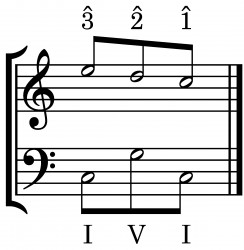
Carl Schachter, Arnold Whittall, and why music analysis matters
9th June 2026
Two recent deaths have robbed the world of music analysis of a pair of its most revered figures. Carl Schachter, who has died at the age of 93, was a pupil of (and subsequently collaborator with) Felix Salzer, himself one of Heinrich Schenker’s foremost students. Schachter continued to enrich and broaden the teaching of Schenkerian analysis, including important work on its application to issues of rhythm (which Schenker, focussing on harmonic and contrapuntal matters, largely bypassed). His influence went well beyond the... read more
read more
Music of the Iberian Peninsula, Part 2: ‘O quam gloriosum’ – The Spanish and Portuguese Golden Age
2nd June 2026
Over the past fortnight, I’ve been bathed in the most glorious, radiant, transformative light. Not the UK’s recent unseasonable heatwave, but the extraordinary vocal polyphony of the Siglo de Oro: the Spanish (and Portuguese) ‘Golden Century’. Extending from the late 15th to the early 17th century, this was a time of remarkable artistic flowering on the Iberian Peninsula, coinciding with the emergence of Spain and Portugal as global imperial powers with extensive colonial territories in the Americas, Africa and Asia. The... read more
read more