 FREE UK SHIPPING OVER £35!
The Spin Doctor Europadisc's Weekly Column
Birthday Boy: Anton Bruckner & His Symphonies
3rd September 2024
3rd September 2024
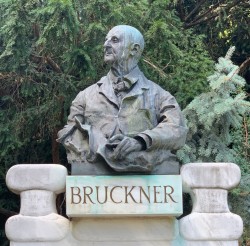 Anton Bruckner, the bicentenary
of whose birth falls this week, wrote music of extremes: blazing
orchestral tuttis and sparsely-textured woodwind solos, extended lyrical
outpourings and fragmented thematic cells punctuated by pauses. In its
turn, this music seems to prompt either fanatical devotion or downright
incomprehension (as it did during Bruckner’s lifetime), all of which –
combined with the sheer scale and duration of the symphonies that form
the bulk of his output – can make it seem rather forbidding to the
uninitiated. There are other factors that can be off-putting, too: the
multiple versions and editions of many of Bruckner’s symphonies (he was
an inveterate reviser, often at the behest of well-meaning but misguided
acolytes), the intensely religious nature of the man himself and the
quasi-religious fervour of many of his admirers, and the posthumous
appropriation of his music by the Nazi regime in the 1930s and 40s.
Anton Bruckner, the bicentenary
of whose birth falls this week, wrote music of extremes: blazing
orchestral tuttis and sparsely-textured woodwind solos, extended lyrical
outpourings and fragmented thematic cells punctuated by pauses. In its
turn, this music seems to prompt either fanatical devotion or downright
incomprehension (as it did during Bruckner’s lifetime), all of which –
combined with the sheer scale and duration of the symphonies that form
the bulk of his output – can make it seem rather forbidding to the
uninitiated. There are other factors that can be off-putting, too: the
multiple versions and editions of many of Bruckner’s symphonies (he was
an inveterate reviser, often at the behest of well-meaning but misguided
acolytes), the intensely religious nature of the man himself and the
quasi-religious fervour of many of his admirers, and the posthumous
appropriation of his music by the Nazi regime in the 1930s and 40s.Little wonder, then, that for many listeners the way into Bruckner’s music is through the more compact and immediately appealing (though no less characterful) world of his choral motets: epigrammatic by comparison with the symphonies and masses, yet still encompassing a vast expressive and dynamic range (as in the ever-popular Locus iste and Christus factus est for unaccompanied choir). For others, his slender chamber music output (not least the F major String Quintet with its glorious Adagio slow movement) has – for all its symphonic breadth – an intimate charm which is far more beguiling than the monumentality of the symphonies.
Yet inevitably it is the symphonies – the genre which occupied the composer almost exclusively for the last three decades of his life – that attract the most attention. Among the issues that might discourage newcomers to Bruckner’s music is the fact that in addition to the nine numbered symphonies (with the Ninth surviving as a three-movement, its finale left incomplete at the composer’s death) there are a further two, in D minor (‘No.0’, dating between the official First and Second symphonies), and the early ‘Study’ Symphony in F minor (sometimes labelled ‘No.00’). Furthermore, no fewer than five of the symphonies (Nos. 1–4 and No.8) exist in multiple versions; and, among the even more numerous published editions that have appeared from Bruckner’s lifetime onwards, some are blatant travesties while others indulge in a ‘mix and match’ of various versions. (The most famous example is the Robert Haas edition of No.8, which grafts onto Bruckner’s revised version of 1890 passages from the earlier 1887 version, creating a hybrid that is still favoured by several eminent Brucknerians.)
The potential confusion arising from these factors led Deryck Cooke in 1969 to publish a famous article optimistically titled ‘The Bruckner Problem Simplified’ and for many decades the general thrust of Cooke’s argument divided Brucknerians between the editions of Robert Haas (general editor of the International Bruckner Society edition until 1945) and those of his successor (and gatekeeper for many decades of the Bruckner archives in Vienna) Leopold Nowak. If anything, since the 1990s the situation has become yet more complex (although Brucknerians might prefer the term ‘nuanced’), as further editorial refinements and in-between versions have been prepared by editors including the late William Carragan and Benjamin-Gunnar Cohrs, as well as Benjamin Korstvedt and Paul Hawkshaw. At the same time there has been an element of revisionism from some who have embraced long-discredited editions like the heavily-cut and rescored edition of the Fifth Symphony by Franz Schalk (once favoured by Hans Knappertsbusch but few others).
Amid this veritable avalanche of musicological detail, the blazing originality of Bruckner’s creations can sometimes be overlooked: the astonishingly ambitious musical architecture, the bold harmonic and textural juxtapositions, the fruitful interplay of often lively foreground figuration and patiently-paced underlying pulse. Some of the original versions (of the Third and Fourth symphonies, for example) may feel lacking in focus compared with the relative clarity of the tauter revisions, but equally the latter may feel for some listeners to be lacking in freshness or too-brutally pruned (a common criticism levelled at the third version of No.3).
For the neophyte, the time-honoured safe entry points have been the ardently lyrical Seventh Symphony (which, thankfully, exists in essentially just one authentic version) and the scarcely less appealing No.4 (the ‘Romantic’) with its wonderfully evocative horns calls and ‘hunting’ Scherzo. But there is no one-size-fits all recommendation: my own way into Bruckner’s soundworld came via the austere magnificence of the contrapuntally intricate Fifth Symphony and the edge-of-the-beyond Ninth, closely followed by the compelling imperfections of the Third.
Probably the most important recommendation in this bicentennial year is to programmers and record companies: a plea for greater clarity in identifying which version and which edition is being used for a particular performance. This information is helpful not just for the cognoscenti, but also for those newcomers trying to negotiate their way around Bruckner’s multi-faceted, potentially life-transforming output. Pity the poor soul who has fallen in love with a particular symphony in one version, only to discover (as can easily happen with the Third, Fourth and Eighth) that the recording they have subsequently purchased contains often radically different music!
To their aid has come the newly collected ‘Complete Versions Edition’ recently completed on the Capriccio label under conductor Markus Poschner, and due for imminent release as a box set on Naxos. While the reviews of the individual releases have ranged from enthusiastic to mixed, the opportunity to have all the main versions of each symphony collected together is too good to miss. Meanwhile, the impecunious might explore the Suisse Romande cycle recently reissued by Brilliant Classics under the assured direction of Marek Janowski. In individual symphonies, the options range from the downright iconoclastic (Mario Venzago on CPO), via the briskly-paced Norrington (SWR Classic) to the controversially long-winded (Sergiu Celibidache on Warner). Seasoned Brucknerians still sing the praises of Furtwängler, Klemperer, Böhm, Karajan and Giulini (the latter’s traversal of the Ninth with the Vienna Philharmonic on DG remains a thing of wonder).
Latest Posts
Music of the Iberian Peninsula, Part 3: More observations on the Golden Age
16th June 2026
Our last visit to the Iberian peninsula, a fortnight ago, was an insanely ambitious, necessarily broad-brush survey of the Spanish and Portuguese Golden Age, covering vocal and instrumental music, the sacred and the secular. This week, we take a more concise and (I hope) focussed look at a few of the sacred vocal masterpieces which exemplify the particular fervour and intensity of this remarkable period of musical history. They reflect the special place the peninsula had as a bulwark against the Reformation that had taken... read more
read more
Music of the Iberian Peninsula, Part 3: More observations on the Golden Age
16th June 2026
Our last visit to the Iberian peninsula, a fortnight ago, was an insanely ambitious, necessarily broad-brush survey of the Spanish and Portuguese Golden Age, covering vocal and instrumental music, the sacred and the secular. This week, we take a more concise and (I hope) focussed look at a few of the sacred vocal masterpieces which exemplify the particular fervour and intensity of this remarkable period of musical history. They reflect the special place the peninsula had as a bulwark against the Reformation that had taken... read more
read more
Carl Schachter, Arnold Whittall, and why music analysis matters
9th June 2026
Two recent deaths have robbed the world of music analysis of a pair of its most revered figures. Carl Schachter, who has died at the age of 93, was a pupil of (and subsequently collaborator with) Felix Salzer, himself one of Heinrich Schenker’s foremost students. Schachter continued to enrich and broaden the teaching of Schenkerian analysis, including important work on its application to issues of rhythm (which Schenker, focussing on harmonic and contrapuntal matters, largely bypassed). His influence went well beyond the... read more
read more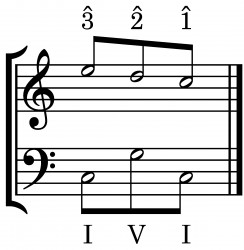
Carl Schachter, Arnold Whittall, and why music analysis matters
9th June 2026
Two recent deaths have robbed the world of music analysis of a pair of its most revered figures. Carl Schachter, who has died at the age of 93, was a pupil of (and subsequently collaborator with) Felix Salzer, himself one of Heinrich Schenker’s foremost students. Schachter continued to enrich and broaden the teaching of Schenkerian analysis, including important work on its application to issues of rhythm (which Schenker, focussing on harmonic and contrapuntal matters, largely bypassed). His influence went well beyond the... read more
read more
Music of the Iberian Peninsula, Part 2: ‘O quam gloriosum’ – The Spanish and Portuguese Golden Age
2nd June 2026
Over the past fortnight, I’ve been bathed in the most glorious, radiant, transformative light. Not the UK’s recent unseasonable heatwave, but the extraordinary vocal polyphony of the Siglo de Oro: the Spanish (and Portuguese) ‘Golden Century’. Extending from the late 15th to the early 17th century, this was a time of remarkable artistic flowering on the Iberian Peninsula, coinciding with the emergence of Spain and Portugal as global imperial powers with extensive colonial territories in the Americas, Africa and Asia. The... read more
read more