 FREE UK SHIPPING OVER £35!
The Spin Doctor Europadisc's Weekly Column
Two British Anniversaries
13th August 2024
13th August 2024
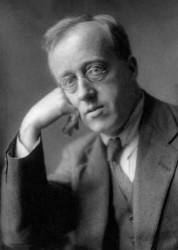 Bruckner, Smetana, Puccini, Fauré, Busoni, Suk… This year’s multiple musical anniversaries aren’t restricted to continental European composers alone. 2024 also brings significant milestones for two hugely significant figures in British music, one with Irish roots who made a lasting contribution to Anglican liturgical music, the other with continental ancestry who brought together such influences as English folksong and Hindu mysticism to create a uniquely fascinating body of work.
Born in Dublin into a family of distinguished Irish lawyers, Charles Villiers Stanford (1852–1924) grew up in a highly cultured household whose musical gatherings attracted such figures as the great Hungarian violinist Joseph Joachim. Stanford’s musical gifts were evident from an early age, and his school years introduced him to the music of Bach, Schumann and Brahms (the latter a lasting influence), to go with his early knowledge of Handel and Mendelssohn (two composers who in those days were positively de rigueur). He gained a classical scholarship to Cambridge, where he was also organ scholar at Queen’s College – and so began the unequal struggle between his official studies and his love of music, which saw him appointed assistant conductor (and subsequently conductor) of the Cambridge University Musical Society (CUMS), and in 1873 organist at Trinity College.
Stanford’s earliest compositions date before his Cambridge years, but in the mid-1870s he furthered his musical studies abroad, first in Leipzig (where he said of his composition teacher, Reinecke, ‘Of all the dry musicians I have ever known he was the most desiccated’), and then in Berlin (with the more congenial Friedrich Kiel). Back in Cambridge, he brought CUMS to greater prominence, not least with the first English performance of Brahms’s First Symphony (conducted by Joachim), while also establishing a formidable reputation with his own compositions. In 1883 he joined the staff of the Royal College of Music, where his many students – including the likes of Vaughan Williams, Bridge, Coleridge-Taylor, Howells and Ireland – led to him being regarded as the father-figure of the English musical Renaissance at the turn of the century.
In 1887, at the age of 35, Stanford was appointed professor of music at Cambridge, raising standards for the MusB course and continuing his activities as a conductor. By the time of his death on 29 March 1924 he was perceived as an increasingly conservative figure, both musically and politically. He had never embraced the more extreme chromaticism of Wagner and the New German School, instead combining a Brahmsian structural rigour with strains of Mendelssohnian lightness and lyricism. Yet his reactionary reputation – a necessary foil off which the bolder leanings of his students could bounce? – masks an unerring sense of craftsmanship, coupled at its best with formal clarity, which make the lesser-known corners of his output ripe for exploration.
Of his four great settings of the Evening Canticles, only the A major Service was originally conceived with orchestral accompaniment, yet the orchestral versions of the double-choir B flat Service and the raptly soaring G major one are also well worth hearing. Of Stanford’s seven symphonies, the Third (the ‘Irish’) is certainly the most compelling (it was championed by both Mengelberg and Mahler), and the chamber music contains many delightful jewels. The success as an opera composer by which Stanford set such great store eluded him, but the recent semi-professional premiere recording of his final opera The Travelling Companion (1916) – a fairy-tale plot with elements of Turandot in the story – demonstrates a sure feeling for wistful lyricism. If vocal music was Stanford’s strongest suit, however, it is probably his 1904 Songs of the Sea (together with its 1910 sequel, Songs of the Fleet) that presents the strongest combination of Brahmsian muscularity with sensitive, affecting lyricism.
Among Stanford’s many RCM students was one who carved for himself a very distinctive place in English music. Best known now for his suite for large orchestra The Planets, Gustav Holst (1874–1934) could trace his forebears to Latvia, Sweden, Germany and Russia. These cosmopolitan roots may have laid the groundwork for a mind that sought ideas from the widest possible canvas. A sickly childhood put paid to any career as a solo instrumentalist, but at the RCM he studied composition and trombone, and in his early career worked as a repetiteur as well as an orchestral trombonist. His 1905 appointment as head of music at St Paul’s Girls’ School in Hammersmith was an important moment: he remained in the post for the rest of his life, and teaching was an important springboard for his compositional activities.
Together with fellow-student and lifelong friend Ralph Vaughan Williams, Holst was early on taken up with the English folksong revival, which proved a catalyst not only in terms of style (e.g. the Somerset Rhapsody of 1906) but also of medium, as he became a gifted composer for the voice, from part-songs and choruses to opera. He also developed a keen interest in Sanskrit literature, and this – together with a 1908 holiday in Algeria – broadened his outlook well beyond European horizons, and indeed beyond the faux-orientalism of many of his contemporaries. In particular, his deep interest in Hindu mysticism led to two of his masterpieces, the Choral Hymns from the ‘Rig Veda’ in his own translation (1908–14), and the 30-minute chamber opera Sāvitri (1908), whose succinct dimensions seem to have acted – counterintuitively – as something of a barrier to wider uptake and recognition.
It is, perhaps, little wonder that the stupendously scored Planets has scored such phenomenal success, particularly since the advent of hi-fi recording, yet it has cast a long shadow over the rest of Holst’s output, and its frequent programming on space-themed programmes is a distortion of its astrological roots. In Holst’s own opinion, his masterpiece was the very different, sparser and far more subdued Egdon Heath (1927), a homage to the work of Thomas Hardy which even numbered the late Harrison Birtwistle among its admirers. Like the transcendent Hymn of Jesus (1917) and much else in his vocal and orchestral output, it deserves to emerge from The Planets’ shadows, and next month – marking Holst’s sesquicentenary on 21 September – is the ideal time for listeners to take a closer look at the many underexplored byways of this unusually interesting figure from 20th-century English music.
Recommended recordings:
I Was Glad: Sacred Music of Stanford & Parry (King’s Consort) VIVAT101
Stanford – Songs of the Sea, Songs of the Fleet (Finley / Hickox) CHSA5043
Stanford - The Travelling Companion (New Sussex Opera) SOMMCD2742
Holst - Hymn of Jesus, Egdon Heath, The Perfect Fool, Folk Songs (Boult) ALC1359
Holst - Sāvitri, The Planets, The Perfect Fool Ballet Suite, etc. (historic & archive recordings) ARIADNE5030-2
Latest Posts
Music of the Iberian Peninsula, Part 3: More observations on the Golden Age
16th June 2026
Our last visit to the Iberian peninsula, a fortnight ago, was an insanely ambitious, necessarily broad-brush survey of the Spanish and Portuguese Golden Age, covering vocal and instrumental music, the sacred and the secular. This week, we take a more concise and (I hope) focussed look at a few of the sacred vocal masterpieces which exemplify the particular fervour and intensity of this remarkable period of musical history. They reflect the special place the peninsula had as a bulwark against the Reformation that had taken... read more
read more
Music of the Iberian Peninsula, Part 3: More observations on the Golden Age
16th June 2026
Our last visit to the Iberian peninsula, a fortnight ago, was an insanely ambitious, necessarily broad-brush survey of the Spanish and Portuguese Golden Age, covering vocal and instrumental music, the sacred and the secular. This week, we take a more concise and (I hope) focussed look at a few of the sacred vocal masterpieces which exemplify the particular fervour and intensity of this remarkable period of musical history. They reflect the special place the peninsula had as a bulwark against the Reformation that had taken... read more
read more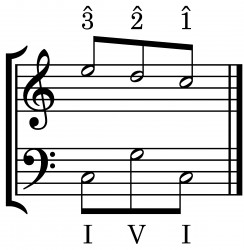
Carl Schachter, Arnold Whittall, and why music analysis matters
9th June 2026
Two recent deaths have robbed the world of music analysis of a pair of its most revered figures. Carl Schachter, who has died at the age of 93, was a pupil of (and subsequently collaborator with) Felix Salzer, himself one of Heinrich Schenker’s foremost students. Schachter continued to enrich and broaden the teaching of Schenkerian analysis, including important work on its application to issues of rhythm (which Schenker, focussing on harmonic and contrapuntal matters, largely bypassed). His influence went well beyond the... read more
read more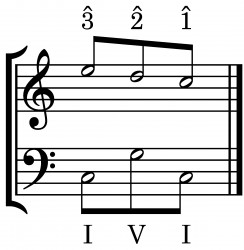
Carl Schachter, Arnold Whittall, and why music analysis matters
9th June 2026
Two recent deaths have robbed the world of music analysis of a pair of its most revered figures. Carl Schachter, who has died at the age of 93, was a pupil of (and subsequently collaborator with) Felix Salzer, himself one of Heinrich Schenker’s foremost students. Schachter continued to enrich and broaden the teaching of Schenkerian analysis, including important work on its application to issues of rhythm (which Schenker, focussing on harmonic and contrapuntal matters, largely bypassed). His influence went well beyond the... read more
read more
Music of the Iberian Peninsula, Part 2: ‘O quam gloriosum’ – The Spanish and Portuguese Golden Age
2nd June 2026
Over the past fortnight, I’ve been bathed in the most glorious, radiant, transformative light. Not the UK’s recent unseasonable heatwave, but the extraordinary vocal polyphony of the Siglo de Oro: the Spanish (and Portuguese) ‘Golden Century’. Extending from the late 15th to the early 17th century, this was a time of remarkable artistic flowering on the Iberian Peninsula, coinciding with the emergence of Spain and Portugal as global imperial powers with extensive colonial territories in the Americas, Africa and Asia. The... read more
read more