 FREE UK SHIPPING OVER £35!
The Spin Doctor Europadisc's Weekly Column
More Anniversaries: Busoni & Suk
7th August 2024
7th August 2024
 2024 is an unusually rich year for musical anniversaries. Most prominent in live performances and on disc have been the Bruckner and Smetana bicentenaries (both were born in 1824), as well as the 100th anniversary of the death of Gabriel Fauré. But we ought not to overlook several composers of second rank (though decidedly not second-rate!) for whom this year is also a significant one. Among them are two composer-performers whose lives centred on a slightly skewed vertical axis through the heart of central Europe, and whose output has only gradually won wider attention and appreciation in recent times.
During his lifetime, the Tuscan-born Ferruccio Busoni (1866–1924) was acclaimed as a child prodigy and one of the leading piano virtuosos of the early 20th century. For much of last century he was best remembered for his prolific editions and transcriptions of the music of J.S. Bach, not least his celebrated piano transcription of the Chaconne from Bach’s D minor Partita for solo violin – surely the best-known of the many arrangements of this iconic work. Yet his original compositional output, begun at an early age, was rather neglected by all but a handful of champions (his pupil Egon Petri being chief among them), while his voluminous writings – with the notable exception of the Sketch for a New Aesthetic of Music (1907, rev. 1916) – are still largely unpublished.
Busoni’s performing career took him from German-speaking Trieste, where he grew up (although he later remarked that, thanks to his prodigious talents, he never had a childhood), across the length and breadth of Europe, and from Moscow to the United States, while his studies were in those two august seats of musical learning, Vienna and Leipzig. Even before he embarked on a teaching career of his own in Berlin, his list of contacts in the musical world alone reads like a Who’s Who of the era, while he was in encouraging the careers of Schoenberg and Weill (the latter the most prominent of his many pupils). Other composers whose music he promoted included Bartók, Elgar and Sibelius.
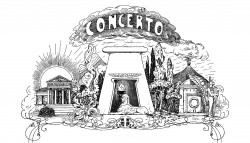
Acutely conscious of his Italian roots, Busoni was himself a Renaissance man, whose interests encompassed the wider arts as well as politics. He was also a musical visionary, but one who faced, Janus-like, towards the past as much as to the future. His mature output pushed music to the bounds of tonality but never quite beyond (as Schoenberg and his school were to do), and always with a sophisticated and refined sense of form. Several of his works, including the monumental Piano Concerto of 1903–04, are prefaced with architectural schemata which reflect his talents as a draughtsman (see illustration), and that work in particular highlights the two poles of Germanic formal rigour and Italianate grace and suppleness that characterised all his music.
Busoni’s musical tastes and knowledge were broad, but his reverence for the music of Bach as well as his own skills as performer ensured that the piano held central place in his output. But he was also drawn to the world of opera, the ultimate medium (he felt) for theatrical communication, though he scorned Wagnerian music-drama. He wrote his own libretti for his four operas, Die Brautwahl (1912), Arlecchino and Turandot (both 1917), and Doktor Faust (completed after Busoni’s death by his pupil Philipp Jarnach). The last of these is perhaps his greatest musical achievement, and the string of ‘satellite’ works that fed into it is a long one. With Kent Nagano’s splendid 1999 recording currently out of the catalogue, it is Marc-André Hamelin’s marvellous survey of the late piano works (including the Elegies and Sonatinas) that provides the best corrective to the long-held view that Busoni was a composer who never quite matched the promise or vision of his aesthetic writings.
Although no prodigy like Busoni, the Czech composer Josef Suk (1874–1935) combined a successful performing career (as violinist in the Czech Quartet) with compositional and teaching activities. The Czech Quartet was one of the most acclaimed chamber groups in the early 20th century, and their concert tours undoubtedly introduced Suk to a wider range of musical styles and influences than would otherwise have been the case. Unlike his mentor and eventual father-in-law Dvořák, Suk had no use in his own compositions for folk style, although his earlier works – including the Serenade for Strings and the incidental music for Julius Zeyer’s Radúz and Mahulena (subsequently arranged as the orchestral suite Fairy Tale) – have an abundant Bohemian charm to them. Curiously for such an accomplished string player, there is relatively little for Suk’s own instrument, either as soloist or in chamber groups, though the G minor Fantasy for violin and orchestra and the B flat major String Quartet, op.11, are among the notable exceptions.
Instead, one of the most frequent outlets for Suk’s most intimate musical thoughts was the piano, and the two cycles About Mother, op.28 (1907), and Things Lived and Dreamt, op.30 (1909), form the peak of this still undervalued corner of his oeuvre. Two devastating blows in 1904 and 1905 – the deaths of Dvořák and then of his daughter (and Suk’s young wife) Otilie – proved the catalyst for the composer’s mature style. His monumental ‘Asrael’ Symphony (named after the mythological Angel of Death) formed the first part of an orchestral tetralogy which – when performing and teaching schedules allowed – took up more of Suk’s energies in his later years. While Asrael is now somewhat belatedly acclaimed as a masterpiece, the other works in the cycle – A Summer’s Tale (1907–9), Ripening (1912–17) and the vocal-orchestral Epilogue (1920–29) – still deserve wider currency, notwithstanding the pioneering efforts of the late Jiří Bělohlávek and Libor Pešek. Their sophisticated scoring and brooding soundworld (with flashes of the Mahlerian macabre) constitute a thoroughly distinctive take on the post-Straussian symphonic poem, very different from those of Suk’s compatriots Smetana and Dvořák, and deeply infused with the fears, anxieties and hopes of life in a new century.
Recommended recordings:
Busoni - Piano Concerto (Gerstein, BSO / Oramo) MYR024
Busoni - Late Piano Music (Hamelin) CDA679513
Suk - Asrael (Czech PO / Mackerras) SU40432
Suk - Prague, A Summer’s Tale (BBCSO / Bělohlávek) CHSA5109
Suk - Piano Works (Pavel Štěpán) SU38202
Latest Posts
Music of the Iberian Peninsula, Part 3: More observations on the Golden Age
16th June 2026
Our last visit to the Iberian peninsula, a fortnight ago, was an insanely ambitious, necessarily broad-brush survey of the Spanish and Portuguese Golden Age, covering vocal and instrumental music, the sacred and the secular. This week, we take a more concise and (I hope) focussed look at a few of the sacred vocal masterpieces which exemplify the particular fervour and intensity of this remarkable period of musical history. They reflect the special place the peninsula had as a bulwark against the Reformation that had taken... read more
read more
Music of the Iberian Peninsula, Part 3: More observations on the Golden Age
16th June 2026
Our last visit to the Iberian peninsula, a fortnight ago, was an insanely ambitious, necessarily broad-brush survey of the Spanish and Portuguese Golden Age, covering vocal and instrumental music, the sacred and the secular. This week, we take a more concise and (I hope) focussed look at a few of the sacred vocal masterpieces which exemplify the particular fervour and intensity of this remarkable period of musical history. They reflect the special place the peninsula had as a bulwark against the Reformation that had taken... read more
read more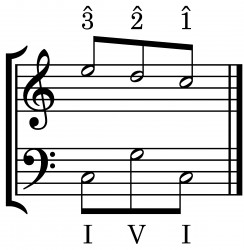
Carl Schachter, Arnold Whittall, and why music analysis matters
9th June 2026
Two recent deaths have robbed the world of music analysis of a pair of its most revered figures. Carl Schachter, who has died at the age of 93, was a pupil of (and subsequently collaborator with) Felix Salzer, himself one of Heinrich Schenker’s foremost students. Schachter continued to enrich and broaden the teaching of Schenkerian analysis, including important work on its application to issues of rhythm (which Schenker, focussing on harmonic and contrapuntal matters, largely bypassed). His influence went well beyond the... read more
read more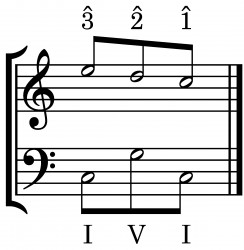
Carl Schachter, Arnold Whittall, and why music analysis matters
9th June 2026
Two recent deaths have robbed the world of music analysis of a pair of its most revered figures. Carl Schachter, who has died at the age of 93, was a pupil of (and subsequently collaborator with) Felix Salzer, himself one of Heinrich Schenker’s foremost students. Schachter continued to enrich and broaden the teaching of Schenkerian analysis, including important work on its application to issues of rhythm (which Schenker, focussing on harmonic and contrapuntal matters, largely bypassed). His influence went well beyond the... read more
read more
Music of the Iberian Peninsula, Part 2: ‘O quam gloriosum’ – The Spanish and Portuguese Golden Age
2nd June 2026
Over the past fortnight, I’ve been bathed in the most glorious, radiant, transformative light. Not the UK’s recent unseasonable heatwave, but the extraordinary vocal polyphony of the Siglo de Oro: the Spanish (and Portuguese) ‘Golden Century’. Extending from the late 15th to the early 17th century, this was a time of remarkable artistic flowering on the Iberian Peninsula, coinciding with the emergence of Spain and Portugal as global imperial powers with extensive colonial territories in the Americas, Africa and Asia. The... read more
read more