 FREE UK SHIPPING OVER £35!
The Spin Doctor Europadisc's Weekly Column
Bedřich Smetana: The Father of Czech Opera
30th July 2024
30th July 2024
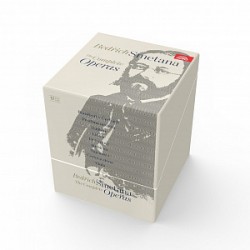
Although widely known for his cycle of symphonic poems Má vlast and chamber music (particularly the Piano Trio and String Quartet no.1 ‘From My Life’), Smetana’s greatest importance was as the father of Czech opera. Long renowned for their firmly rooted musical traditions, in the mid-19th century the Czech lands and their historic capital of Prague still lacked the native-language theatres and operatic repertoire that were regarded as essential parts of the nation-building project, at a time when national consciousness was fast growing. There had been other composers of Czech-language opera – names like František Škroup, František Skuherský and Karel Šebor – but they provided just isolated examples.
All that changed with Smetana. His first opera, The Brandenburgers in Bohemia (1862–63, premiered in January 1866) was composed in response to a competition for historical or comic operas with a national theme. The Brandenburgers admirably fitted the bill, focussing on the period of 13th-century occupation of the Czech crown lands by the forces of Otto of Brandenburg. Smetana’s opera concentrates on the plight of ordinary Czechs caught up in these historic events, and was deemed progressive on account of its ‘Wagnerian’ harmonic language.
Smetana’s turned in his next opera to the genre of village comedy. Originally premiered in May 1866 and subsequently revised to replace the spoken dialogue with singing, The Bartered Bride has – thanks to its infectious tunes, catchy dances and dazzling overture – become the very epitome of Czech opera, but it was no overnight success. Like The Brandenburgers and his next opera, Dalibor (1865–67), it suffers from the poor word-setting that at first hampered the composer, who had been educated in German and had no feel for the distinctive stress patterns of the Czech language.
In time, The Bartered Bride became a huge hit, both at home and abroad. Smetana was irked by this success, dismissing it as ‘really just a trifle’. With its historical subject (set in 15th-century Prague) and more taxing vocal demands (the title role calls for a Heldentenor, the heroine Milada a dramatic soprano), Dalibor was another matter entirely. Ironically, it was only after Smetana’s death that its true dramatic stature came to be appreciated, since when it has secured a special place in the Czech repertoire and is regarded by many cognoscenti as his greatest opera.
The subject matter of Smetana’s fourth opera went back even further, to the founding myths of the Czech nation and the legendary queen Libuše, who with her ploughman husband Přemysl founded the Přemyslid dynasty. Originally composed to mark the (abandoned) coronation of Emperor Franz Josef as King of Bohemia, Libuše was eventually premiered at the opening of Prague’s National Theatre in June 1881. Although it doesn’t lack moments of drama, this is essentially a pièce d’occasion which culminates in Libuše’s prophecy and a grand tableau of pages from Czech history. It remains a staple work at moments of national significance.
Smetana’s fifth opera was in a different direction altogether, a sophisticated but sparkling bourgeois comedy on a French subject. The Two Widows (1874, subsequently revised with recitatives instead of dialogue) is the tale of two contrasting cousins, the energetic Karolina and more introspective Anežka, and the latter’s eventually successful wooing by her suitor Ladislav (but only after he has contrived to be arrested for poaching). The libretto by Emanuel Züngel features the trochaic rhythms characteristic of the polka, a national dance at which Smetana was becoming increasingly adept. With its plot concerning the overcoming of obstacles to marriage by characters in middle age, it anticipates Smetana’s final three operas, written in collaboration with the librettist Eliška Krásnohorská, at a time when deafness and increasing ill-health had forced the composer to give up his activities as an opera conductor.
The Kiss (1876) and The Secret (1878) have slender, almost naïve plots, but they drew forth from Smetana a tenderness and poignancy which leads many connoisseurs to rank them – along with The Two Widows – among the composer’s greatest achievements, accompanied by a return to a folk milieu which now fits Smetana like a glove. (Exceptionally, Smetana included an actual folk song in The Kiss, but his grasp of the idiom was such that many other pages evoke the same feelings.) Smetana’s last opera was the ‘comic-romantic’ The Devil’s Wall, with an aristocratic 13th-century setting. The complications of comic opera suited Krásnohorská less well than the more lyrical worlds of the previous two works, and Smetana’s ill health was taking its toll, but at its best The Devil’s Wall – named after a striking natural feature in the Vltava river – manages to recapture the special magic of its immediate predecessors.
Over the years, the Czech label Supraphon has recorded all Smetana’s operas, in some cases several times over. Now, to mark this year’s bicentenary, they are reissuing all eight (plus the unfinished first Krásnohorská collaboration, Viola, based on Shakespeare’s Twelfth Night), in recordings dating from 1960 to 1983. Based on an original LP edition issued in the mid-1980s, all the recordings have been newly remastered, in most cases resulting in greater vividness compared with previous CD reissues, although the fanfare trumpets in Dalibor are still marred by harshness, and the live 1983 recording of Libuše seems curiously veiled. While one could quibble over the individual choices of recordings, the casts are distinguished ones: Gabriela Beňačková and Peter Dvorský as the leads in The Bartered Bride, Beňačková in the title role in Libuše), and the conducting of Zdeněk Košler in both these works and The Secret is commanding. But the most pleasant surprises are elsewhere: a grippingly dramatic 1963 account of The Brandenburgers under Jan Hus Tichý, boasting a cast including Milada Šubrtová, Věra Soukupová, Ivo Žídek and Eduard Haken. Just as vivid is a 1963 Dalibor under the veteran Jaroslav Krombholc, with the great Vilém Přibyl in the title role and Naděžda Kniplová as Milada.
A 1975 account of The Two Widows under František Jílek may have marginally less charm than the old Krombholc recording, but is still a gem of a performance, as is a 1980 Brno recording (all the others are from Prague) of The Kiss under František Vajnar. The Devil’s Wall finds a most persuasive champion in the great Zdeněk Chalabala with a strong cast and 1960 recording that scrubs up very well. Most of these recordings have been available only fitfully in the past. Now handsomely presented with informative booklets as separate 2- and 3-disc sets in a nicely designed, limited edition box at a sensible price, this is a collection that no lover of Czech music or 19th-century opera should be without.
The Recording:
Smetana - The Complete Operas SU43352
Latest Posts
Music of the Iberian Peninsula, Part 3: More observations on the Golden Age
16th June 2026
Our last visit to the Iberian peninsula, a fortnight ago, was an insanely ambitious, necessarily broad-brush survey of the Spanish and Portuguese Golden Age, covering vocal and instrumental music, the sacred and the secular. This week, we take a more concise and (I hope) focussed look at a few of the sacred vocal masterpieces which exemplify the particular fervour and intensity of this remarkable period of musical history. They reflect the special place the peninsula had as a bulwark against the Reformation that had taken... read more
read more
Music of the Iberian Peninsula, Part 3: More observations on the Golden Age
16th June 2026
Our last visit to the Iberian peninsula, a fortnight ago, was an insanely ambitious, necessarily broad-brush survey of the Spanish and Portuguese Golden Age, covering vocal and instrumental music, the sacred and the secular. This week, we take a more concise and (I hope) focussed look at a few of the sacred vocal masterpieces which exemplify the particular fervour and intensity of this remarkable period of musical history. They reflect the special place the peninsula had as a bulwark against the Reformation that had taken... read more
read more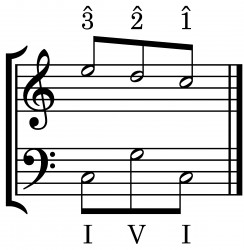
Carl Schachter, Arnold Whittall, and why music analysis matters
9th June 2026
Two recent deaths have robbed the world of music analysis of a pair of its most revered figures. Carl Schachter, who has died at the age of 93, was a pupil of (and subsequently collaborator with) Felix Salzer, himself one of Heinrich Schenker’s foremost students. Schachter continued to enrich and broaden the teaching of Schenkerian analysis, including important work on its application to issues of rhythm (which Schenker, focussing on harmonic and contrapuntal matters, largely bypassed). His influence went well beyond the... read more
read more
Carl Schachter, Arnold Whittall, and why music analysis matters
9th June 2026
Two recent deaths have robbed the world of music analysis of a pair of its most revered figures. Carl Schachter, who has died at the age of 93, was a pupil of (and subsequently collaborator with) Felix Salzer, himself one of Heinrich Schenker’s foremost students. Schachter continued to enrich and broaden the teaching of Schenkerian analysis, including important work on its application to issues of rhythm (which Schenker, focussing on harmonic and contrapuntal matters, largely bypassed). His influence went well beyond the... read more
read more
Music of the Iberian Peninsula, Part 2: ‘O quam gloriosum’ – The Spanish and Portuguese Golden Age
2nd June 2026
Over the past fortnight, I’ve been bathed in the most glorious, radiant, transformative light. Not the UK’s recent unseasonable heatwave, but the extraordinary vocal polyphony of the Siglo de Oro: the Spanish (and Portuguese) ‘Golden Century’. Extending from the late 15th to the early 17th century, this was a time of remarkable artistic flowering on the Iberian Peninsula, coinciding with the emergence of Spain and Portugal as global imperial powers with extensive colonial territories in the Americas, Africa and Asia. The... read more
read more