 FREE UK SHIPPING OVER £35!
The Spin Doctor Europadisc's Weekly Column
The Little Things That Matter
23rd July 2024
23rd July 2024
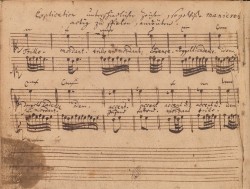 There comes a time in most musicians’ training when the ‘little things’ are introduced: the ornaments that enliven the bare surface of the music and decorate the notes on the page. Like the ornaments on a mantelpiece, or the traceries, grotesques and gargoyles that bring exuberance to a Gothic cathedral, these are small details that are crucial to a sense of style. They include (in standard, modern-day terminology): appoggiaturas and acciaccaturas (‘grace notes’), trills, mordents (the upper or lower inflection of the main note), and turns (the most famous being the inverted turn that characterises Brünnhilde’s leitmotif in Wagner’s Ring).
Although in the hierarchical organisation of music these details typically rank lower than, say, the form, genre, tonality or composer of a musical work, they are often crucial in giving a piece its particular flavour and appeal. As Schoenberg is said to have remarked on seeing a similarly hierarchical analysis by his compatriot Heinrich Schenker, ‘But where are my favourite notes? Ah yes, there – the little black ones.’ Ornamentation is deeply embedded in the history of music, and was no doubt a feature of the earliest, orally transmitted repertoires, if analogous folk traditions are anything to judge by. Certainly the earliest notated music (the neumes of Byzantine and Western liturgical chant) contain ornament-like features such as the quilisma (possibly a type of trill) and plica (a passing note), although their realisation in performance remains largely conjectural.
In the medieval period, the earliest notated polyphony is itself a kind of ‘ornament’: a multi-line elaboration on the fundamental plainchant, either in simple homophony, or more rhythmically animated, as in the more complex forms of organum such as the Notre Dame School of Léonin and Pérotin in the 12th and early 13th centuries. To this type of polyphonic elaboration we can add the art of diminution or ‘division’ that emerged in the Renaissance period and reached its apex in the Baroque, although the flowering of variation form in the Classical and Romantic periods represented a sort of continuation of this art.
Up until the Renaissance, ornamentation was little codified, but what we know of it was common to both vocal and instrumental execution. With the emergence of distinct vocal and instrumental genres and repertoires in the early Baroque, however, the types of ornament began to differ, and there were increasing attempts by music teachers and theorists to codify the many different forms they could take. It is thus that we know about the Monteverdian stile concitato and trillo (a rapidly repeated single note or ‘goat’s trill’, not to be confused with the modern trill), as well as the rich ornamentation of the English virginalists. The even more elaborate ornamentation of the French clavecinistes of the high Baroque represents a highpoint in the history of ornamentation, yet the precise notation and execution of particular figures varied from not just region to region, but teacher to teacher, and even (allegedly) day to day! Any present-day performer confronted with the keyboard works of François Couperin (let alone the unmeasured Préludes of his uncle Louis) needs to immerse themselves in the theoretical works and tables of this period as much as the notes themselves, just to stand a chance in this repertoire.
In non-keyboard instrumental music, a special place belongs to Christopher Simpson’s The Division-Violist: or An Introduction to the Playing upon a Ground (1659), not just for its thorough treatment of the art of diminution, but for its table of ornaments with many distinctive English terms: backfall, elevation, springer, close shake, double relish, etc. The mid-18th century saw the emergence of several theoretical treatises which have become required reading for musicians specialising in ‘early music’: J.J. Quantz’s Versuch einer Anweisung die Flöte traversiere zu spielen (‘On Playing the Flute’, 1752), C.P.E. Bach’s Essay on the True Art of Playing Keyboard Instruments (1753) and Leopold Mozart’s Treatise on the Fundamental Principles of Violin Playing (1756), but the literature is much more extensive and diverse than these three classics might suggest.
While the Classical and early Romantic periods still clung onto certain features of ‘old’ ornamentation practices (Chopin, for instance, still preferred trills to start on the upper note), the beginnings of ‘modern’ practice began to emerge, and with it less reliance on ornament signs and increasingly written-out elaborations. This is a phenomenon that can be observed in J.S. Bach who – unlike his contemporary Handel – preferred a ‘maximalist’ approach, particularly in slow movements, where florid, complex ornamentation was fully notated, leaving nothing to chance, and leading (unfortunately) to some unstylishly slow tempi in many modern-day performances. Chopin’s often dazzlingly elaborate fioritura passages (the quasi-improvisatory flourishes in some of the Nocturnes, for example) are a direct descendant of this tradition.
By the late 19th and early 20th centuries, the old art of ornamentation had been more or less forgotten, though a few historically-conscious composers – most notably Brahms – had preserved some of its essence. But, until the late 1950s, ornamentation had been eased out, not just by the written-out density (both ‘vertical’ and ‘horizontal’) of musical modernism, but by the matter-of-fact utilitarianism of Hindemith’s Gebrauchsmusik and the cool detachment of (ironically) neoclassicism. Yet the increasingly style-conscious early music revival saw a renewed interest in the art of ornamentation. Charles Mackerras’s 1965 performances of Mozart’s The Marriage of Figaro at Sadler’s Wells were a pivotal moment, reintroducing extensive vocal decorations in keeping with the style of the period, while his EMI recording of Handel’s Messiah made at roughly the same time (and reconsidered in the August 2024 issue of Gramophone) was similarly groundbreaking. In the realm of instrumental music, the work of Gustav Leonhardt was hugely influential on several generations of keyboard players, and has become not only ‘mainstream’ (influencing pianists as well as harpsichordist and organists) but also subject to further refinement, as researchers and performers become increasingly aware of geographically distinct traditions and nuances.
It's substantially more than half a lifetime since my first piano and violin teachers taught me that trills should be played absolutely evenly (with never a mention of them starting on the upper note!), and while there may be a few out there who are still wedded to the bad old ways of doing things, the benefits of decades of research are now abundantly evident in countless recordings. So, next time you hear a favourite cadential trill, a magical arabesque in Schumann or Chopin, a heart-teasing vocal appoggiatura or ornamented repeat in a da capo aria, give thanks for the little things…
A Few Recommendations:
Con arte e maestria: Virtuoso Early Baroque Violin Ornamentation RES10282
Hume - Passion & Division CDA67811
L’Arte di diminuire (The Art of Diminution) CC72843
Byrd - Harpsichord Music (Leonhardt) ALPHA348
Classic Mozart Operas (SCO/Mackerras) CR02008
Latest Posts
Music of the Iberian Peninsula, Part 3: More observations on the Golden Age
16th June 2026
Our last visit to the Iberian peninsula, a fortnight ago, was an insanely ambitious, necessarily broad-brush survey of the Spanish and Portuguese Golden Age, covering vocal and instrumental music, the sacred and the secular. This week, we take a more concise and (I hope) focussed look at a few of the sacred vocal masterpieces which exemplify the particular fervour and intensity of this remarkable period of musical history. They reflect the special place the peninsula had as a bulwark against the Reformation that had taken... read more
read more
Music of the Iberian Peninsula, Part 3: More observations on the Golden Age
16th June 2026
Our last visit to the Iberian peninsula, a fortnight ago, was an insanely ambitious, necessarily broad-brush survey of the Spanish and Portuguese Golden Age, covering vocal and instrumental music, the sacred and the secular. This week, we take a more concise and (I hope) focussed look at a few of the sacred vocal masterpieces which exemplify the particular fervour and intensity of this remarkable period of musical history. They reflect the special place the peninsula had as a bulwark against the Reformation that had taken... read more
read more
Carl Schachter, Arnold Whittall, and why music analysis matters
9th June 2026
Two recent deaths have robbed the world of music analysis of a pair of its most revered figures. Carl Schachter, who has died at the age of 93, was a pupil of (and subsequently collaborator with) Felix Salzer, himself one of Heinrich Schenker’s foremost students. Schachter continued to enrich and broaden the teaching of Schenkerian analysis, including important work on its application to issues of rhythm (which Schenker, focussing on harmonic and contrapuntal matters, largely bypassed). His influence went well beyond the... read more
read more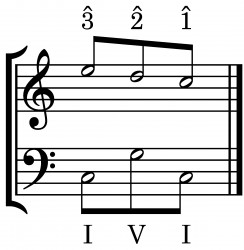
Carl Schachter, Arnold Whittall, and why music analysis matters
9th June 2026
Two recent deaths have robbed the world of music analysis of a pair of its most revered figures. Carl Schachter, who has died at the age of 93, was a pupil of (and subsequently collaborator with) Felix Salzer, himself one of Heinrich Schenker’s foremost students. Schachter continued to enrich and broaden the teaching of Schenkerian analysis, including important work on its application to issues of rhythm (which Schenker, focussing on harmonic and contrapuntal matters, largely bypassed). His influence went well beyond the... read more
read more
Music of the Iberian Peninsula, Part 2: ‘O quam gloriosum’ – The Spanish and Portuguese Golden Age
2nd June 2026
Over the past fortnight, I’ve been bathed in the most glorious, radiant, transformative light. Not the UK’s recent unseasonable heatwave, but the extraordinary vocal polyphony of the Siglo de Oro: the Spanish (and Portuguese) ‘Golden Century’. Extending from the late 15th to the early 17th century, this was a time of remarkable artistic flowering on the Iberian Peninsula, coinciding with the emergence of Spain and Portugal as global imperial powers with extensive colonial territories in the Americas, Africa and Asia. The... read more
read more