 FREE UK SHIPPING OVER £35!
The Spin Doctor Europadisc's Weekly Column
The Greatest Ever? – Remembering Carlos Kleiber
17th July 2024
17th July 2024
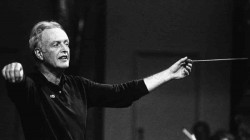 This Saturday marked the 20th anniversary of the death of one of the most acclaimed maestros of the late 20th century. Born in Berlin on 3 July 1930, and raised from 1935 in Argentina, where his family had moved following their departure from Nazi Germany, Carlos Kleiber is regarded by many critics, musicians and music lovers as one of the greatest conductors of all time. He was the son of Erich Kleiber, himself one of the most important conductors of the last century, who had conducted the premieres of Berg’s Wozzeck (1925) and Milhaud’s Christophe Colomb (1930) as well as an important production of Janáček’s Jenůfa (1924) at the Berlin Staatsoper, where he was musical director (1923–34).
Although Erich was against his son pursuing a musical career (with all its attendant precariousness), Carlos inherited the conducting bug, as well as his father’s phenomenal gift for precision, long-term control and musical vibrancy. Added to these qualities (abundantly evident in Erich’s critically lauded recordings) was a febrile intensity and spur-of-the-moment feel that was unique to Carlos. After studying chemistry in Zurich, Carlos worked as a repetiteur in Munich, and soon rose through a series of opera-house posts in Potsdam, Düsseldorf and Duisburg, before becoming first Kapellmeister at the Stuttgart Staatsoper (1966–73).
This time-honoured operatic apprenticeship was as crucial to Carlos’s musicianship as it had been to his father’s. Whether in the opera house or the concert hall, his performances had a theatrical feel, not in the sense of showiness, but of an intense drama being enacted or unfolded before the audience, with a keen sense of timing and rhythmic energy. The Stuttgart job was his last permanent job, but from the 1970s he appeared regularly on the podium of the Bavarian State Opera in Munch, with whose orchestra (the Bayerisches Staatsorchester) he developed a uniquely close working relationship.
For the wider musical world, Kleiber’s breakthrough came with a 1974 recording of Beethoven’s Fifth Symphony (a work at which his father had excelled) with the Vienna Philharmonic Orchestra for Deutsche Grammophon. It bowled over the critics and music lovers alike with its white-hot intensity, and still regularly tops the recommendations for this celebrated work. And it led to further recordings for DG, of Beethoven’s Seventh, Schubert’s Third and ‘Unfinished’ Eighth, as well as an early digital Brahms Fourth, all blessed with the same combination of astonishing vitality and keen sense of detail and drive, as well as phenomenal playing from the Vienna Philharmonic. And there was opera, too: a wonderfully idiomatic Die Fledermaus as well as a Traviata which rivals Toscanini’s for buoyancy and fervency, both with stellar casts and Bavarian State Opera forces; and with Staatskapelle Dresden both Weber’s Der Freischütz (a favourite work of Kleiber senior) and Wagner’s Tristan, the sessions of which were abandoned by Kleiber at a late stage, but from which DG somehow salvaged a complete recording which ranks alongside Furtwängler and Böhm as one of the most compelling and ardent in the catalogue.
The walkout from Tristan was typical of Kleiber’s cancellations in later years: he would often suddenly call an opera house offering to conduct (all such offers were, of course, eagerly accepted), but almost as often suddenly cancel or walk out, so that a standby conductor always had to be ready, even for the two New Year’s concerts he conducted with the Vienna Philharmonic (1989 and 1992). There were eccentric casting choices which sometimes worked fabulously well (Margaret Price as Isolde on DG, a role she never sang live) but sometimes didn’t (Iwan Rebroff as a falsetto Orlovsky in the Fledermaus recording).
In his later years, Kleiber’s repertoire – which had ranged from Telemann through operetta to Butterworth and Berg – contracted to just a few key works (Beethoven’s Fourth and Seventh symphonies were a favourite programme, captured on film with the Concertgebouw, and even more viscerally as live audio recording with the Bavarian State Orchestra). Karajan famously quipped that Kleiber only conducted when the fridge was bare, and his public appearances in later years were rare and always sold-out. I was lucky enough to see him (sadly just the once) conducting an unforgettable Otello at Covent Garden in the mid-1980s, the atmosphere electric from the stormy outset onwards, the dramatic momentum utterly gripping, the ending (with Domingo in the title role and Ricciarelli as Desdemona) unbearably moving.
Was Kleiber ‘the greatest ever’ conductor, as some have claimed? His singular lack of engagement with the music of his own time probably discounts him from this accolade. Toscanini, Walter, Furtwängler, father Erich, Karajan and Böhm were all significant champions of music by their near contemporaries. On the other hand, his knowledge of the repertoire was far broader than his meagre discography (even including live and off-air recordings) would suggest. Though he conducted Das Lied von der Erde (with Christa Ludwig and Waldemar Kmentt), one would love to have heard him in Mahler’s elusive Seventh Symphony, a work which would surely have suited his temperament ideally. Yet the (for him) often scarcely bearable intensity and commitment he brought to every performance, whether in Johann Strauss, Beethoven or Brahms, together with the most elegant baton technique since Nikisch, paradoxically combined to make him probably the most natural conductor ever to have graced the podium.
This month DG are re-releasing Kleiber’s complete audio recordings on DG, both the symphonic and operatic discs, which together have earned what should be a permanent place in the catalogue. Frustratingly, his video recordings for the same label are mostly unavailable at present. Two documentaries (Traces to Nowhere and I am Lost to the World) are compelling viewing, exploring Kleiber’s uniquely self-effacing brilliance. To these, the live Beethoven symphony recordings on Orfeo are essential (above all, the Fourth, from its shaky beginning to its seat-of-the-pants finale), as is the 1992 New Year’s concert (unavailable, but worth seeking out for Johann Strauss II’s Persian March and Josef Strauss’s Music of the Spheres alone). At a time when gushing superlatives have become the norm, Kleiber was one who continues to fully deserve them, a brilliant comet who briefly lit up the musical firmament with unrivalled brightness.
Key Recordings:
Carlos Kleiber: Complete Recordings on DG (CD + Blu-ray Audio) 4863796
Beethoven - Symphony no.4 (Bayerisches Staatsorchester) C100841
Latest Posts
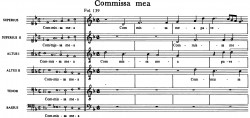
Music of the Iberian Peninsula, Part 3: More observations on the Golden Age
16th June 2026
Our last visit to the Iberian peninsula, a fortnight ago, was an insanely ambitious, necessarily broad-brush survey of the Spanish and Portuguese Golden Age, covering vocal and instrumental music, the sacred and the secular. This week, we take a more concise and (I hope) focussed look at a few of the sacred vocal masterpieces which exemplify the particular fervour and intensity of this remarkable period of musical history. They reflect the special place the peninsula had as a bulwark against the Reformation that had taken... read more
read more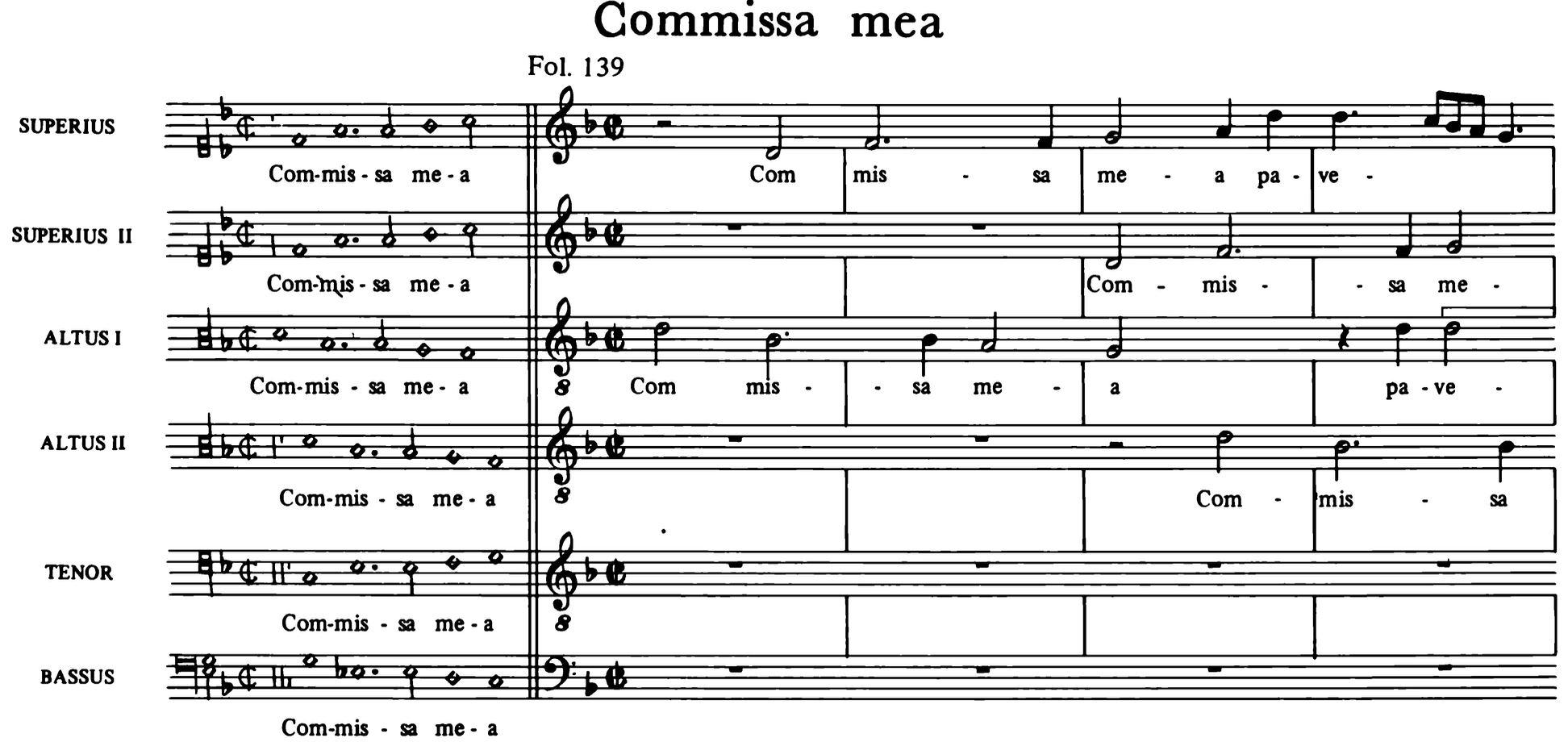
Music of the Iberian Peninsula, Part 3: More observations on the Golden Age
16th June 2026
Our last visit to the Iberian peninsula, a fortnight ago, was an insanely ambitious, necessarily broad-brush survey of the Spanish and Portuguese Golden Age, covering vocal and instrumental music, the sacred and the secular. This week, we take a more concise and (I hope) focussed look at a few of the sacred vocal masterpieces which exemplify the particular fervour and intensity of this remarkable period of musical history. They reflect the special place the peninsula had as a bulwark against the Reformation that had taken... read more
read more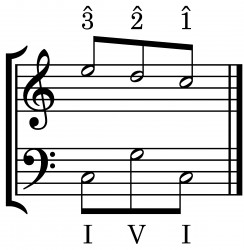
Carl Schachter, Arnold Whittall, and why music analysis matters
9th June 2026
Two recent deaths have robbed the world of music analysis of a pair of its most revered figures. Carl Schachter, who has died at the age of 93, was a pupil of (and subsequently collaborator with) Felix Salzer, himself one of Heinrich Schenker’s foremost students. Schachter continued to enrich and broaden the teaching of Schenkerian analysis, including important work on its application to issues of rhythm (which Schenker, focussing on harmonic and contrapuntal matters, largely bypassed). His influence went well beyond the... read more
read more
Carl Schachter, Arnold Whittall, and why music analysis matters
9th June 2026
Two recent deaths have robbed the world of music analysis of a pair of its most revered figures. Carl Schachter, who has died at the age of 93, was a pupil of (and subsequently collaborator with) Felix Salzer, himself one of Heinrich Schenker’s foremost students. Schachter continued to enrich and broaden the teaching of Schenkerian analysis, including important work on its application to issues of rhythm (which Schenker, focussing on harmonic and contrapuntal matters, largely bypassed). His influence went well beyond the... read more
read more
Music of the Iberian Peninsula, Part 2: ‘O quam gloriosum’ – The Spanish and Portuguese Golden Age
2nd June 2026
Over the past fortnight, I’ve been bathed in the most glorious, radiant, transformative light. Not the UK’s recent unseasonable heatwave, but the extraordinary vocal polyphony of the Siglo de Oro: the Spanish (and Portuguese) ‘Golden Century’. Extending from the late 15th to the early 17th century, this was a time of remarkable artistic flowering on the Iberian Peninsula, coinciding with the emergence of Spain and Portugal as global imperial powers with extensive colonial territories in the Americas, Africa and Asia. The... read more
read more