 FREE UK SHIPPING OVER £35!
The Spin Doctor Europadisc's Weekly Column
Of Satire, Humour and Anthems
10th July 2024
10th July 2024
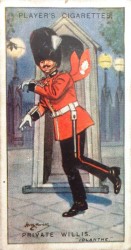
I often think it's comical
How Nature always does contrive
That every boy and every gal
That’s born into the world alive
Is either a little Liberal*
Or else a little Conservative!
Musical humour, however, is notoriously difficult to bring off. Joseph Haydn was the undoubted master, and not just because he introduced the Scherzo movement to the string quartet genre. His ability to wrong-foot the listener with the musical equivalent of a double-take or pun was rooted in his musical language focused on short, highly malleable motifs rather than the long-breathed melodies of Mozart.
Beethoven undoubtedly inherited the art of musical humour from Haydn, but in the younger composer’s hands it became coarser and swarthier as it was thrown into the mix with Beethoven’s middle-period ‘heroic’ phase. The last movement of his final string quartet, in F major, op.135, is headed ‘Der schwer gefasste Entschluss’ (The Difficult Decision), and pits two motifs against each other: ‘Muss es sein?’ (Must it be?) and ‘Es muss sein!’ (It must be!). These originated in a mundane argument over money: something that performers and commentators would do well to remember before going all starry-eyed over the music. (This is a movement rooted in Beethoven’s earthy humour, and a performance that ignores this aspect does so at its peril.)
Humour in music is a tricky subject and, for most composers, rather elusive. As a musical humourist, Haydn is rivalled only by the irresistible high spirits of Rossini’s comic operas (founded, like Haydn, on an inimitable personal style including the famous ‘Rossini crescendo’, in a genre that the Esterházy composer never mastered). After the heady earnestness of the Romantic era, the next great period for musical humour came at the turn of the 20th century. Infused with the anxieties of the time, it was now altogether more prickly: notable examples include Mahler in sardonic mode (sending up established popular genres like military marches and folk Ländler), Charles Ives, and just about the entire output of the droll Erik Satie.
Mockery is a potent tool for sending up individuals and institutions wielding power, but it’s not to all tastes. At the opposite extreme is the anthem or secular hymn, a genre soaked in the fervour of commitment. Used and abused throughout music history, it too can wield great force in animating an audiences’ feelings. There are many notable examples, but one of the most intriguing is Verdi’s Inno delle nazioni (Hymn of the Nations), a rare occasional work from this composer’s pen, commissioned (after Rossini declined) for the 1862 International Exhibition in London. This was Verdi’s first collaboration with the young composer and poet Arrigo Boito, who much later would provide the Shakespeare-based librettos of Verdi’s last two operas.
Another notable feature of Verdi’s Hymn is its inclusion of three ‘borrowed’ tunes: God Save the Queen, the Marseillaise and Il Canto degli Italiani, the last two of which had not yet been adopted as the official anthems of their respective countries. Controversially, the Hymn was turned down by the Exhibition’s organising committee, triggering a wave of public support for the composer and a highly successful alternative premiere at Her Majesty’s Theatre on 24 May 1862. Scored for large chorus and orchestra plus a tenor soloist, it’s a work that – in the right hands – can raise the roof, and a new recording from Freddie De Tommaso and La Scala forces under Riccardo Chailly does just that, while allowing space for its more reflective moments. Italianate passion here overrides any feeling of contrivance, even if it can’t quite eclipse Toscanini’s wartime performances which added into the mix the Internationale and The Star-Spangled Banner to thrilling effect.
We hope to revisit the subject of humour in music very soon, and would love to hear your own choices on the matter. In the meanwhile, happy listening!
Recommended recordings:
Gilbert & Sullivan - Iolanthe (D’Oyly Carte, RPO / Nash) ELQ4820512
Verdi - Hymn of the Nations, Quattro pezzi sacri (La Scala / Chailly) 4870255
Latest Posts
Music of the Iberian Peninsula, Part 3: More observations on the Golden Age
16th June 2026
Our last visit to the Iberian peninsula, a fortnight ago, was an insanely ambitious, necessarily broad-brush survey of the Spanish and Portuguese Golden Age, covering vocal and instrumental music, the sacred and the secular. This week, we take a more concise and (I hope) focussed look at a few of the sacred vocal masterpieces which exemplify the particular fervour and intensity of this remarkable period of musical history. They reflect the special place the peninsula had as a bulwark against the Reformation that had taken... read more
read more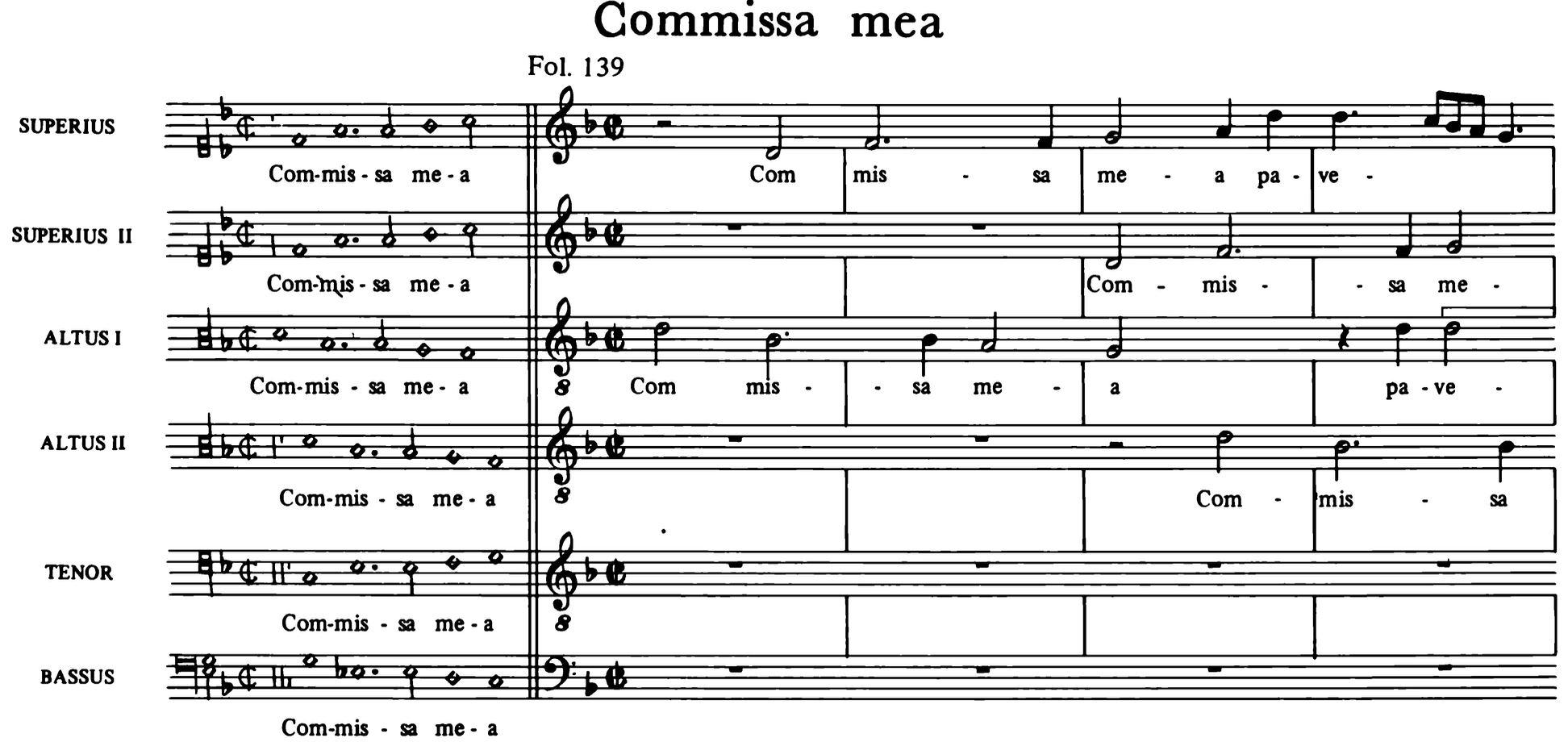
Music of the Iberian Peninsula, Part 3: More observations on the Golden Age
16th June 2026
Our last visit to the Iberian peninsula, a fortnight ago, was an insanely ambitious, necessarily broad-brush survey of the Spanish and Portuguese Golden Age, covering vocal and instrumental music, the sacred and the secular. This week, we take a more concise and (I hope) focussed look at a few of the sacred vocal masterpieces which exemplify the particular fervour and intensity of this remarkable period of musical history. They reflect the special place the peninsula had as a bulwark against the Reformation that had taken... read more
read more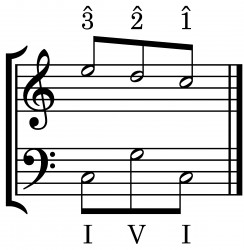
Carl Schachter, Arnold Whittall, and why music analysis matters
9th June 2026
Two recent deaths have robbed the world of music analysis of a pair of its most revered figures. Carl Schachter, who has died at the age of 93, was a pupil of (and subsequently collaborator with) Felix Salzer, himself one of Heinrich Schenker’s foremost students. Schachter continued to enrich and broaden the teaching of Schenkerian analysis, including important work on its application to issues of rhythm (which Schenker, focussing on harmonic and contrapuntal matters, largely bypassed). His influence went well beyond the... read more
read more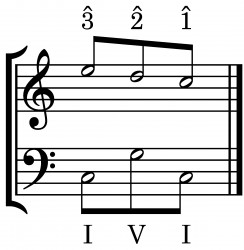
Carl Schachter, Arnold Whittall, and why music analysis matters
9th June 2026
Two recent deaths have robbed the world of music analysis of a pair of its most revered figures. Carl Schachter, who has died at the age of 93, was a pupil of (and subsequently collaborator with) Felix Salzer, himself one of Heinrich Schenker’s foremost students. Schachter continued to enrich and broaden the teaching of Schenkerian analysis, including important work on its application to issues of rhythm (which Schenker, focussing on harmonic and contrapuntal matters, largely bypassed). His influence went well beyond the... read more
read more
Music of the Iberian Peninsula, Part 2: ‘O quam gloriosum’ – The Spanish and Portuguese Golden Age
2nd June 2026
Over the past fortnight, I’ve been bathed in the most glorious, radiant, transformative light. Not the UK’s recent unseasonable heatwave, but the extraordinary vocal polyphony of the Siglo de Oro: the Spanish (and Portuguese) ‘Golden Century’. Extending from the late 15th to the early 17th century, this was a time of remarkable artistic flowering on the Iberian Peninsula, coinciding with the emergence of Spain and Portugal as global imperial powers with extensive colonial territories in the Americas, Africa and Asia. The... read more
read more