 FREE UK SHIPPING OVER £35!
The Spin Doctor Europadisc's Weekly Column
The Drover’s Return: Vaughan Williams and the (Re)Birth of English Opera
26th June 2024
26th June 2024
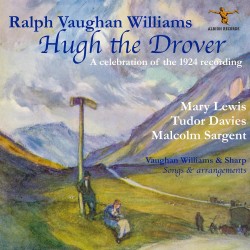 In the late 19th and early 20th centuries, English opera was in the doldrums. The few composers who attempted it (such as Delius and Smyth) found it easier to get their works performed abroad. A key work in the emergence of a distinctively English modern operatic repertoire was Ralph Vaughan Williams's first work in the genre, Hugh the Drover, which he worked on in the years immediately prior to the First World War, but which received its eventual premiere only in 1924. A two-act work set in the early 19th century in a small Cotswold town, with a libretto by Harold Child, it presents a conventional operatic love triangle set against the Francophobia of the Napoleonic Wars, and is organised on orthodox ‘number opera’ lines, its arias, duets, ensembles and choruses punctuated by recitatives. Vaughan Williams viewed it partly as an English answer to Smetana’s The Bartered Bride.
One of the qualities that marks Hugh the Drover as distinctive is its pronounced folk-music character. Vaughan Williams’s early career had been dominated and shaped by his activities as a folksong collector, and although it contains very few actual folksongs, the music is saturated with the flavours of the folk idiom, with an easy, direct lyricism and predominance of vernacular-style modal melodies. By the time of its eventual July 1924 premieres in London (a series of ‘private’ performances at the Royal College of Music, followed by a public production by the British National Opera Company at His Majesty’s Theatre), it must have aroused nostalgic feelings for an idyllic world forever lost.
The performances – particularly the BNOC production, with a young Malcolm Sargent conducting his first opera – were a resounding success, and it subsequently toured the length and breadth of Britain, as well as being taken up by amateurs (a notable production at Caterham School in 1926) and as far afield as Russia and Canada. Although most of the cast is made up of stock folk characters, the central lovers – the titular wandering drover and the Constable’s daughter Mary – are well-developed, with ‘The Song of Hugh the Drover’ and the Act I love duet as well as their Act II scenes together being among the opera’s highlights.
Another distinguishing feature of the opera is the central role played by the chorus of townsfolk. Following a 1937 Sadler’s Wells production, Vaughan Williams went so far as to claim the chorus was the protagonist (although occasionally, as when Hugh is accused of being a French spy, they side with the antagonists). The importance of this feature was taken to peak development in the operas of Britten, notably Peter Grimes. Meanwhile, the depiction on stage of a prize fight gave a nice English twist to the aristocratic duels of operatic tradition.
The cast of the 1924 BNOC production is an impressive one, headed by the ringing, powerfully communicative Welsh tenor of Tudor Davies and the impassioned soprano of Mary Lewis (an American singer who had featured in the Ziegfeld Follies in New York, before making her sensational operatic debut as Marguerite in Gounod’s Faust in Vienna under Weingartner). Although Lewis’s occasionally thin middle register attracted some criticism, she and Davies made a handsome onstage couple, adding considerably to the work’s dramatic charm and impact.
By the 1950s, Hugh the Drover was perceived as rather dated, and performances of any kind were rare. Two complete studio recordings, by Charles Groves for EMI in the late 1970s (with Robert Tear and Sheila Armstrong in the lead roles) and Matthew Best for Hyperion in 1994 (featuring Bonaventura Bottone and Rebecca Evans) kept the flame alive for afficionados. However, a heavily abridged recording made in autumn 1924 for HMV with members of the original cast under Sargent had already contributed to the opera’s early success. Previously mastered for CD by Pearl in 1975, this valuable piece of recording history now makes a welcome return in a splendid new remastering, fastidiously researched and presented, on Albion Records, the label of the Ralph Vaughan Williams Society.
This is the latest in a steady stream of archive recordings to be reissued with illuminating couplings by Albion: their most recent release of the Serenade to Music in a 1938 recording featuring the original singers, as well as a variety of solo items from each of them, was a great success with collectors and critics. Hugh the Drover is a worthy successor: less than half of the opera’s music is contained on the ten original 78rpm sides, and it was recorded using the cramped techniques of the acoustic era, with Sargent harnessed to the wall on a shelf above the orchestra, conducting with one hand while pushing the singer’s head into the recording horn with the other! In Pete Reynolds’s skilful remastering, the recording emerges with remarkable clarity and freshness a century later, with details of orchestration like the harp swirls clearly audible, and the voices for the most part clearly intelligible (just the occasional ensemble sounds precariously cramped).
The strengths of the original cast, their intelligible diction and direct, unaffected tone, cast the work in an entirely different light from the stereo/digital complete recordings. There’s undoubtedly a strong whiff of the period (with both instrumental and vocal portamento), but also an emotional engagement and honesty from which modern singers could learn much. And the 1924 recording also uses the original version of the score, predating the composer’s 1933 and 1956 revisions. The Albion team has carefully transcribed the words of the original recording for the accompanying libretto. Although reduced to a 44-minute torso, there’s enough here to give more than a flavour of the work and its narrative, with both Hugh’s song and the love duet included, although the fight scene was clearly too much of a challenge for the acoustic recording process.
To make up the rest of the disc, Albion have included a series of folksong recordings by artists closely associated with Vaughan Williams, including John Coates in a 1925 recording of Linden Lea, Maggie Teyte singing Comin’ thro’ the Rye, and Harry Plunkett Greene in Cecil Sharp’s arrangement of Poor Old Horse. The disc is completed by a later recording of Hugh’s ‘Song of the Road’ by James Johnston made with the Philharmonia Orchestra under James Robertson in 1950 – the same year in which Johnston starred in a new production of Hugh the Drover at Sadler’s Wells. It caps a disc of archive treasures which is yet another highlight of Albion Records’ catalogue, where new recordings and resurrected jewels sit happily side-by-side. Capturing a key moment in the development of 20th-century English opera, it deserves to be widely heard.
The Recording:
Vaughan Williams - Hugh the Drover (BNOC/Sargent) ALBCD060
Latest Posts
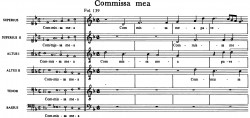
Music of the Iberian Peninsula, Part 3: More observations on the Golden Age
16th June 2026
Our last visit to the Iberian peninsula, a fortnight ago, was an insanely ambitious, necessarily broad-brush survey of the Spanish and Portuguese Golden Age, covering vocal and instrumental music, the sacred and the secular. This week, we take a more concise and (I hope) focussed look at a few of the sacred vocal masterpieces which exemplify the particular fervour and intensity of this remarkable period of musical history. They reflect the special place the peninsula had as a bulwark against the Reformation that had taken... read more
read more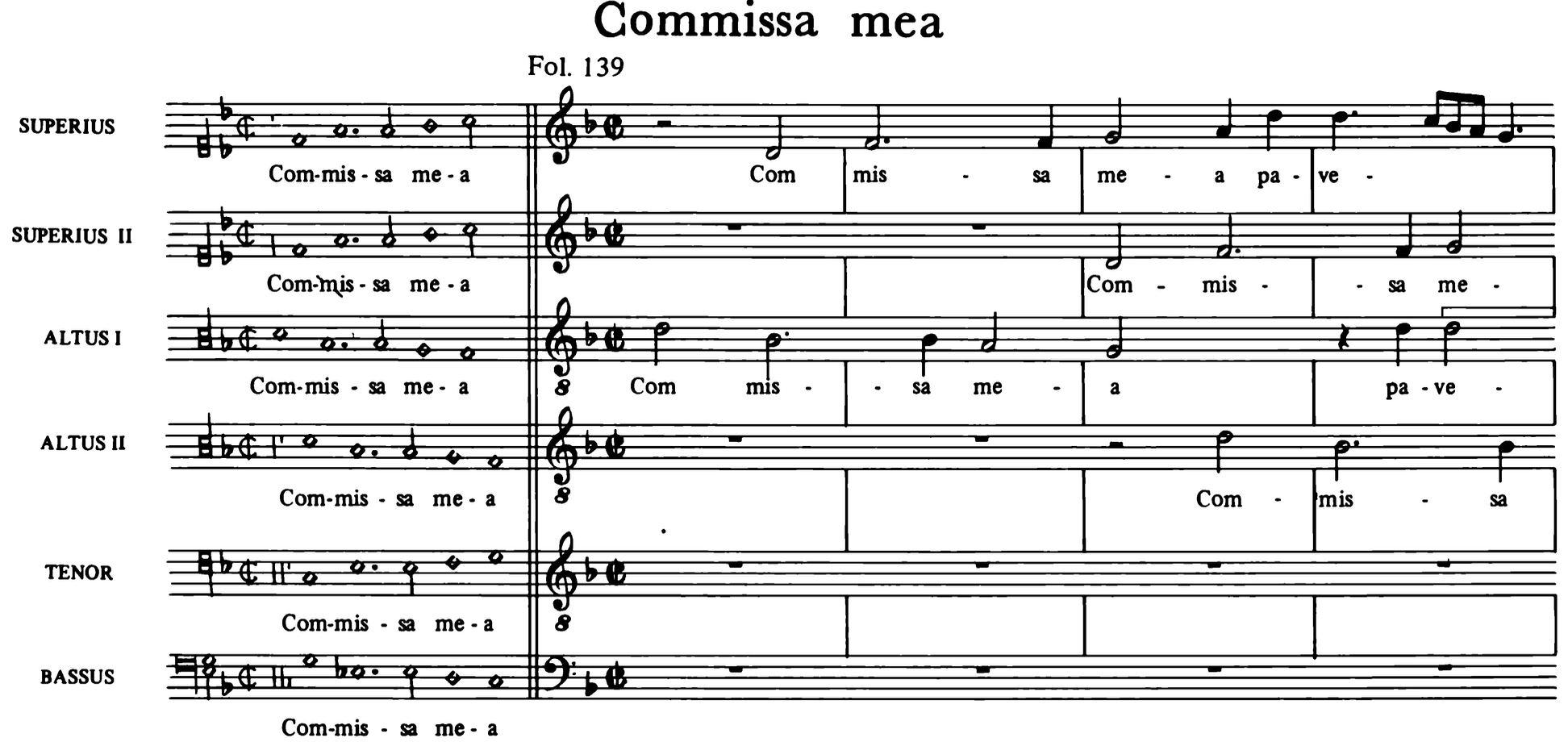
Music of the Iberian Peninsula, Part 3: More observations on the Golden Age
16th June 2026
Our last visit to the Iberian peninsula, a fortnight ago, was an insanely ambitious, necessarily broad-brush survey of the Spanish and Portuguese Golden Age, covering vocal and instrumental music, the sacred and the secular. This week, we take a more concise and (I hope) focussed look at a few of the sacred vocal masterpieces which exemplify the particular fervour and intensity of this remarkable period of musical history. They reflect the special place the peninsula had as a bulwark against the Reformation that had taken... read more
read more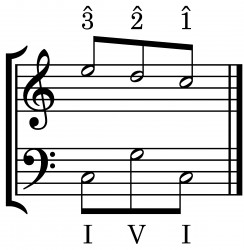
Carl Schachter, Arnold Whittall, and why music analysis matters
9th June 2026
Two recent deaths have robbed the world of music analysis of a pair of its most revered figures. Carl Schachter, who has died at the age of 93, was a pupil of (and subsequently collaborator with) Felix Salzer, himself one of Heinrich Schenker’s foremost students. Schachter continued to enrich and broaden the teaching of Schenkerian analysis, including important work on its application to issues of rhythm (which Schenker, focussing on harmonic and contrapuntal matters, largely bypassed). His influence went well beyond the... read more
read more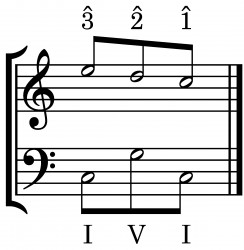
Carl Schachter, Arnold Whittall, and why music analysis matters
9th June 2026
Two recent deaths have robbed the world of music analysis of a pair of its most revered figures. Carl Schachter, who has died at the age of 93, was a pupil of (and subsequently collaborator with) Felix Salzer, himself one of Heinrich Schenker’s foremost students. Schachter continued to enrich and broaden the teaching of Schenkerian analysis, including important work on its application to issues of rhythm (which Schenker, focussing on harmonic and contrapuntal matters, largely bypassed). His influence went well beyond the... read more
read more
Music of the Iberian Peninsula, Part 2: ‘O quam gloriosum’ – The Spanish and Portuguese Golden Age
2nd June 2026
Over the past fortnight, I’ve been bathed in the most glorious, radiant, transformative light. Not the UK’s recent unseasonable heatwave, but the extraordinary vocal polyphony of the Siglo de Oro: the Spanish (and Portuguese) ‘Golden Century’. Extending from the late 15th to the early 17th century, this was a time of remarkable artistic flowering on the Iberian Peninsula, coinciding with the emergence of Spain and Portugal as global imperial powers with extensive colonial territories in the Americas, Africa and Asia. The... read more
read more