 FREE UK SHIPPING OVER £35!
The Spin Doctor Europadisc's Weekly Column
Early Vocal Treasures from Hyperion
12th June 2024
12th June 2024
 Recently taken under the wing of Universal Music Group, the British label Hyperion has a long-established reputation for excellence across a wide range of genres. Its landmark complete recording of Schubert’s complete songs under the curatorship of pianist Graham Johnson, the complete solo piano music of Liszt by Leslie Howard, Purcell’s choral music under the direction Robert King, and the still-active multi-disc survey of Romantic Piano Concertos all bear testament to Hyperion’s high standards of performance, recording and background research. The Schubert cycle in particular spawned a number of successors, including complete surveys of lieder by Schumann and Brahms as well as highly-regarded cycles of French melodies.
Yet many would argue that some of Hyperion’s most important contributions to the catalogue have come in its recordings of pre-Baroque vocal music. We’ve remarked before on the iconic status achieved by Gothic Voices’ 1981 recording of music by the medieval abbess Hildegard of Bingen, ‘A Feather on the Breath of God’, featuring soprano Emma Kirkby. Though less high-profile, the label’s partnership with the Choir of Westminster Cathedral and David Hill in choral music by Tomás Luis de Victoria was just as critically lauded, drawing to wider attention the Cathedral’s distinctive ‘continental’ vocal style compared with that of the Abbey at the other end of the street. With these releases, Hyperion established new standards in the recording of music from the Medieval and Renaissance eras which they maintain to this day.
Dating from a little later than Hildegard is the repertoire of the 13th-century conductus: newly-composed sacred vocal music to new texts, scored for one to three or four voices, and an important milestone in the development of sacred polyphony. The conductus was the subject of a three-disc series recorded between 2011 and 2014 by a trio of experienced early music tenors: John Potter, Christopher O’Gorman and Rogers Covey-Crump. This beguiling music, performed and recorded with remarkable sensitivity, deserves to be heard by anyone with an interest in the emergence polyphonic vocal music.
From the following century, the music of Guillaume de Machaut looms large both in the history books and, increasingly, on disc. Here the extensive ongoing series by the superb Orlando Consort has opened up new perspectives on Machaut’s output. Currently extending to ten disc, this survey is the most complete yet on disc, ranging across the genres mastered by the 14th-century cleric/poet/composer, from ballades, motets and rondeaus to the longer narratives of the lais. Maintaining the high standards they set during their earlier recordings for DG’s Archiv Produktion, the Orlando Consort unveil a world of incomparable poetic and musical riches with exemplary performances steeped in long familiarity with the music of the period. Once again, these are essential recordings for anyone with an interest in vocal music of the late Medieval period. Performed strictly a cappella and one voice per part, with not an instrument in earshot, these performances provide ample evidence that the ‘purist’ approach works wonderfully in music of such captivating beauty. As do the recordings by the Binchois Consort under Andrew Kirkman of music by Dufay, Binchois and the early English masters (Dunstaple, Frye, et al.) on the cusp of the Renaissance era, fastidiously researched and documented.
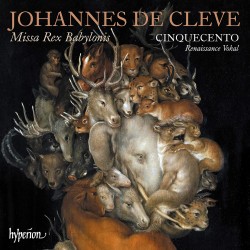
It is in the vocal music of the Renaissance period that the Hyperion catalogue’s riches are most readily apparent. The label’s partnership with the Vienna-based Cinquecento ensemble – specialists in music associated with the Habsburg court – has served up some exquisite delicacies over the past 17 years, ranging from well-known figures like Willaert, Lassus, Palestrina and Heinrich Isaac to such rarities as Jacobus Vaet, Philipp Schoendorff, Jean Guyot, Johannes de Cleve, Ludwig Daser and (most recently) Annibale Padovano. The care over cover art (typical of Hyperion) is as rewarding on these discs as the consistent excellence of the performances themselves.
Renaissance music from the Iberian peninsula and by Hispanic composers has been well-served by Hyperion since the days of the Victoria recordings by the Westminster Cathedral Choir. In recent years, the catalogue has been particularly enriched by a series of discs from Cupertinos under the direction of Luís Toscano, ranging from an award-winning release of Manuel Cardoso’s Requiem and Maundy Thursday Lamentations to masses by Duarte Lobo, Filipe de Magalhães and Pedro de Cristo, including several first recordings. Another Spanish group well worth sampling is El León de Oro under the experienced direction of Peter Phillips (more familiar from his work with the Tallis Scholars), not least their spellbinding 2021 disc of music by Francisco Guerrero.
All these artists and many more are now part of our new special offer on vocal and choral music from Hyperion. In the field of Renaissance music, special mention should also be made of the wonderful work of Stephen Rice and his Brabant Ensemble, but whatever period you’re attracted to, there are treasures aplenty to be explored, from the 12th century to the present day. Happy listening!
A few favourites:
Conductus Vol.1 (Potter, O’Gorman, Covey-Crump) CDA67949
Machaut - The Single Rose (Orlando Consort) CDA68277
Music for Saint Katherine of Alexandria (Binchois Consort) CDA68274
Daser - Missa Pater noster (Cinquecento) CDA68414
Magalhães - Missa Veni Domine & Missa Vere Dominus est (Cupetinos) CDA68403
Guerrero - Magnificat, Lamentations & Canciones (El León de Oro) CDA68347
Explore the whole Special Offer collection:
https://www.europadisc.co.uk/offer/3292/Hyperion_Vocal_and_Choral_Music.htm
Latest Posts
Music of the Iberian Peninsula, Part 3: More observations on the Golden Age
16th June 2026
Our last visit to the Iberian peninsula, a fortnight ago, was an insanely ambitious, necessarily broad-brush survey of the Spanish and Portuguese Golden Age, covering vocal and instrumental music, the sacred and the secular. This week, we take a more concise and (I hope) focussed look at a few of the sacred vocal masterpieces which exemplify the particular fervour and intensity of this remarkable period of musical history. They reflect the special place the peninsula had as a bulwark against the Reformation that had taken... read more
read more
Music of the Iberian Peninsula, Part 3: More observations on the Golden Age
16th June 2026
Our last visit to the Iberian peninsula, a fortnight ago, was an insanely ambitious, necessarily broad-brush survey of the Spanish and Portuguese Golden Age, covering vocal and instrumental music, the sacred and the secular. This week, we take a more concise and (I hope) focussed look at a few of the sacred vocal masterpieces which exemplify the particular fervour and intensity of this remarkable period of musical history. They reflect the special place the peninsula had as a bulwark against the Reformation that had taken... read more
read more
Carl Schachter, Arnold Whittall, and why music analysis matters
9th June 2026
Two recent deaths have robbed the world of music analysis of a pair of its most revered figures. Carl Schachter, who has died at the age of 93, was a pupil of (and subsequently collaborator with) Felix Salzer, himself one of Heinrich Schenker’s foremost students. Schachter continued to enrich and broaden the teaching of Schenkerian analysis, including important work on its application to issues of rhythm (which Schenker, focussing on harmonic and contrapuntal matters, largely bypassed). His influence went well beyond the... read more
read more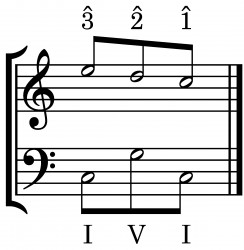
Carl Schachter, Arnold Whittall, and why music analysis matters
9th June 2026
Two recent deaths have robbed the world of music analysis of a pair of its most revered figures. Carl Schachter, who has died at the age of 93, was a pupil of (and subsequently collaborator with) Felix Salzer, himself one of Heinrich Schenker’s foremost students. Schachter continued to enrich and broaden the teaching of Schenkerian analysis, including important work on its application to issues of rhythm (which Schenker, focussing on harmonic and contrapuntal matters, largely bypassed). His influence went well beyond the... read more
read more
Music of the Iberian Peninsula, Part 2: ‘O quam gloriosum’ – The Spanish and Portuguese Golden Age
2nd June 2026
Over the past fortnight, I’ve been bathed in the most glorious, radiant, transformative light. Not the UK’s recent unseasonable heatwave, but the extraordinary vocal polyphony of the Siglo de Oro: the Spanish (and Portuguese) ‘Golden Century’. Extending from the late 15th to the early 17th century, this was a time of remarkable artistic flowering on the Iberian Peninsula, coinciding with the emergence of Spain and Portugal as global imperial powers with extensive colonial territories in the Americas, Africa and Asia. The... read more
read more