 FREE UK SHIPPING OVER £35!
The Spin Doctor Europadisc's Weekly Column
The Nuts and Bolts of Musical Invention
6th June 2024
6th June 2024
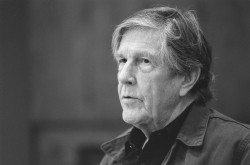 In Paul Beatty’s 2008 novel Slumberland, the hero writes that ‘Music history is rife with no-brainer collaborations that should’ve but never happened. Charlie Parker and Arnold Schoenberg. The Osmonds and the Jackson Five. The Archies and Josie and the Pussycats…’. There are however, plenty of great collaborations that did happen: Mozart and Da Ponte, Verdi and Boito, Strauss and Hoffmansthal, Stravinsky and Diaghilev. One of the less widely celebrated, but enormously consequential for the development of modern dance, was that between the great American experimentalist John Cage and the dancer and choreographer Merce Cunningham.
Cage and Cunningham had first met in the late 1930s at the Cornish College of the Arts in Seattle, on the US west coast. Cunningham had originally enrolled to pursue studies in acting, but found the wordless pull of dance more alluring, while Cage was working there as composer and accompanist for Bonnie Bird. He was beginning to work with increasingly unorthodox instrumentations, chiefly percussion, leading in 1940 to the development of the ‘prepared piano’: an instrument whose timbre was altered by the insertion between the strings and hammers of a variety of metallic, plastic and wooden objects, including screws, bolts and strips of paper. These had the effect of reducing the instruments harmonic element and emphasising the percussive: rhythm, not tonality, was the chief driver of Cage’s musical revolution.
Although Cage had been a devoted student of Schoenberg – who had said of him, ‘of course he's not a composer, but he's an inventor – of genius’ – he had parted ways with the Viennese exile over the centrality of pitch rather than rhythm as the driving force of a truly modern music. In the early to mid-1940s, amid the tumultuous break-up of his marriage to surrealist sculptor Xenia Andreyevna Kashevaroff, Cage wrote a series of works for prepared piano, the majority of them expressly for and dedicated to Cunningham, who became his collaborator and lifelong romantic partner. They immediately pre-date his groundbreaking Sonatas and Interludes for prepared piano (1946–48), and reflect Cage’s growing interest in Hindu music, Zen Buddhism and other non-western traditions and influences.
Now, pianist Bertrand Chamayou – having already explored the links between Cage and another musical iconoclast, Erik Satie, in his 2023 album Letter(s) to Erik Satie – delves further into Cage’s music for prepared piano with CAGE², which gathers together many of the works for prepared piano that Cage wrote in collaboration with Cunningham and other dancers, from Syvilla Fort to Valerie Bettis and Jean Erdman. A key aspect of this project is its roots in Chamayou’s own live performances with dancer and choreographer Élodie Sicard, and although the audio-only nature of the album places the focus firmly on the sonic rather than the visual, the grasp of the essentially rhythmic and (in the broadest sense) balletic aspects in Chamayou’s performances is unmistakable.
Cage’s works for prepared piano look forward to the world of electronic music, and if the indeterminacy of his later maturity is still a way off, his revelry in sound – rather than the officially-sanctioned forms of music handed down by academicians – is forcefully in evidence. This truly is ‘organised sound’ with universal ambitions, rather than the constantly reconfigured phrases, harmonies and forms of the 18th and 19th centuries. There’s an hypnotic quality to much of this music, yet without the somnolence of the minimalists on whom Cage was such a decisive influence. Non-western traditions such as African music and Indonesian gamelan are frequently evoked, to beguiling effect.
At the same time, Chamayou’s performances are less aggressively percussive than some others on disc. The harmonic ghosts of the piano strings are allowed a degree more prominence, even though the (often complex) rhythmic skeleton is foundational. In a 1944 article for Dance Observer (reprinted in the seminal 1968 collection of lectures and writings, Silence), Cage identified the sometimes complementary, at others oppositional qualities of (rhythmic) clarity and grace: ‘the modern dance must clarify its rhythmic structure, then enliven it with grace, and so get itself a theory, the common, universal one about what is beautiful in a time art.’
It is this combination of clarity and grace that makes Chamayou’s new disc so compelling. For anyone with ears open beyond the boundaries of the officially approved canon of western art music, this is an endlessly absorbing album, ranging from the intensely personal to the joyously universal, from the sonically mesmerising to the downright mechanistic. For many, Schoenberg’s characterisation of Cage as ‘an inventor’ – albeit one ‘of genius’ – carries the hint of a put-down. But isn’t any great composer an inventor at a fundamental level? And hasn’t the art of ‘invention’ been fundamental to many composers across the centuries. It’s Cage’s boldness in being willing to think ‘outside the box’ that makes his music so fascinating for many outside the neat and tidy confines of ‘classical music’, and eighty years it continues to sound as fresh as ever.
The Recording:
CAGE² (Bertrtand Chamayou) 2173227516
Latest Posts
Music of the Iberian Peninsula, Part 3: More observations on the Golden Age
16th June 2026
Our last visit to the Iberian peninsula, a fortnight ago, was an insanely ambitious, necessarily broad-brush survey of the Spanish and Portuguese Golden Age, covering vocal and instrumental music, the sacred and the secular. This week, we take a more concise and (I hope) focussed look at a few of the sacred vocal masterpieces which exemplify the particular fervour and intensity of this remarkable period of musical history. They reflect the special place the peninsula had as a bulwark against the Reformation that had taken... read more
read more
Music of the Iberian Peninsula, Part 3: More observations on the Golden Age
16th June 2026
Our last visit to the Iberian peninsula, a fortnight ago, was an insanely ambitious, necessarily broad-brush survey of the Spanish and Portuguese Golden Age, covering vocal and instrumental music, the sacred and the secular. This week, we take a more concise and (I hope) focussed look at a few of the sacred vocal masterpieces which exemplify the particular fervour and intensity of this remarkable period of musical history. They reflect the special place the peninsula had as a bulwark against the Reformation that had taken... read more
read more
Carl Schachter, Arnold Whittall, and why music analysis matters
9th June 2026
Two recent deaths have robbed the world of music analysis of a pair of its most revered figures. Carl Schachter, who has died at the age of 93, was a pupil of (and subsequently collaborator with) Felix Salzer, himself one of Heinrich Schenker’s foremost students. Schachter continued to enrich and broaden the teaching of Schenkerian analysis, including important work on its application to issues of rhythm (which Schenker, focussing on harmonic and contrapuntal matters, largely bypassed). His influence went well beyond the... read more
read more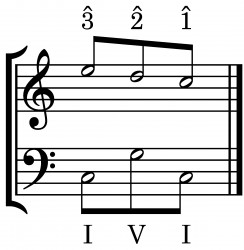
Carl Schachter, Arnold Whittall, and why music analysis matters
9th June 2026
Two recent deaths have robbed the world of music analysis of a pair of its most revered figures. Carl Schachter, who has died at the age of 93, was a pupil of (and subsequently collaborator with) Felix Salzer, himself one of Heinrich Schenker’s foremost students. Schachter continued to enrich and broaden the teaching of Schenkerian analysis, including important work on its application to issues of rhythm (which Schenker, focussing on harmonic and contrapuntal matters, largely bypassed). His influence went well beyond the... read more
read more
Music of the Iberian Peninsula, Part 2: ‘O quam gloriosum’ – The Spanish and Portuguese Golden Age
2nd June 2026
Over the past fortnight, I’ve been bathed in the most glorious, radiant, transformative light. Not the UK’s recent unseasonable heatwave, but the extraordinary vocal polyphony of the Siglo de Oro: the Spanish (and Portuguese) ‘Golden Century’. Extending from the late 15th to the early 17th century, this was a time of remarkable artistic flowering on the Iberian Peninsula, coinciding with the emergence of Spain and Portugal as global imperial powers with extensive colonial territories in the Americas, Africa and Asia. The... read more
read more