FREE UK SHIPPING OVER £35!

The Spin Doctor Europadisc's Weekly Column

Musicians Behaving Badly

  29th May 2024

29th May 2024

It seems that barely a month goes by without some musician or other in the headlines accused of morally reprehensible behaviour: inappropriate comments or actions, in some cases assault (sexual or physical), or support for causes with which many others may disagree. This is, of course, concerning to anyone who follows the musical world, yet in some respects also encouraging: there is now less tolerance for the ‘wall of silence’ that used to surround such murky affairs. If the age of deference is (allegedly) long past, the age of sweeping things under the carpet, of non-disclosure agreements (NDAs) and the like, is still being shaken off.

It should not surprise us that every so often a few rotten apples come to light. There are good and bad in all walks of life. Is music – along with the other performing arts – more afflicted in this respect than other walks of life? Certainly the arts constitute an area where the intensity of emotional involvement, the presence of strong creative personalities, and the high pressure of a performance environment can all contribute to a heady atmosphere. Most particularly, in situations where some figures have authority over others (and especially in the sphere of education) there can be a power imbalance which is easy to take advantage of. The exposure of historic incidents at music colleges and conservatoires will hopefully lead to a more open environment, no longer blind to such abuses.

Yet, as recent headlines involving a small number of conductors make plain (why is it so often conductors and music directors?), bad behaviour among musicians is by no means a thing of the past. There should quite rightly be zero tolerance to bullying and inappropriate behaviour, above all among those with responsibility for the education of the young, but also among all those involved in the arts. At the same time, we should all be mindful of the difference between allegations, admissions, contrition and convictions. People should feel able to come forward with grievances without fear, but at the same time we should be wary of the sort of ‘open season’ evident in some online forums, and the risk this poses of prejudicing a fair hearing.

Beyond the voluntary or enforced silencing of performers who fall from grace in such cases, what are the implications for wider audiences? In extreme cases, one may feel moved to boycott recordings made by certain artists. Yet any draconian blanket ban would smack of totalitarianism. Just as there are some performers one may wish to give a wide berth on artistic grounds, so there may also be others one wishes to avoid on account of their behaviour. For many of us, the criteria will rarely be clear-cut. More than eight decades on, the activities of some performers and composers during World War II continue to be divisive, the gravity of the historical situation still felt with raw intensity by many. Wagner’s notorious antisemitism makes him a no-go area for some listeners, just as the Teutonic bombast of some of his more high-profile scores is a turn-off for others. Historic links to the slave trade may create new slews of no-go composers. Judgement and taste are rarely absolute, often highly malleable.

Can one separate artists as fallible, even criminal human beings from their creations, whether works of music or recordings? Is artistic value dependent on the circumstances of a work’s creation and its creator(s), or is the artwork an autonomous entity which transcends such considerations? These are issues which have been debated endlessly down the ages, and they will no doubt continue to divide opinion. For many, it will be a question of weighing the quality of the music (work and/or performance) against the qualities of its creator/performer. And perhaps it is precisely music’s transcendent, transformative properties that make us so very sensitive to instances of transgression among its practitioners.

Music has the potential to move and transform us, to inspire lofty thoughts and ideals, to transport us from the here-and-now to a more elevated plane of existence. But it is created and performed by mere mortals (even Bach had his flaws), and we should not be surprised if musicians sometimes fall short of the ideals aspired to by the art form itself. Creating a kinder, more open atmosphere for students, performers and audiences than has often existed in the past should be an absolute priority, without sacrificing artistic standards. But this also needs to extend to the way in which music itself is appreciated and valued, and to our readiness to rush to judgement on others.

Latest Posts


Music of the Iberian Peninsula, Part 3: More observations on the Golden Age

16th June 2026

Our last visit to the Iberian peninsula, a fortnight ago, was an insanely ambitious, necessarily broad-brush survey of the Spanish and Portuguese Golden Age, covering vocal and instrumental music, the sacred and the secular. This week, we take a more concise and (I hope) focussed look at a few of the sacred vocal masterpieces which exemplify the particular fervour and intensity of this remarkable period of musical history. They reflect the special place the peninsula had as a bulwark against the Reformation that had taken... read more

read more
Music of the Iberian Peninsula, Part 3: More observations on the Golden Age

16th June 2026

Our last visit to the Iberian peninsula, a fortnight ago, was an insanely ambitious, necessarily broad-brush survey of the Spanish and Portuguese Golden Age, covering vocal and instrumental music, the sacred and the secular. This week, we take a more concise and (I hope) focussed look at a few of the sacred vocal masterpieces which exemplify the particular fervour and intensity of this remarkable period of musical history. They reflect the special place the peninsula had as a bulwark against the Reformation that had taken... read more

read more
Carl Schachter, Arnold Whittall, and why music analysis matters

9th June 2026

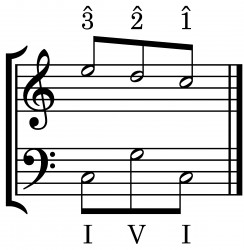
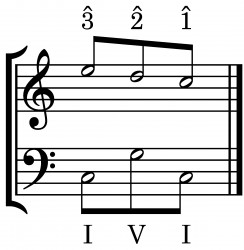
Two recent deaths have robbed the world of music analysis of a pair of its most revered figures. Carl Schachter, who has died at the age of 93, was a pupil of (and subsequently collaborator with) Felix Salzer, himself one of Heinrich Schenker’s foremost students. Schachter continued to enrich and broaden the teaching of Schenkerian analysis, including important work on its application to issues of rhythm (which Schenker, focussing on harmonic and contrapuntal matters, largely bypassed). His influence went well beyond the... read more

read more
Carl Schachter, Arnold Whittall, and why music analysis matters

9th June 2026

Two recent deaths have robbed the world of music analysis of a pair of its most revered figures. Carl Schachter, who has died at the age of 93, was a pupil of (and subsequently collaborator with) Felix Salzer, himself one of Heinrich Schenker’s foremost students. Schachter continued to enrich and broaden the teaching of Schenkerian analysis, including important work on its application to issues of rhythm (which Schenker, focussing on harmonic and contrapuntal matters, largely bypassed). His influence went well beyond the... read more

read more

Music of the Iberian Peninsula, Part 2: ‘O quam gloriosum’ – The Spanish and Portuguese Golden Age

2nd June 2026

Over the past fortnight, I’ve been bathed in the most glorious, radiant, transformative light. Not the UK’s recent unseasonable heatwave, but the extraordinary vocal polyphony of the Siglo de Oro: the Spanish (and Portuguese) ‘Golden Century’. Extending from the late 15th to the early 17th century, this was a time of remarkable artistic flowering on the Iberian Peninsula, coinciding with the emergence of Spain and Portugal as global imperial powers with extensive colonial territories in the Americas, Africa and Asia. The... read more

read more
View Full Archive