 FREE UK SHIPPING OVER £35!
The Spin Doctor Europadisc's Weekly Column
‘In the black, dismal dungeon of despair’... Tackling music’s challenges
15th May 2024
15th May 2024
 Our column last week on ‘The Problem of Attracting Audiences’ prompted a typically thoughtful response from one of our regular readers, which in turn drew us to reflect further on this issue. The number of performers, critics and other commentators weighing into the current debate ought to persuade all but the most sceptical of followers that the arts in general, and classical music in particular, are currently facing a moment of real crisis. And even though there are plenty of other areas of the contemporary world that are comparably embattled (some quite literally), the problems confronting the arts are no less serious: how we tackle them will determine what’s left when (if?) the world gets through its current bleak phase (economic challenges, rising authoritarianism, multiple conflicts and flashpoints, global warming…).
As we’ve remarked repeatedly in the past, a fundamental issue is education. In particular, the widescale withdrawal (here in the UK) of free instrumental tuition in state schools, which threatens to wipe out engagement with music at a specialist level for all but children from wealthier backgrounds. (A similar situation has been widely highlighted in the world of stage and screen acting, where only those from well-heeled families and acting ‘dynasties’ now dominate the ranks of younger performers.) Exposure to classical music from an early age and throughout the school years is vital to the genre’s long-term survival. But its demands as a discipline (including focus on detail and the need for sustained practice) also have proven benefits in an age where concentration spans seem to be shrinking from generation to generation.
The need for a revival in school music tuition is all the greater given the incessant competition from an ever more dominant mass culture and technological quick-fixes (smart phones, AI, social media, etc.). It’s not necessary to disregard some of the benefits brought by such technologies to recognise that they can also present problems in terms of capacity for concentration. The issues raised by primary and secondary education inevitably feed into higher education, where first-year courses are increasingly focussed on catching-up to a level of basic education that used to be assumed at entry point. Even in higher education, standards in all but the most elite institutions have been slipping for a while – certainly in the areas of engagement with subject-specialist literature and the capacity for intellectual rigour (and this despite the fashionable focus on ‘critical thinking’).
Such matters might seem rarified to the average classical music lover, but they are directly related to the loss of interest in classical music as an art form among the younger generation (always a minority interest, but now seemingly more precarious than ever). It would be easy to lay the blame entirely at the doorstep of mass culture, but the way classical music is ‘consumed’ is itself a big part of the problem. The repeated iterations of the classics, the ‘Disneyfication’ of recital programmes, the fixation of record labels with photogenic bright young things, and the unearthing of reams of obscure Romantic repertoire – anything rather than engaging with the music of today – all play their part in the current moribund state of the art form.
To give just one example: in the last five years, Deutsche Grammophon have released no fewer than three new cycles of Beethoven symphonies (to say nothing of reissues). Even given the Beethoven jubilee of four years ago, that’s quite some feat: but is such proliferation necessary? There are already well over 150 complete cycles of these works out there. Do these new ones have sufficient new insights to justify themselves, or are they a form of cash cow, the gift that keeps on giving for a label that was once a byword for excellence among aficionados? Undoubtedly there are commercial considerations at play here, but the (artistic) justification for such releases would surely be the ploughing back of funds into more esoteric programmes, of the sort for which DG was once renowned.
By this point, you may be asking what’s wrong with giving audiences what they want? But the extent to which audiences’ tastes are manipulated by slick advertising and marketing is still – several generations on from Adorno – worth interrogating. In recent years it has become fashionable to blame musical modernism and the postwar avant garde for the perceived decline in classical music. From Schoenberg and Webern to Stockhausen and Boulez, modernist bogeymen are set up as straw men responsible for the genre’s downward spiral and the terminal disconnect of contemporary music from audiences. Yet a counterargument might point out that the 1970s, when concerts of new music by Stockhausen, Boulez, Berio and others attracted large, enthusiastic and young audiences, were a highpoint for new music, and one which the commercial bean-counters and wider audiences failed to engage with sufficiently for it to bear further fruit.
Fast forward a couple of decades and ‘new music’ of a demanding nature became increasingly consigned to late night slots by those broadcasters who bothered to play it at all. Little wonder, then, that it failed to connect with audiences bombarded with concert programmes and albums which continued to reinscribe the canonical works of the past without much question. The early music movement may have breathed new life into the classics, but it arguably did little to advance the cause of the new in ways that would really keep classical music alive. So now, here we are in 2024, and one of this year’s major composer anniversaries – Luigi Nono’s centenary – will be completely unmarked at this year’s BBC Proms, which still likes to bill itself as ‘the world’s greatest classical music festival’. Few of the new commissions on offer are likely to be as challenging as Nono’s music, and it’s the audience’s loss that they will be experiencing none of his output this year. We must hope that the Proms do better for next year’s Boulez and Berio centenaries.
Our correspondent DW writes that ‘we need a wholesale change of socio-economic and cultural awareness even to get the problems into proper perspective’. If that sounds rather daunting, there is perhaps some cause for hope in the likely shake-up of Arts Council England, which seems to be on the cards whatever the result of this year’s UK general election. It will come too late for those groups – small and large – whose funding has been decimated in the past year or so. But a bold new strategic vision (dare we hope for one that would encompass both the creative and education sectors?) might yet rescue classical music from its torpor.
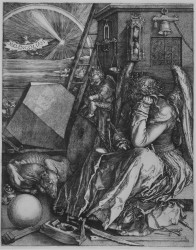
Illustration: Albrecht Dürer - Melencolia I (1514)
Latest Posts
Music of the Iberian Peninsula, Part 3: More observations on the Golden Age
16th June 2026
Our last visit to the Iberian peninsula, a fortnight ago, was an insanely ambitious, necessarily broad-brush survey of the Spanish and Portuguese Golden Age, covering vocal and instrumental music, the sacred and the secular. This week, we take a more concise and (I hope) focussed look at a few of the sacred vocal masterpieces which exemplify the particular fervour and intensity of this remarkable period of musical history. They reflect the special place the peninsula had as a bulwark against the Reformation that had taken... read more
read more
Music of the Iberian Peninsula, Part 3: More observations on the Golden Age
16th June 2026
Our last visit to the Iberian peninsula, a fortnight ago, was an insanely ambitious, necessarily broad-brush survey of the Spanish and Portuguese Golden Age, covering vocal and instrumental music, the sacred and the secular. This week, we take a more concise and (I hope) focussed look at a few of the sacred vocal masterpieces which exemplify the particular fervour and intensity of this remarkable period of musical history. They reflect the special place the peninsula had as a bulwark against the Reformation that had taken... read more
read more
Carl Schachter, Arnold Whittall, and why music analysis matters
9th June 2026
Two recent deaths have robbed the world of music analysis of a pair of its most revered figures. Carl Schachter, who has died at the age of 93, was a pupil of (and subsequently collaborator with) Felix Salzer, himself one of Heinrich Schenker’s foremost students. Schachter continued to enrich and broaden the teaching of Schenkerian analysis, including important work on its application to issues of rhythm (which Schenker, focussing on harmonic and contrapuntal matters, largely bypassed). His influence went well beyond the... read more
read more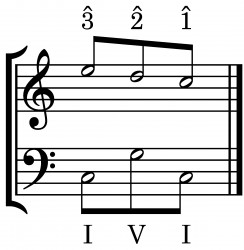
Carl Schachter, Arnold Whittall, and why music analysis matters
9th June 2026
Two recent deaths have robbed the world of music analysis of a pair of its most revered figures. Carl Schachter, who has died at the age of 93, was a pupil of (and subsequently collaborator with) Felix Salzer, himself one of Heinrich Schenker’s foremost students. Schachter continued to enrich and broaden the teaching of Schenkerian analysis, including important work on its application to issues of rhythm (which Schenker, focussing on harmonic and contrapuntal matters, largely bypassed). His influence went well beyond the... read more
read more
Music of the Iberian Peninsula, Part 2: ‘O quam gloriosum’ – The Spanish and Portuguese Golden Age
2nd June 2026
Over the past fortnight, I’ve been bathed in the most glorious, radiant, transformative light. Not the UK’s recent unseasonable heatwave, but the extraordinary vocal polyphony of the Siglo de Oro: the Spanish (and Portuguese) ‘Golden Century’. Extending from the late 15th to the early 17th century, this was a time of remarkable artistic flowering on the Iberian Peninsula, coinciding with the emergence of Spain and Portugal as global imperial powers with extensive colonial territories in the Americas, Africa and Asia. The... read more
read more