 FREE UK SHIPPING OVER £35!
The Spin Doctor Europadisc's Weekly Column
In Praise of Theodora
21st February 2024
21st February 2024
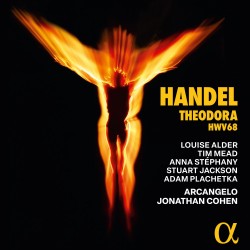 Surely the most intriguing of all Handel’s oratorios is his antepenultimate work in the genre. Unlike the biblical works on Old Testament subjects with which the composer had enjoyed some of his greatest successes, Theodora is based on the story of an early Christian martyr, persecuted for her beliefs by the Roman authorities during the reign of Diocletian. The story is a bleak one. For her refusal to sacrifice to the Roman gods, Theodora is first ordered to serve as a prostitute, and then – when her beloved Didymus, a Roman convert to Christianity, hatches a rescue plan to free her – condemned to death along with Didymus.
Handel composed the work in the summer of 1749 to a libretto by Thomas Morell (1703–1784), based largely on Robert Boyle’s 1687 novella (reprinted in 1744) The Martyrdom of Theodora and Didymus, although the story goes back to a 4th-century account by Saint Ambrose. Handel regarded Morell’s libretto as the best oratorio text he had ever set, and he had a similarly high regard for the music he wrote for it. It abounds in strong characterisations, not just of the two main protagonists, but of the sympathetic Roman soldier Septimius, Theodora’s friend and fellow Christian Irene, and the overbearing Roman governor Valens. The chorus alternates between being bemused and gloating ‘Heathens’ and representatives of the fearful and persecuted Christian community. Handel thought the chorus of Christians at the end of Part 2, ‘He saw the lovely Youth’, infinitely superior to the already celebrated ‘Hallelujah’ chorus from the equivalent point in Messiah.
Yet for all Handel’s strong belief in Theodora, it was not a success during his lifetime. The three performances in the oratorio season of 1750 were sparsely attended, a fact only partly attributable to public fears of a repeat of the earthquake that struck London a week before the premiere. Other factors include the non-biblical subject matter and, more significantly, the work’s sombre, often introspective tone, lacking the tub-thumping triumphalism which audiences craved. A small group of more discerning listeners appreciated the music’s rich beauties, but Theodora was revived only once in Handel’s lifetime, in 1755, and thereafter fell into undeserved neglect.
It was not until the 1990s – rather late in the timeline of the 20th-century Handel revival – that Theodora’s fortunes began to change. Almost overnight, the work’s focus on religious intolerance and the plight of the individual when pitted against a powerful state, as well as its message of hope for a better future (in the form of the afterlife for Theodora and Didymus), began to chime with both performers and audiences. And a succession of recordings and stage performances revealed the music’s astonishing depths and beauties, distributed among an evenly-balanced cast of voice types: soprano (Theodora), mezzo-soprano (Irene), countertenor (Didymus), tenor (Septimius) and bass (Valens).
The remarkable turn-around in Theodora’s fortunes has raised its status considerably. Once virtually unknown to all but the most committed Handelians (there was a 1969 recording with Heather Harper and Maureen Forrester under the baton of Johannes Somary), it is now regarded by many as the greatest of all Handel’s oratorios, while its surely paced narrative makes it well-suited to stage performance, as productions by Peter Sellars, Christof Loy and Katie Mitchell have demonstrated. And although it will never enjoy the popular profile of Messiah, its extraordinary depth of emotional expression has won it a steadily growing band of admirers.
Most recently Theodora has enjoyed the custodianship of Arcangelo under the direction of Jonathan Cohen. Starting with a memorable and acclaimed performance at the 2018 Proms, their account has since toured to Vienna, Antwerp and London’s Barbican Centre. Although the cast has changed over the years, these concert performances have always been led by soprano Louise Alder in the title role, a part perfectly suited to her radiant and endlessly sensitive voice. Now this team’s performance has been recorded on a new set from the Alpha label, and the results – with an aural ‘depth of field’ that does full justice to the music’s seemingly inexhaustible musical riches – are enormously persuasive.
From her very first appearance, Alder exudes an ideal combination of vulnerability and inner strength, and her arias – including the heart-stoppingly anguished ‘With Darkness deep as is my Woe’ with its halting string accompaniment – are absolute pearls. In the more animated ‘O that I on Wings cou’d rise’, the way in which her voice sweeps back to the ritornello is one of the recording’s many treasurable moments. She is coupled here with the Didymus of countertenor Tim Mead, whose tone has been aptly been described as ‘coppery’, and his distinctive voice lends an unforced nobility to the role. His two duets with Alder, ‘To thee, Thou glorious Son of Worth’ and ‘Thither let our Hearts aspire’ are meltingly lovely, belying the work’s sombre reputation of old.
Stuart Jackson makes an excellent Septimius, sympathetic yet animated, fully equal to the shimmering vocal fireworks of ‘Dread the Fruits of Christian Folly’. Anna Stéphany is an intelligent, supportive Irene, while Adam Plachetka is formidable as a powerful, threatening yet focussed Valens. The Arcangelo chorus rise to the almost schizophrenic demands of their dual role as Heathens and Christians, immaculately drilled and clearly projecting but full of engagement with the vivid text. Above all, the Arcangelo instrumentalists – especially the strings on whom much of the expressive burden falls – are simply inspired, with a vast range of projected colours under Cohen’s ever-probing direction. In every number, there is evidence of music that has accompanied them for many seasons, with a depth of engagement, care and insight that nevertheless sounds wonderfully fresh. That’s a tribute to the vividness of the recording, made in St Augustine’s, Kilburn last spring.
This new release is accompanied by compact but insightful notes by Ruth Smith, as well as complete libretto and French translation. There are too many highlights to mention here, but whether or not you already have a Theodora recording on your shelves, you need to hear this one: these performers absolutely own the piece, and they prove that it is not only Handel’s most intriguing oratorio, but also his most emotionally compelling, paradoxically uplifting and, quite probably, greatest.
The Recording:
Handel – Theodora (Alder, Arcangelo / Cohen) ALPHA1025
Latest Posts
Music of the Iberian Peninsula, Part 3: More observations on the Golden Age
16th June 2026
Our last visit to the Iberian peninsula, a fortnight ago, was an insanely ambitious, necessarily broad-brush survey of the Spanish and Portuguese Golden Age, covering vocal and instrumental music, the sacred and the secular. This week, we take a more concise and (I hope) focussed look at a few of the sacred vocal masterpieces which exemplify the particular fervour and intensity of this remarkable period of musical history. They reflect the special place the peninsula had as a bulwark against the Reformation that had taken... read more
read more
Music of the Iberian Peninsula, Part 3: More observations on the Golden Age
16th June 2026
Our last visit to the Iberian peninsula, a fortnight ago, was an insanely ambitious, necessarily broad-brush survey of the Spanish and Portuguese Golden Age, covering vocal and instrumental music, the sacred and the secular. This week, we take a more concise and (I hope) focussed look at a few of the sacred vocal masterpieces which exemplify the particular fervour and intensity of this remarkable period of musical history. They reflect the special place the peninsula had as a bulwark against the Reformation that had taken... read more
read more
Carl Schachter, Arnold Whittall, and why music analysis matters
9th June 2026
Two recent deaths have robbed the world of music analysis of a pair of its most revered figures. Carl Schachter, who has died at the age of 93, was a pupil of (and subsequently collaborator with) Felix Salzer, himself one of Heinrich Schenker’s foremost students. Schachter continued to enrich and broaden the teaching of Schenkerian analysis, including important work on its application to issues of rhythm (which Schenker, focussing on harmonic and contrapuntal matters, largely bypassed). His influence went well beyond the... read more
read more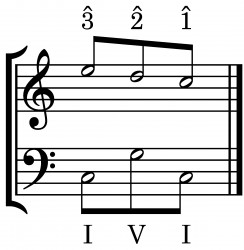
Carl Schachter, Arnold Whittall, and why music analysis matters
9th June 2026
Two recent deaths have robbed the world of music analysis of a pair of its most revered figures. Carl Schachter, who has died at the age of 93, was a pupil of (and subsequently collaborator with) Felix Salzer, himself one of Heinrich Schenker’s foremost students. Schachter continued to enrich and broaden the teaching of Schenkerian analysis, including important work on its application to issues of rhythm (which Schenker, focussing on harmonic and contrapuntal matters, largely bypassed). His influence went well beyond the... read more
read more
Music of the Iberian Peninsula, Part 2: ‘O quam gloriosum’ – The Spanish and Portuguese Golden Age
2nd June 2026
Over the past fortnight, I’ve been bathed in the most glorious, radiant, transformative light. Not the UK’s recent unseasonable heatwave, but the extraordinary vocal polyphony of the Siglo de Oro: the Spanish (and Portuguese) ‘Golden Century’. Extending from the late 15th to the early 17th century, this was a time of remarkable artistic flowering on the Iberian Peninsula, coinciding with the emergence of Spain and Portugal as global imperial powers with extensive colonial territories in the Americas, Africa and Asia. The... read more
read more