 FREE UK SHIPPING OVER £35!
The Spin Doctor Europadisc's Weekly Column
Looking back on 2023
20th December 2023
20th December 2023
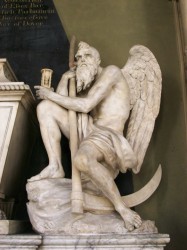 As the end of the calendar year fast approaches, looking back on 2023 prompts mixed emotions. At last clear of most of the challenges set by the global health crisis of 2020-22, musicians, performing artists and their audiences have had other problems to contend with. Global emergencies and conflicts dominate the headlines more depressingly than ever, and the ongoing cost-of-living crisis continues to have an impact, whether on private purse-strings or strategic cultural spending.
2023 was the year when the BBC – under continued budgetary pressures – announced the demise of its widely-respected professional chamber choir, the BBC Singers, as well as cuts to its orchestras, only to announce a (temporary?) reprieve just weeks later after a public outcry. Hasty alterations were made to enable the Singers to take part in the 2023 BBC Proms: the first snag-free season since before the COVID pandemic. This was a rare cause for celebration, although many noted the post-Brexit scarcity of big-name international orchestras. Will the Proms see the great orchestras of Berlin, Vienna and Chicago again any time soon? Is the nature of the classical concert itself undergoing an epochal change, with Virtual Reality and Artificial Intelligence set to play ever larger roles in an effort to get bums on seats?
The world of opera continues to face challenges, with many smaller groups and country-house ventures forced to scale back or even discontinue because of the financial situation and cuts to grants. In the UK, the biggest question mark remains over the future of English National Opera, whose music director Martyn Brabbins resigned amid plans to reduce the size of its orchestra. ENO will move much of its operation – though not its large-scale productions – to Manchester, the city which has just had a high-speed rail link project from London withdrawn. Joined-up thinking it ain’t. Whether, as one newspaper article suggested recently, the results ‘could be really interesting’ remains to be seen.
This year has also seen the final curtain for a number of big names in the classical music world. Followers of contemporary music will have mourned the losses of composers Friedrich Cerha and Kaija Saariaho, as well as the co-founder of the London Sinfonietta, Nicholas Snowman. Notable singers including Soňa Červená, Renata Scotto, Grace Bumbry, James Bowman and Ryland Davies, together with distinguished Wagnerians Graham Clark and Stephen Gould, have all sung their last. Pianists to have left the stage for the final time include Ingrid Haebler, Anatol Ugorski, André Watts, Naxos stalwart Jenő Jandó, and the widely-loved and revered Menahem Pressler, the last original member of the Beaux Arts Trio. The Czech conductor Zdeněk Mácal and Russian maestro Yuri Temirkanov also died this year.
The year was also one of celebrations, with the Rachmaninov sesquicentenary and Byrd quatercentenary most widely marked, both in live performances and on disc. It was also the 400th anniversary of the death of Byrd’s younger (and wilder) contemporary Thomas Weelkes, although significant milestones for Édouard Lalo (born in 1823) and Max Reger (born in 1873) were much less in evidence. (Reger’s complete organ works have just been reissued on the Brilliant Classics label, while next month Chandos releases a disc of Lalo’s orchestral works conducted by Neeme Järvi.)
Following a helpful suggestion from one of our regular correspondents, we trained our sights on the music of Finland in a series of ongoing articles which we hope to conclude (at least for the time being!) in the New Year, with Rautavaara, Saariaho and others in the frame. Following that, the Iberian Peninsula seems long overdue a visit: watch this space for future developments! Of our other pieces this year, the focus on collecting and storing recorded music generated probably the most responses, but our feature on vinyl proved that many of you are still attached to the older medium. And our articles on the inescapable Coronation (particularly the ‘alternative’ coronation playlist) prompted a fair amount of discussion and even controversy.
As always, our intention is to inform, entertain and provoke: if we can manage at least one of these each week in the coming year, we'll be happy! After a rather slow-burning year, my own personal New Year’s resolution is to get to more live musicmaking, while still listening to as many recordings and broadcasts as I possibly can. In the meantime, we wish all of you – not least the performers, supporting staff and audiences who make it all worthwhile – the very best for the holiday season, however you observe it!
Lalo - Orchestral Works (Estonian National SO / Järvi) CHAN20183
Reger - Complete Organ Music (R Marini) 97066
Latest Posts
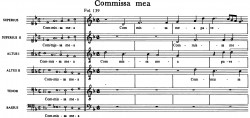
Music of the Iberian Peninsula, Part 3: More observations on the Golden Age
16th June 2026
Our last visit to the Iberian peninsula, a fortnight ago, was an insanely ambitious, necessarily broad-brush survey of the Spanish and Portuguese Golden Age, covering vocal and instrumental music, the sacred and the secular. This week, we take a more concise and (I hope) focussed look at a few of the sacred vocal masterpieces which exemplify the particular fervour and intensity of this remarkable period of musical history. They reflect the special place the peninsula had as a bulwark against the Reformation that had taken... read more
read more
Music of the Iberian Peninsula, Part 3: More observations on the Golden Age
16th June 2026
Our last visit to the Iberian peninsula, a fortnight ago, was an insanely ambitious, necessarily broad-brush survey of the Spanish and Portuguese Golden Age, covering vocal and instrumental music, the sacred and the secular. This week, we take a more concise and (I hope) focussed look at a few of the sacred vocal masterpieces which exemplify the particular fervour and intensity of this remarkable period of musical history. They reflect the special place the peninsula had as a bulwark against the Reformation that had taken... read more
read more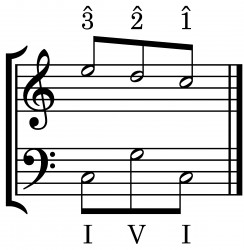
Carl Schachter, Arnold Whittall, and why music analysis matters
9th June 2026
Two recent deaths have robbed the world of music analysis of a pair of its most revered figures. Carl Schachter, who has died at the age of 93, was a pupil of (and subsequently collaborator with) Felix Salzer, himself one of Heinrich Schenker’s foremost students. Schachter continued to enrich and broaden the teaching of Schenkerian analysis, including important work on its application to issues of rhythm (which Schenker, focussing on harmonic and contrapuntal matters, largely bypassed). His influence went well beyond the... read more
read more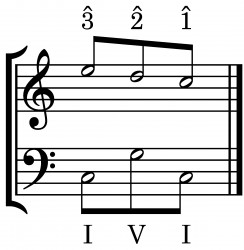
Carl Schachter, Arnold Whittall, and why music analysis matters
9th June 2026
Two recent deaths have robbed the world of music analysis of a pair of its most revered figures. Carl Schachter, who has died at the age of 93, was a pupil of (and subsequently collaborator with) Felix Salzer, himself one of Heinrich Schenker’s foremost students. Schachter continued to enrich and broaden the teaching of Schenkerian analysis, including important work on its application to issues of rhythm (which Schenker, focussing on harmonic and contrapuntal matters, largely bypassed). His influence went well beyond the... read more
read more
Music of the Iberian Peninsula, Part 2: ‘O quam gloriosum’ – The Spanish and Portuguese Golden Age
2nd June 2026
Over the past fortnight, I’ve been bathed in the most glorious, radiant, transformative light. Not the UK’s recent unseasonable heatwave, but the extraordinary vocal polyphony of the Siglo de Oro: the Spanish (and Portuguese) ‘Golden Century’. Extending from the late 15th to the early 17th century, this was a time of remarkable artistic flowering on the Iberian Peninsula, coinciding with the emergence of Spain and Portugal as global imperial powers with extensive colonial territories in the Americas, Africa and Asia. The... read more
read more