 FREE UK SHIPPING OVER £35!
The Spin Doctor Europadisc's Weekly Column
Who is the Greatest of Them All?
29th November 2023
29th November 2023
 It was probably in 1999 that I became aware of the scale of the problem and the sheer stupidity of it all: HMV stores (remember those?) and the UK’s Channel 4 network teamed up (together with minor input from Classic FM) to conduct a poll to determine the ‘Music of the Millennium’. Well, it was asking for trouble, wasn’t it? A millennium: that’s a thousand years by normal reckoning. Yet with the sole exception of the ‘Best Piece of Classical Music’* and ‘Best Classical Composer’** categories, the entire poll was dominated by music of the previous four decades. In a millennial context, the choices looked desperately myopic. Best Songwriter (of the Millennium, remember): John Lennon; of Franz Schubert and Robert Schumann, not a whiff, let alone Guillaume de Machaut or Josquin Desprez. Best Male Singer? Elvis Presley, followed by Robbie Williams and Michael Jackson. Sorry about that, Pavarotti, Caruso, Martinelli, Senesino, et al.
Unfortunately, things are hardly less moronic when it comes to ‘classical’ music alone. Classic FM’s annual ‘Hall of Fame’ seems to be an ongoing ‘Old Firm’ tussle between Rachmaninov’s Piano Concerto no.2 and Vaughan Williams’s The Lark Ascending. Still, at least it doesn’t claim that these are the best classical music there is, let alone of the last thousand years. But there are plenty of other forms of indulging in the rather schoolboyish practice of ranking: Radio 3’s ‘Building a Library’, for instance, or the top choice in Gramophone magazine’s ‘Gramophone Collection’, both of which take an individual piece of music and whittle the choices down to the eventual winner. (We hold our hands up here: our own ‘Top Ten’ Discs of the Year are a similar exercise in telling you The Recordings You Really Need To Own.)
The problem with this sort of musical beauty parade is even more apparent with online forums where, for instance, one contributor recently declared a still-living pianist (unquestionably a great artist in her own right) as ‘the greatest Bach player ever’. While several respondents were quick to offer their own alternatives, depressingly few pointed out that the greatest Bach player ever might perhaps have been Bach himself… Recent swooning reviews of Ravel’s Daphnis et Chloé and Bach’s Goldberg Variations have fallen into a similar trap. People can get very defensive of their own particular favourites, but it’s the blind certainty of those who claim a particular singer, player, orchestra or conductor as The Greatest that is most worrying. Music shouldn’t be a competition. The fact that one work, performance or performer means a lot to me doesn’t mean that everyone should agree. Enthusiasm can be a powerful tool in persuading others to open their minds, but simply declaring (as many classical presenters seem to do these days) that something is ‘amazing’ is no substitute for nuanced description. In other words: don’t tell me, show me.
The practice of ranking recordings – whether by sales or by (often superficial) comparison with others (faster than Toscanini, slower than Klemperer) – risks reducing the joys of listening to music to a sort of glorified Crufts. Some artists seem to achieve top-ranking partly because of the sheer number of their recordings (Karajan’s recordings for DG and EMI flooded the market in the 1960s to 1980s, exaggerating their merits through sheer commercial pulling power), others because of their very scarcity (Carlos Kleiber being an obvious example). Sage heads warn over the hype surrounding the latest Wunderkinds, harking instead back to the glory days of Furtwängler, Klemperer, Solomon and Backhaus; yet their long-departed seniors would no doubt have held a similar position and looked back still further with longing to Weingartner, Nikisch, Schnabel and Cortot. By all accounts, Gustav Mahler was one of the most remarkable conductors ever to mount the podium, yet you rarely encounter him in discussions of the ‘greatest’ conductors because of the lack of recordings. In music – as the ‘Music of the Millennium’ poll amply demonstrated – memories can be shockingly short, yet at the same time the recent past can cast a long shadow over artists of the present day. Some figures are forgotten almost as soon as they exit the stage, while for others death seems to cement their legendary status.
All of which simply adds to the bafflement of potential newcomers to the world of classical music. For all the ‘iconic’ status of certain works, composers and performers, there’s no telling what may grip the listener at any given moment. The proliferation of unknown repertoire of the past being uncovered by such labels as CPO, MDG and Toccata Classics, to name just three of the more enterprising labels out there, suggests that there’s certainly an audience for music that sits outside the canon. For those wanting to explore beyond the Cruftian world of the Great Works and Great Performers that seem to be the bread and butter of the commercial industry, there’s probably never been a better time to explore the cultural byways and escape the treadmill of the endless quest for ‘the Greatest’.
A few recent recommendations:
N Berg - Symphonies 4 & 5 7776652
Casali - Sacred Music from Eighteenth-Century Rome TOCC0429
Kalinnikov - Orchestral Works MDG95222406
Müller-Hartmann - Chamber Works CHAN20294
Pepusch - Chandos Anthems ACC24397
* Rather predictably, Vivaldi’s ‘Four Seasons’
** Equally predictably, Mozart (followed by Beethoven and J.S. Bach)
Latest Posts
Music of the Iberian Peninsula, Part 3: More observations on the Golden Age
16th June 2026
Our last visit to the Iberian peninsula, a fortnight ago, was an insanely ambitious, necessarily broad-brush survey of the Spanish and Portuguese Golden Age, covering vocal and instrumental music, the sacred and the secular. This week, we take a more concise and (I hope) focussed look at a few of the sacred vocal masterpieces which exemplify the particular fervour and intensity of this remarkable period of musical history. They reflect the special place the peninsula had as a bulwark against the Reformation that had taken... read more
read more
Music of the Iberian Peninsula, Part 3: More observations on the Golden Age
16th June 2026
Our last visit to the Iberian peninsula, a fortnight ago, was an insanely ambitious, necessarily broad-brush survey of the Spanish and Portuguese Golden Age, covering vocal and instrumental music, the sacred and the secular. This week, we take a more concise and (I hope) focussed look at a few of the sacred vocal masterpieces which exemplify the particular fervour and intensity of this remarkable period of musical history. They reflect the special place the peninsula had as a bulwark against the Reformation that had taken... read more
read more
Carl Schachter, Arnold Whittall, and why music analysis matters
9th June 2026
Two recent deaths have robbed the world of music analysis of a pair of its most revered figures. Carl Schachter, who has died at the age of 93, was a pupil of (and subsequently collaborator with) Felix Salzer, himself one of Heinrich Schenker’s foremost students. Schachter continued to enrich and broaden the teaching of Schenkerian analysis, including important work on its application to issues of rhythm (which Schenker, focussing on harmonic and contrapuntal matters, largely bypassed). His influence went well beyond the... read more
read more
Carl Schachter, Arnold Whittall, and why music analysis matters
9th June 2026
Two recent deaths have robbed the world of music analysis of a pair of its most revered figures. Carl Schachter, who has died at the age of 93, was a pupil of (and subsequently collaborator with) Felix Salzer, himself one of Heinrich Schenker’s foremost students. Schachter continued to enrich and broaden the teaching of Schenkerian analysis, including important work on its application to issues of rhythm (which Schenker, focussing on harmonic and contrapuntal matters, largely bypassed). His influence went well beyond the... read more
read more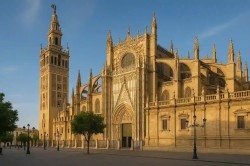
Music of the Iberian Peninsula, Part 2: ‘O quam gloriosum’ – The Spanish and Portuguese Golden Age
2nd June 2026
Over the past fortnight, I’ve been bathed in the most glorious, radiant, transformative light. Not the UK’s recent unseasonable heatwave, but the extraordinary vocal polyphony of the Siglo de Oro: the Spanish (and Portuguese) ‘Golden Century’. Extending from the late 15th to the early 17th century, this was a time of remarkable artistic flowering on the Iberian Peninsula, coinciding with the emergence of Spain and Portugal as global imperial powers with extensive colonial territories in the Americas, Africa and Asia. The... read more
read more