 FREE UK SHIPPING OVER £35!
The Spin Doctor Europadisc's Weekly Column
Remembering two Slavic conductors
7th November 2023
7th November 2023
 The past fortnight has seen the passing of two conductors who rose to prominence in the 1970s and forged very different career paths in the febrile post-war atmosphere of central and eastern Europe. Born in Brno, Czechoslovakia, on 8 January 1936, Zdeněk Mácal received his first violin lessons at an early age from his father, before entering the city’s Conservatory and Janáček Academy of Performing Arts and graduating with top honours in 1960. He looked set for success when, after becoming principal conductor of the Prague Symphony Orchestra, in the mid-1960s he won international conducting competitions in Besançon and New York. But the Soviet-led suppression of the Prague Spring in 1968 prompted Macal and his young family to flee the country. He was invited by fellow-emigré Rafael Kubelík to conduct the Bavarian Radio Symphony Orchestra in contemporary music, and made his London debut in 1969 with the Bournemouth Symphony Orchestra, deputising for the indisposed Constantin Silvestri.
In 1970 Macal became chief conductor of the WDR Symphony Orchestra in Cologne, where he remained for four years. In 1972 he made his US debut with the Chicago Symphony Orchestra, the beginning of a long association with American orchestras. In 1980 he was appointed chief conductor of the NDR Orchestra in Hanover, an appointment that lasted for three years. He briefly occupied a similar post with the Sydney Symphony Orchestra in 1986, but departed during his inaugural season. His appointments as music director of the Milwaukee Symphony Orchestra (1986–95) and New Jersey Symphony Orchestra (1993–2002) were more successful, and led to several notable recording projects. But what should have been the summit of his career, as chief conductor of the Czech Philharmonic from 2003, ended with his sudden resignation in 2007, though not before making a series of recordings of Czech repertoire and Mahler for the Exton label.
Macal was a lifelong champion of the music of Dvořák, as well as works by Smetana (an acclaimed Má vlast from Milwaukee on Telarc), Vítězslav Novák and Suk. His care over detail and textural tranbsparency, and a sure sense of pacing, are all evident in the recording that established his name with many western listeners: Dvořák’s ‘New World’ Symphony with the London Philharmonic Orchestra, which was an early digital-era success on EMI’s Classics for Pleasure imprint. Complete with the then rarely-observed exposition repeat, it’s a performance that still sounds remarkably fresh and deserves reissue, although he later returned to the piece (and many other Dvořák works) with both the New Jersey Symphony and the Czech Philharmonic.
While Macal forged a career as an emigré, his near contemporary, the Russian conductor Yuri Temirkanov, was a more establishment figure, although he maintained that he never joined the Communist party during the Soviet part of his career. He was born on 10 December 1938 in the North Caucasus city of Nalchik. He studied violin and viola in Leningrad, which became the focal point for his career. From 1968 to 1976 he was principal conductor of the Leningrad Symphony Orchestra, and from 1976 to 1988 music director of the Kirov Opera and Ballet (since renamed the Mariinsky).
Temirkanov was one of the first Soviet artists allowed to perform in the United States following the end of the Soviet-Afghan War in 1988. His international career further blossomed following the end of the Cold War: from 1992 to 1998 he was chief conductor of the Royal Philharmonic Orchestra, with whom he made several successful recordings including the complete Tchaikovsky symphonies for RCA. He followed this with seven seasons as music director of the Baltimore Symphony Orchestra, where he won the devotion of musicians and audiences alike and excelled in the Russian and Soviet repertoires.
The undoubted highpoint of Temirkanov’s career, however, was his 34 years as head of the Leningrad/St Petersburg Philharmonic, which he took over in succession to the legendary Evgeny Mravinsky. Although he lacked the latter’s knife-edge precision (or, for that matter, Evgeny Svetlanov’s heady, often revelatory volatility), Temirkanov’s expressive hand technique (he eschewed the baton he had employed in earlier years) had a balletic quality which he used to mould his own distinctive interpretations. For his detractors, these could verge on the wilful, with unmarked changes of tempi, dynamics and even scoring, making his performances of Tchaikovsky and Shostakovich often highly controversial. Comparably controversial were his views on women conductors, much discussed in obituary columns over the past week.
Temirkanov was arguably at his best in Rachmaninov, where his indulgent modifications jarred less with the thrust of the music. He was also outstanding in Verdi: his interpretation of the Messa da Requiem was widely admired for its surprising restraint and clear-headedness, respectful and devotional without being overtly pious, and he coaxed from his singers (soloists and chorus) performances of matching nobility – a quality which also informed his readings of another surprising favourite work, Elgar’s ‘Enigma’ Variations. Although not quite the last representative of the old ‘Soviet School’ (Fedoseyev and Simonov survive him), Yuri Temirkanov was certainly among its last high-profile members, and with him another part of a distinctive cultural legacy dies out, its echoes fortunately preserved on disc and in numerous video recordings.
Recommended recordings:
Dvořák - Requiem, Symphony no.9 (Westminster Symphonic Choir, New Jersey SO/Macal) DE3260
Dvořák - The Spectre’s Bride (Westminster Symphonic Choir, New Jersey SO/Macal) DE3296
Yuri Temirkanov at the BBC Proms (St Petersburg PO) ICAD5065 (DVD)
Verdi – Messa da Requiem (Teatro Regio di Parma/Temirkanov) 725408 (DVD)
Latest Posts
Music of the Iberian Peninsula, Part 3: More observations on the Golden Age
16th June 2026
Our last visit to the Iberian peninsula, a fortnight ago, was an insanely ambitious, necessarily broad-brush survey of the Spanish and Portuguese Golden Age, covering vocal and instrumental music, the sacred and the secular. This week, we take a more concise and (I hope) focussed look at a few of the sacred vocal masterpieces which exemplify the particular fervour and intensity of this remarkable period of musical history. They reflect the special place the peninsula had as a bulwark against the Reformation that had taken... read more
read more
Music of the Iberian Peninsula, Part 3: More observations on the Golden Age
16th June 2026
Our last visit to the Iberian peninsula, a fortnight ago, was an insanely ambitious, necessarily broad-brush survey of the Spanish and Portuguese Golden Age, covering vocal and instrumental music, the sacred and the secular. This week, we take a more concise and (I hope) focussed look at a few of the sacred vocal masterpieces which exemplify the particular fervour and intensity of this remarkable period of musical history. They reflect the special place the peninsula had as a bulwark against the Reformation that had taken... read more
read more
Carl Schachter, Arnold Whittall, and why music analysis matters
9th June 2026
Two recent deaths have robbed the world of music analysis of a pair of its most revered figures. Carl Schachter, who has died at the age of 93, was a pupil of (and subsequently collaborator with) Felix Salzer, himself one of Heinrich Schenker’s foremost students. Schachter continued to enrich and broaden the teaching of Schenkerian analysis, including important work on its application to issues of rhythm (which Schenker, focussing on harmonic and contrapuntal matters, largely bypassed). His influence went well beyond the... read more
read more
Carl Schachter, Arnold Whittall, and why music analysis matters
9th June 2026
Two recent deaths have robbed the world of music analysis of a pair of its most revered figures. Carl Schachter, who has died at the age of 93, was a pupil of (and subsequently collaborator with) Felix Salzer, himself one of Heinrich Schenker’s foremost students. Schachter continued to enrich and broaden the teaching of Schenkerian analysis, including important work on its application to issues of rhythm (which Schenker, focussing on harmonic and contrapuntal matters, largely bypassed). His influence went well beyond the... read more
read more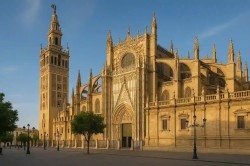
Music of the Iberian Peninsula, Part 2: ‘O quam gloriosum’ – The Spanish and Portuguese Golden Age
2nd June 2026
Over the past fortnight, I’ve been bathed in the most glorious, radiant, transformative light. Not the UK’s recent unseasonable heatwave, but the extraordinary vocal polyphony of the Siglo de Oro: the Spanish (and Portuguese) ‘Golden Century’. Extending from the late 15th to the early 17th century, this was a time of remarkable artistic flowering on the Iberian Peninsula, coinciding with the emergence of Spain and Portugal as global imperial powers with extensive colonial territories in the Americas, Africa and Asia. The... read more
read more