 FREE UK SHIPPING OVER £35!
The Spin Doctor Europadisc's Weekly Column
Early Music Round-Up: Recent and Forthcoming Releases
13th September 2023
13th September 2023
 Although many of the lessons of the historically-informed performance (HIP) movement have been eagerly adopted by mainstream performers (witness the stylistic shift in new recordings of Beethoven, Schumann and Brahms symphonies over the last couple of decades), the wider ‘Early Music’ world still thrives on a mixture of familiar repertoire, neglected works and new discoveries. The regular supply of new recordings of exceptional quality shows no signs of drying up, giving the lie to the frequently proclaimed death of recorded classical music on disc.
Even as wildly popular a composer as Antonio Vivaldi – the subject of the Naïve label’s ongoing Vivaldi Edition whose latest volume of violin concertos (from Fabio Biondi) is due for release next week – continues to serve up surprises. And with the majority of his 230 concertos for his own instrument still relatively rarely recorded, there’s certainly room for a variety of interpretations. What makes Giuliano Carmignola’s The Three Seasons of Antonio Vivaldi (3 CDs, Arcana) so welcome is its generous survey across the course of the Red Priest’s career, from relatively familiar Venetian works including individual concertos Op.3 and Op.8, to much rarer items in Austrian and Bohemian archives. Carmignola’s effortless stylishness and the engagingly lively support of Accademia dell'Annunciata under Riccardo Doni make this dazzling selection of 18 concertos required listening for all Baroque afficionados.
Another Early Music touchstone is the output of Johann Sebastian Bach. It’s good to see Bojan Čičić’s splendid account for Delphian of the unaccompanied Violin Sonatas and Partitas (which we reviewed back in July) welcomed by Edward Breen in the pages of October’s Gramophone as ‘a wonderful addition to a strong field of baroque performances, technically assured and deeply considered.’ Other Bach that’s impressed us recently includes Andrew Arthur’s refreshingly unfussy second volume of harpsichord concertos with The Hanover Band on Signum (including ‘Brandenburg’ Concerto no.5, and the harpsichord version of Brandenburg no.4), and a new account for a variety of stringed instruments including piccolo violin and piccolo cello of The Art of Fugue (Les Récréations on Ricercar). Due out next week (22 September) is an absorbing album entitled ‘Bach & l’Italie’ from young harpsichordist Justin Taylor on Alpha Classics, including not just such familiar items as the Italian Concerto, but many other less well-known works and movements in the Italian manner, placed alongside contemporaries including Marcello, Vivaldi and Alessandro Scarlatti.
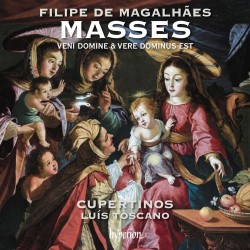
Venturing further back, Henry Purcell’s astonishing Fantazias – jewels of Baroque instrumental polyphony usually heard on viols – make a rare appearance on instruments of the violin family courtesy of the John Holloway Ensemble on ECM New Series. A yet earlier genius of English music, the Tudor composer John Sheppard (c.1515–1558) gets the spotlight shone on his Missa Cantate by Peter Phillips’s Tallis Scholars (Gimell), together with his astonishing votive antiphon Gaude virgo Christiphera, which should be balm for lovers of Renaissance polyphony. Speaking of which, the Cupertinos consort under Luís Toscano continue their exploration of masters of the Portuguese Renaissance on Hyperion with a disc of music by Filipe de Magalhães (c.1563-1652), including two Masses and a Magnificat, recorded in the sumptuously resonant acoustic of the Basílica do Bom Jesus, Braga. Existing fans of this series will know what to expect: it’s enthusiastically recommended to any newcomers!
Earlier still, a forthcoming disc of music by Josquin Desprez from Gli Angeli Genève under Stephan MacLeod on Aparte, centred on his Missa ‘Malheur me bat’, has already aroused our interest, as has a disc of one of this year’s most prominent anniversary composers, William Byrd, with a disc of his keyboard music performed by organist Stephen Farr on the Resonus label. As well as being the house label of The Sixteen under Harry Christophers, the CORO imprint has started issuing (and reissuing) recordings by I Fagiolini under Robert Hollingworth: their account of Orazio Benevoli’s polychoral Missa ‘Tu es Petrus’ (coupled with Palestrina’s motet on which it’s based, as well as motets by Bonifazio Graziano) should open up new perspectives on 17th-century Italian vocal music.
Fast forward to the Classical era, and it is Haydn who is experiencing a veritable renaissance in the run-up to 2032’s tercentenary. The latest volume (no.14!) of Giovanni Antonini’s ongoing survey of the complete symphonies on the Alpha label includes the magnificent Symphony no.53 in D major, ‘L’Impériale’, as well as the similarly imposing no.54 in G major and the vibrant no.33 in C major, all played with immense stylishness by the Kammerorchester Basel. When it’s eventually completely, this cycle will surely become a new benchmark for these life-enhancing works. (But keep eyes peeled for the much-anticipated third volume of The Mozartists’ Sturm und Drang series, which includes Haydn’s Trauer-Symphonie [no.44] alongside Mozart’s C minor Adagio and Fugue and rarities from Anton Schweitzer, Leopold Kozeluch and Paisiello.)
As we’ve remarked before, the boundaries of ‘period performance’ are becoming ever more porous, with period-instrument specialists now venturing well into the 20th century. Certainly the output of the 19th-century German composer Emilie Mayer, with its beginnings in Viennese-like classicism and venturing increasingly into the Romantic idiom, is ripe for tackling, and a new disc of four of her concert overtures plus the Piano Concerto in B flat major makes compelling listening. The period instrumentalists of Michael Alexander Willens’s Kölner Akademie are joined by fortepianist Tobias Koch to make one of the most convincing discs of Mayer’s music we’ve yet heard. A recent disc of Bernhard Crussell’s large-scale choral-orchestral work The Last Warrior, with narration provided by Frank Skog, has almost Bergmanesque moments, and the Bassoon Concerto coupling is just as fascinating (Crusell is better known for his clarinet works). Our final 19th-century tip must be a new disc of Brahms’s Violin Sonatas, performed on period instruments (and informed by a study of Brahmsian performance practice) by Johannes Leertouwer and Julian Reynolds (Challenge Classics).
Whether your taste is for the early or the more recent, the world of ‘Early Music’ continues to cover a vast repertoire, and with performances and recordings of ever higher quality, there’s loads to choose from. Our recommendations are just a personal selection from among the hundreds out there!
The Recordings:
The Three Seasons of Antonio Vivaldi (Carmignola) A550
JS Bach - Harpsichord Concertos (Hanover Band/Arthur) SIGCD764
JS Bach - Die Kunst der Fuge (Les Récréations) RIC453
Bach & l’Italie (Justin Taylor) ALPHA998
Purcell - Fantazias (Holloway) 4856006
Sheppard - Missa Cantate (Tallis Scholars) CDGIM053
Magalhães - Missa Veni Domine & Missa Vere Dominus est (Cupertinos) CDA68403
Josquin Desprez - Malheur me bat (Gli Angeli Genève) AP338
Byrd - Keyboard Works (Farr) RES10326
Benevoli - Missa Tu es Petrus (I Fagiolini) COR16201
Haydn 2032 Vol.14: L’Impériale (Antonini) ALPHA694
Sturm und Drang Vol.3 (The Mozartists/Page) SIGCD759
E Mayer - Piano Concerto, Overtures (Koch, Kölner Akademie/Willens) 5555542
Crusell - The Last Warrior, etc. (Helsinki Baroque Orchestra/Häkkinen) ODE14242
Brahms - Complete Violin Sonatas (Leertouwer, Reynolds) CC72964
Latest Posts
Music of the Iberian Peninsula, Part 3: More observations on the Golden Age
16th June 2026
Our last visit to the Iberian peninsula, a fortnight ago, was an insanely ambitious, necessarily broad-brush survey of the Spanish and Portuguese Golden Age, covering vocal and instrumental music, the sacred and the secular. This week, we take a more concise and (I hope) focussed look at a few of the sacred vocal masterpieces which exemplify the particular fervour and intensity of this remarkable period of musical history. They reflect the special place the peninsula had as a bulwark against the Reformation that had taken... read more
read more
Music of the Iberian Peninsula, Part 3: More observations on the Golden Age
16th June 2026
Our last visit to the Iberian peninsula, a fortnight ago, was an insanely ambitious, necessarily broad-brush survey of the Spanish and Portuguese Golden Age, covering vocal and instrumental music, the sacred and the secular. This week, we take a more concise and (I hope) focussed look at a few of the sacred vocal masterpieces which exemplify the particular fervour and intensity of this remarkable period of musical history. They reflect the special place the peninsula had as a bulwark against the Reformation that had taken... read more
read more
Carl Schachter, Arnold Whittall, and why music analysis matters
9th June 2026
Two recent deaths have robbed the world of music analysis of a pair of its most revered figures. Carl Schachter, who has died at the age of 93, was a pupil of (and subsequently collaborator with) Felix Salzer, himself one of Heinrich Schenker’s foremost students. Schachter continued to enrich and broaden the teaching of Schenkerian analysis, including important work on its application to issues of rhythm (which Schenker, focussing on harmonic and contrapuntal matters, largely bypassed). His influence went well beyond the... read more
read more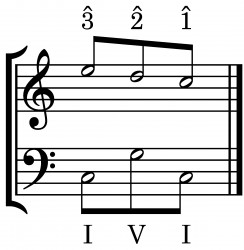
Carl Schachter, Arnold Whittall, and why music analysis matters
9th June 2026
Two recent deaths have robbed the world of music analysis of a pair of its most revered figures. Carl Schachter, who has died at the age of 93, was a pupil of (and subsequently collaborator with) Felix Salzer, himself one of Heinrich Schenker’s foremost students. Schachter continued to enrich and broaden the teaching of Schenkerian analysis, including important work on its application to issues of rhythm (which Schenker, focussing on harmonic and contrapuntal matters, largely bypassed). His influence went well beyond the... read more
read more
Music of the Iberian Peninsula, Part 2: ‘O quam gloriosum’ – The Spanish and Portuguese Golden Age
2nd June 2026
Over the past fortnight, I’ve been bathed in the most glorious, radiant, transformative light. Not the UK’s recent unseasonable heatwave, but the extraordinary vocal polyphony of the Siglo de Oro: the Spanish (and Portuguese) ‘Golden Century’. Extending from the late 15th to the early 17th century, this was a time of remarkable artistic flowering on the Iberian Peninsula, coinciding with the emergence of Spain and Portugal as global imperial powers with extensive colonial territories in the Americas, Africa and Asia. The... read more
read more