 FREE UK SHIPPING OVER £35!
The Spin Doctor Europadisc's Weekly Column
In Praise of Zelenka
23rd August 2023
23rd August 2023
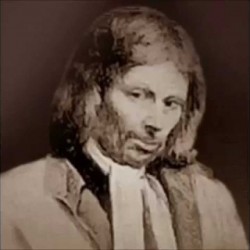 Of the many fine Czech musicians of the Baroque era, one of the most outstanding yet still underappreciated is the composer Jan Dismas Zelenka (1679-1745). This will come as a surprise to the many existing converts to his uniquely distinctive soundworld. Yet although his music has experienced a significant revival since the 1970s, the fact is that the profile of this marvellous musician - admired during his lifetime by such figures as Telemann and J.S. Bach - is still not quite at the level it merits. At its best - especially the music of the early 1720s and his later years - Zelenka's works are wonderfully idiosyncratic, with bold harmonic shifts and chromaticism, adventurous instrumentation (including the chalumeau - an ancestor of the clarinet - and bold horn writing), and a lively rhythmic element which some commentators have traced to the influence of the folk music of his Czech homeland.
Zelenka was born in October 1679 in the Bohemian village of Louňovice pod Blaníkem, southeast of Prague. His first musical training likely came from his father, Jiří, who was cantor and organist of the parish church. His further training seems to have been during the course of a Jesuit education in Prague, and by 1711 he had moved to Dresden, where he was a violone (double bass) player in the court chapel (Hofkapelle). Here his stock (and salary) quickly rose, apparently thanks to a performance of his Missa Sanctae Caeciliae, ZWV1, the first in an extensive output of Catholic church music.
Although Zelenka developed a fine awareness of foreign musical trends, suggestions that he spent a period of study in Italy are unsubstantiated. He did, however, undertake studies in Vienna with the imperial Kapellmeister Johann Joseph Fux (author of the classic counterpoint treatise Gradus ad Parnassum). By spring 1719 he had returned to Dresden, where the closure of the opera in 1720 led to a sustained promotion of Catholic liturgical music, to which Zelenka enthusiastically contributed, as well as composing his celebrated set of six Trio Sonatas, ZWV161. The most notable success of his career, however, was the lavish Melodrama de Sancto Wenceslao, ZWV175, an extended series of tableaux on Czech history celebrating the coronation of Emperor Charles VI and his consort as King and Queen of Bohemia. Zelenka himself directed the performance on 12 September in the presence of the imperial couple and a huge audience.
In July 1729 Zelenka's immediate superior at the Dresden court, Johann David Heinichen, died, yet ultimately he was passed over for promotion in favour of Johann Adolf Hasse, who came in a 'package' with his wife, the brilliant star soprano Faustina Bordoni. There are conflicting opinions as to how much this was a factor in Zelenka's later decline in health, yet his salary increased (partly as a result of petitions), and from 1734 he was effectively vice-Kapellmeister in Dresden. Among his close friends, he counted not just Telemann, but J.G. Pisendel and the great lutenist Sylvius Leopold Weiss, while his pupils included Johann Joachim Quantz, who went on to great success as Frederick the Great's flautist in Berlin.
Zelenka died of dropsy on 23 December 1745 in Dresden, and was buried on Christmas Eve. Unmarried and with no children, he nevertheless left a huge legacy in his music. Initially rediscovered by Smetana in the 19th century, the bulk of his output was presumed destroyed during the February 1945 firebombing of Dresden, but luckily most of his scores were stored away from the bombed Hofkirche, and since the 1950s they have gradually resurfaced. A significant factor in the revival of Zelenka's fortunes was the recordings of orchestral and chamber music made by Camerata Bern for Archiv Produktion in the mid-1970s (subsequently reissued on CD but currently deleted). His music has always been well represented on the Czech national label, Supraphon, but in recent years the series of performances by Václav Luks and his Collegium 1704 for Accent have been notable for their characterful and historically-informed approach, with exceptionally nuanced solo and choral singing.
No collection of Baroque music should be without Zelenka's Trio Sonatas, but his deliciously quirky orchestral Capriccios are also required listening, while among his sacred music the quality of his Lamentations and Responsories for Holy Week is superb. Other recommendations are included in the list below. Regarded by some of his contemporaries as a 'bigoted Catholic', Zelenka was nevertheless a remarkable musician whose experience as a violone player gave him the grounding (as it were) for a bold exploration of harmonic language 'from the bottom up'. As his legacy continues to be explored by performers on disc, its treasures can be savoured as never before.
Recommended recordings:
Zelenka - Solo Motets (Alex Potter) CHR77463
Zelenka - 6 Trio Sonatas, ZWV181 (Collegium 1704) ACC24319
Zelenka - Missa Sanctissimae Trinitatis (Musica Florea/Štryncl) MK00172231
Zelenka - Missa Divi Xaverii, Litaniae de Sancto Xaverio (Collegium 1704/Luks) ACC24301
Zelenka - Italian Arias, ZWV176 (Blažíková) ACC24306
Zelenka - Melodrama de Sancto Wenceslao (Štryncl) SU41132
Zelenka - Responsories & Lamentations (Collegium 1704/Luks) ACC24259
Zelenka - Orchestral Works (Sonnentheil) 9998972
Latest Posts
Music of the Iberian Peninsula, Part 3: More observations on the Golden Age
16th June 2026
Our last visit to the Iberian peninsula, a fortnight ago, was an insanely ambitious, necessarily broad-brush survey of the Spanish and Portuguese Golden Age, covering vocal and instrumental music, the sacred and the secular. This week, we take a more concise and (I hope) focussed look at a few of the sacred vocal masterpieces which exemplify the particular fervour and intensity of this remarkable period of musical history. They reflect the special place the peninsula had as a bulwark against the Reformation that had taken... read more
read more
Music of the Iberian Peninsula, Part 3: More observations on the Golden Age
16th June 2026
Our last visit to the Iberian peninsula, a fortnight ago, was an insanely ambitious, necessarily broad-brush survey of the Spanish and Portuguese Golden Age, covering vocal and instrumental music, the sacred and the secular. This week, we take a more concise and (I hope) focussed look at a few of the sacred vocal masterpieces which exemplify the particular fervour and intensity of this remarkable period of musical history. They reflect the special place the peninsula had as a bulwark against the Reformation that had taken... read more
read more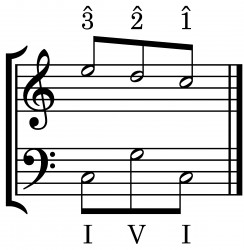
Carl Schachter, Arnold Whittall, and why music analysis matters
9th June 2026
Two recent deaths have robbed the world of music analysis of a pair of its most revered figures. Carl Schachter, who has died at the age of 93, was a pupil of (and subsequently collaborator with) Felix Salzer, himself one of Heinrich Schenker’s foremost students. Schachter continued to enrich and broaden the teaching of Schenkerian analysis, including important work on its application to issues of rhythm (which Schenker, focussing on harmonic and contrapuntal matters, largely bypassed). His influence went well beyond the... read more
read more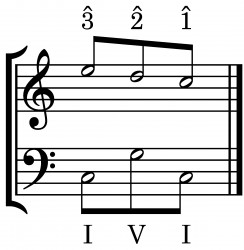
Carl Schachter, Arnold Whittall, and why music analysis matters
9th June 2026
Two recent deaths have robbed the world of music analysis of a pair of its most revered figures. Carl Schachter, who has died at the age of 93, was a pupil of (and subsequently collaborator with) Felix Salzer, himself one of Heinrich Schenker’s foremost students. Schachter continued to enrich and broaden the teaching of Schenkerian analysis, including important work on its application to issues of rhythm (which Schenker, focussing on harmonic and contrapuntal matters, largely bypassed). His influence went well beyond the... read more
read more
Music of the Iberian Peninsula, Part 2: ‘O quam gloriosum’ – The Spanish and Portuguese Golden Age
2nd June 2026
Over the past fortnight, I’ve been bathed in the most glorious, radiant, transformative light. Not the UK’s recent unseasonable heatwave, but the extraordinary vocal polyphony of the Siglo de Oro: the Spanish (and Portuguese) ‘Golden Century’. Extending from the late 15th to the early 17th century, this was a time of remarkable artistic flowering on the Iberian Peninsula, coinciding with the emergence of Spain and Portugal as global imperial powers with extensive colonial territories in the Americas, Africa and Asia. The... read more
read more