 FREE UK SHIPPING OVER £35!
The Spin Doctor Europadisc's Weekly Column
The Ever-Evolving Canon
16th August 2023
16th August 2023
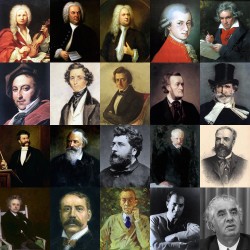 However enterprising performers, broadcasters, record companies, audiences and listeners might be, there’s no getting away that classical music – like its sister disciplines in the arts and literature – is dominated by a few dozen ‘great names’. These are the Composers You Need To Know if you’re to be taken seriously as a connoisseur of great classical music. They are overwhelmingly male, white and dead (or, as the phrase goes, ‘Male, Pale and Stale’). They range from medieval and Renaissance masters to the present day, although in music the majority are from the Baroque, Classical and Romantic eras, with a healthy representation up to about the mid-20th century. Together they form the ‘canon’ of western classical music: the accepted group of figures that form the backbone of the discipline. It matters little whether you or I personally like them all: they set the standards by which all others are conventionally judged.
Some of you may be familiar with a bulky 2007 tome entitled 1001 Classical Recordings to Hear Before You Die (Cassell Illustrated, London). Intended as a guide to ‘essential’ recordings of key works of music, and lavishly illustrated, it weighs in at a hefty 960 pages. Yet just 56 of those pages are taken up with music ‘Pre-1700’ (a period comprising the vast majority of western musical history!), and a little over are 100 devoted to music of our own times (‘1951–Present’), neatly illustrating the stranglehold exercised by the late-Baroque, Classical, Romantic and early-20th-century eras on the popular perception of classical music. And there are barely any women composers, or ones of non-Western origin. A 2023 edition would, we hope, look rather different!
If such a book has been produced in 1951 rather than 2007, it would certainly have looked very different (apart from the obvious exclusion of music dating from 1951 onwards). The early music section would have been even more slender (not least because both the LP era and the postwar early music boom were still in their early days), while a variety of modern ‘classics’ like Janáček, Messiaen, Szymanowski and Varèse would have been unlikely to make the cut, and Mahler might only have had a very brief mention. Other composers then more popular might have been proportionately more prominent: Gounod and Massenet, perhaps, as well as greater representation of late-Victorian British composers.
Such is the slowly-changing nature of the musical canon. For an older perspective, consider the façade of the old Paris Opéra, the Palais Garnier, completed in 1875. The middle layer is adorned with busts of historically important opera composers: Rossini, Auber, Beethoven, Mozart, Spontini, Meyerbeer and Halévy. Of those, only Rossini, Mozart and Beethoven have continued to maintain an unquestioned place in the repertoire (the first thanks mainly to The Barber of Seville and a smattering of overtures), while the others have only in recent years begun to enjoy a significant revival of interest, and are still hardly ‘standard repertoire’ figures. The lower façade tells a similar story: JS Bach and Haydn remain core figures, but Pergolesi and especially Cimarosa are much less so. (It’s sobering to think that, had the façade been erected early in the 19th century, before Mendelssohn’s evangelising revival, Bach wouldn’t have figured at all.)
Tastes change over time: over a century ago, the Henry Wood Proms were dominated not just by Beethoven and Wagner, but by popular ballads now mostly long forgotten. Next time members of the ‘old guard’ throw up their hands in horror at the programming of the BBC Proms, they would do well to remember that the film music and TV-themed evenings have ample precedent. The Proms have always been a melting pot of the highbrow and the unapologetically popular. In the words of one wag, ‘It can’t all be music of the spheres.’ Furthermore, extramusical events can impinge just as much on what is admitted to (and excluded from) the canon as ‘purely aesthetic’ considerations (as if anything in the late capitalist era is ‘purely aesthetic’ anymore!). Just as the Franco-Prussian War of 1870–71 and the First and Second World Wars had profound effects on repertoires across Europe and beyond, so it should not surprise us that the #MeToo and #BLM movements, and even the Ukraine conflict, are making their impact felt on concert and opera programmes, broadcasts and recordings far beyond their points of origin.
So, next time you hear something unfamiliar – whether new, long-neglected or simply no longer fashionable – take time to consider, without prejudice: am I listening to the essential repertoire of tomorrow? We are living at a time of exceptional change in the musical world, but without change (whether ‘organic’ or stemming from external factors) the repertoire will stagnate and die. Some of these changes present existential challenges, but others (particularly the moves away from the ‘Male, Pale and Stale’ stereotypes) are well worth applauding!
Latest Posts
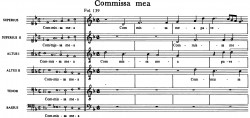
Music of the Iberian Peninsula, Part 3: More observations on the Golden Age
16th June 2026
Our last visit to the Iberian peninsula, a fortnight ago, was an insanely ambitious, necessarily broad-brush survey of the Spanish and Portuguese Golden Age, covering vocal and instrumental music, the sacred and the secular. This week, we take a more concise and (I hope) focussed look at a few of the sacred vocal masterpieces which exemplify the particular fervour and intensity of this remarkable period of musical history. They reflect the special place the peninsula had as a bulwark against the Reformation that had taken... read more
read more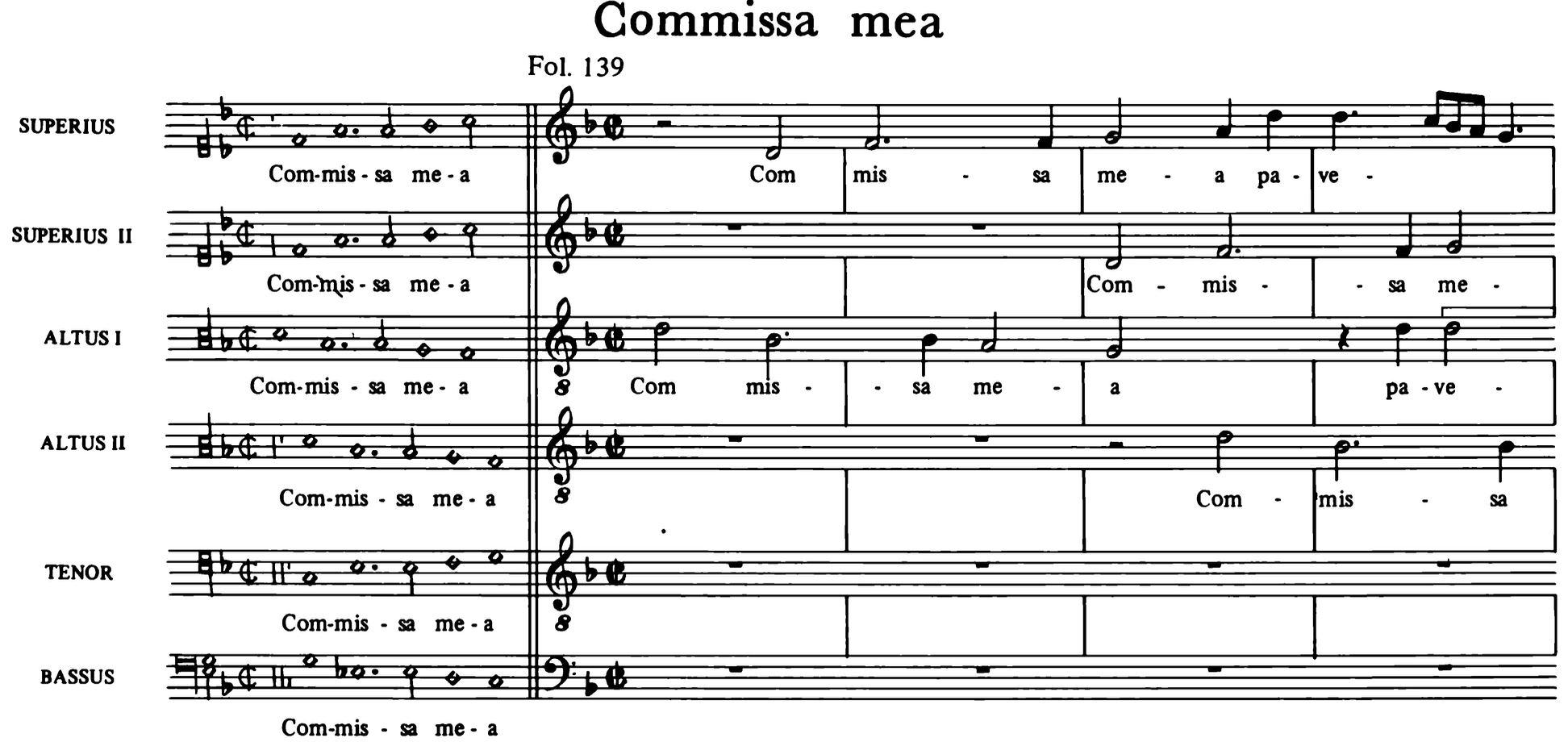
Music of the Iberian Peninsula, Part 3: More observations on the Golden Age
16th June 2026
Our last visit to the Iberian peninsula, a fortnight ago, was an insanely ambitious, necessarily broad-brush survey of the Spanish and Portuguese Golden Age, covering vocal and instrumental music, the sacred and the secular. This week, we take a more concise and (I hope) focussed look at a few of the sacred vocal masterpieces which exemplify the particular fervour and intensity of this remarkable period of musical history. They reflect the special place the peninsula had as a bulwark against the Reformation that had taken... read more
read more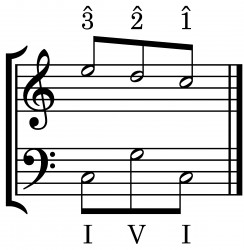
Carl Schachter, Arnold Whittall, and why music analysis matters
9th June 2026
Two recent deaths have robbed the world of music analysis of a pair of its most revered figures. Carl Schachter, who has died at the age of 93, was a pupil of (and subsequently collaborator with) Felix Salzer, himself one of Heinrich Schenker’s foremost students. Schachter continued to enrich and broaden the teaching of Schenkerian analysis, including important work on its application to issues of rhythm (which Schenker, focussing on harmonic and contrapuntal matters, largely bypassed). His influence went well beyond the... read more
read more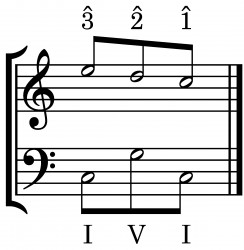
Carl Schachter, Arnold Whittall, and why music analysis matters
9th June 2026
Two recent deaths have robbed the world of music analysis of a pair of its most revered figures. Carl Schachter, who has died at the age of 93, was a pupil of (and subsequently collaborator with) Felix Salzer, himself one of Heinrich Schenker’s foremost students. Schachter continued to enrich and broaden the teaching of Schenkerian analysis, including important work on its application to issues of rhythm (which Schenker, focussing on harmonic and contrapuntal matters, largely bypassed). His influence went well beyond the... read more
read more
Music of the Iberian Peninsula, Part 2: ‘O quam gloriosum’ – The Spanish and Portuguese Golden Age
2nd June 2026
Over the past fortnight, I’ve been bathed in the most glorious, radiant, transformative light. Not the UK’s recent unseasonable heatwave, but the extraordinary vocal polyphony of the Siglo de Oro: the Spanish (and Portuguese) ‘Golden Century’. Extending from the late 15th to the early 17th century, this was a time of remarkable artistic flowering on the Iberian Peninsula, coinciding with the emergence of Spain and Portugal as global imperial powers with extensive colonial territories in the Americas, Africa and Asia. The... read more
read more