 FREE UK SHIPPING OVER £35!
The Spin Doctor Europadisc's Weekly Column
Building a Library: Practical Challenges and Motivations
2nd August 2023
2nd August 2023
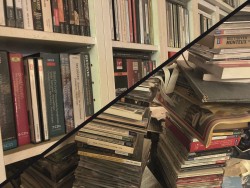 One of the perpetual challenges of the privilege that is reviewing new compact discs on a regular basis is: where to put them all? Some reviewers have no compunction in giving them away, or even in selling them. However – and possibly this is the collector/hoarder in me talking – you never know when you might need to refer back to a particular item! Besides, so many are desirable recordings in their own right, particularly the ones we select for eventual review. Previously, we’ve looked at the problems and challenges of disc packaging. This week, we consider storage: why, how and where we keep the music we acquire.
The late Italian author and semiotician Umberto Eco used to have fun with visitors to his residence, which had the appearance of a vast private library, with the walls lined with packed bookshelves and piles of books on every surface. He would tease those who were foolish enough to ask, ‘Have you really read all these books?’ with the response, ‘Oh no, these are just the ones I have to read by the end of the month; the rest are in storage.’ The more clued-up visitors will have appreciated that the point of amassing such a huge collection is not to have read everything in it, but to have it available should the need or inclination arise.
Others are more minimalist in their acquisitions. There’s the story of a great aunt who, on asking what her favourite great nephew would like for Christmas and being told, ‘A record’, replies, ‘But you already have a record!’ This is an extreme (but nevertheless true) example, but many espouse the fashion/fad for decluttering that has become possible with the advent of streaming services. And ‘decluttered’ environments undeniably have a certain aesthetic appeal, as well as having practical benefits, even if the need to keep them spotlessly clean can sometimes lead to obsessiveness.
However, collections – be they small or large – also have their attractions. A well-ordered collection (by genre, composer, period) ensures ease of access when looking for a particular item. The increasingly large and often luxuriously packaged collectors’ box sets are the music lover’s equivalent of the coffee-table book: pleasing to look at, impressive to visitors, and fascinating to browse through, though not usually something to be listened to complete from one end to the other. This raises an interesting question: do we collect these items simply for ourselves, or to impress others – demonstrating how cultured we are? Some will object to the latter extreme, but the truth is that we probably all sit somewhere on a sliding scale between these two points. And the impression of an extensive personal collection (usually of books) became evident during the Covid lockdowns when interviewees went to sometimes absurd lengths to ensure that well-stocked shelves were arranged behind them on video calls.
If we share our home environment with others – a partner, family or other fellow occupants – the negotiation of where to keep our discs can sometimes be a challenge, as well as (at some point down the line) whose they are. (When Annie Hall is moving out of Alvy’s apartment in Woody Allen’s classic movie Annie Hall, she solves the problem of whose book is whose by observing that anything with ‘death’ in the title must be Alvy’s. The musical equivalents would include, among much else, Songs and Dances of Death, Death and the Maiden, Death and Transfiguration, From the House of the Dead, The Isle of the Dead and anything by the Grateful Dead...) Some degree of understanding or compromise may be necessary, a dedicated room, or possibly separate buildings. Among our regular customers are a few whose monthly purchases would present problems even if the residence were Blenheim Palace.
Some collectors are wary of buying anything that duplicates repertoire they already possess; others devote a lifetime to tracing down every possible recording of a particular work/ artist/composer. Again, most of us will sit somewhere between the two extremes. But the motivations for building a collection are many and varied. The popularity of the ‘Building a Library’ feature on BBC Radio 3’s Record Review suggests that many aspire to having their own ‘collection’, and assessing which recording of a particular work is the best is a continued point of contention for many music lovers. (Some online reviewers have flipped the question, trying to identify the worst accounts of well-known masterpieces.)
There are, of course, some less organised ways of keeping CDs. When time and space are at a premium, CDs can end up growing fungus-like into disorganised piles or merely scattered on any available surface: tables, chairs, even (heaven forfend!) the floor. This isn’t recommended: discs become difficult to locate and/or extract, can become irretrievably lost, cases smashed, the discs themselves broken, and – most frustrating of all, perhaps –separated from the accompanying case and documentation. Few of us are saints, but keeping a modicum of order in any collection is recommended, as the time invested in organisation usually far outweighs that spent searching in vain for that one item you can never find when you need it most.
Whether you’re a compulsive collector or minimalist, fastidiously organised or a clutterer, we’d love to hear your personal experiences of how you organise your discs, what challenges you encounter, and what motivates you in making your own purchases (special points for candour!).
Latest Posts
Music of the Iberian Peninsula, Part 3: More observations on the Golden Age
16th June 2026
Our last visit to the Iberian peninsula, a fortnight ago, was an insanely ambitious, necessarily broad-brush survey of the Spanish and Portuguese Golden Age, covering vocal and instrumental music, the sacred and the secular. This week, we take a more concise and (I hope) focussed look at a few of the sacred vocal masterpieces which exemplify the particular fervour and intensity of this remarkable period of musical history. They reflect the special place the peninsula had as a bulwark against the Reformation that had taken... read more
read more
Music of the Iberian Peninsula, Part 3: More observations on the Golden Age
16th June 2026
Our last visit to the Iberian peninsula, a fortnight ago, was an insanely ambitious, necessarily broad-brush survey of the Spanish and Portuguese Golden Age, covering vocal and instrumental music, the sacred and the secular. This week, we take a more concise and (I hope) focussed look at a few of the sacred vocal masterpieces which exemplify the particular fervour and intensity of this remarkable period of musical history. They reflect the special place the peninsula had as a bulwark against the Reformation that had taken... read more
read more
Carl Schachter, Arnold Whittall, and why music analysis matters
9th June 2026
Two recent deaths have robbed the world of music analysis of a pair of its most revered figures. Carl Schachter, who has died at the age of 93, was a pupil of (and subsequently collaborator with) Felix Salzer, himself one of Heinrich Schenker’s foremost students. Schachter continued to enrich and broaden the teaching of Schenkerian analysis, including important work on its application to issues of rhythm (which Schenker, focussing on harmonic and contrapuntal matters, largely bypassed). His influence went well beyond the... read more
read more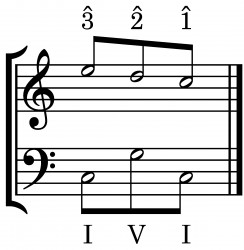
Carl Schachter, Arnold Whittall, and why music analysis matters
9th June 2026
Two recent deaths have robbed the world of music analysis of a pair of its most revered figures. Carl Schachter, who has died at the age of 93, was a pupil of (and subsequently collaborator with) Felix Salzer, himself one of Heinrich Schenker’s foremost students. Schachter continued to enrich and broaden the teaching of Schenkerian analysis, including important work on its application to issues of rhythm (which Schenker, focussing on harmonic and contrapuntal matters, largely bypassed). His influence went well beyond the... read more
read more
Music of the Iberian Peninsula, Part 2: ‘O quam gloriosum’ – The Spanish and Portuguese Golden Age
2nd June 2026
Over the past fortnight, I’ve been bathed in the most glorious, radiant, transformative light. Not the UK’s recent unseasonable heatwave, but the extraordinary vocal polyphony of the Siglo de Oro: the Spanish (and Portuguese) ‘Golden Century’. Extending from the late 15th to the early 17th century, this was a time of remarkable artistic flowering on the Iberian Peninsula, coinciding with the emergence of Spain and Portugal as global imperial powers with extensive colonial territories in the Americas, Africa and Asia. The... read more
read more