 FREE UK SHIPPING OVER £35!
The Spin Doctor Europadisc's Weekly Column
Remembering Graham Clark (1941–2023)
26th July 2023
26th July 2023
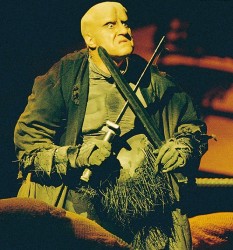 The death on 6 July of Graham Clark at the age of 81 has robbed the operatic world of one of its most outstanding character tenors. Born on 10 November 1941 in Littleborough, Lancashire, he began singing as a treble in the local church choir. After studies at Loughborough University and a period working as a PE teacher, he took up singing in earnest, studying with American baritone Bruce Boyce in London. In the early 1970s he joined the chorus of Wexford Opera, but his breakthrough role came with a 1975 Royal Opera House charity gala in aid of the Australian city of Darwin, in the wake of Cyclone Tracy. The resulting ‘Darwin: Song for a City’, in which Clark sang alongside such stars as Joan Sutherland, Heather Begg and Clifford Grant under the baton of Richard Bonynge, was broadcast on television and issued on LP by Decca – a recording that has since been reissued on CD by Eloquence Classics.
In the mid-1970s Clark joined the company of Scottish Opera, where his roles included Pedrillo (Die Entführung aus dem Serail), Jaquino (Fidelio), and David in Wagner’s Die Meistersinger von Nürnberg, the latter becoming something of a speciality. From 1978 to 1986 Clark was a member of the English National Opera company, and it was here that he cemented his reputation as a character tenor of great individuality and (when needed) beauty of voice as well as formidable acting skills. At ENO his parts included Mephistopheles in Busoni’s Doctor Faust and the title role in Offenbach’s The Tales of Hoffmann.
From the early 1980s Clark was a regular guest artist at the Bayreuth Festival, quickly establishing an international reputation, and in 1988 he sang Loge and Mime – two of his best remembered roles – in the Barenboim/Kupfer Ring cycle. In these he built on the legacy of such predecessors as Gerhard Stolze and Heinz Zednik, while adding his own inimitable stage presence. (This production also put him alongside fellow Lancastrian John Tomlinson as Wotan/Wanderer.) Like Stolze and Zednik, Clark was also a memorable Herod in Strauss’s Salome and an appropriately grotesque, deliciously over-the-top Captain in Berg’s Wozzeck (an assumption which badly needs returning to the DVD catalogue). Although he was singing at New York’s Met from 1985, his first regular appearance at London’s Royal Opera didn’t come until ten years later (as Mime).
Headline roles for character tenors are few and far between, and it is a measure of Clark’s huge talent that he earned such a high reputation as what are essentially supporting characters. Few would doubt his claim as one of the great Mimes and Captains of the post-war years. Another repertoire in which he made a lasting impression was Janáček’s operas: from Steva in Jenufa to Skuratov in From the House of the Dead, he was a firm fixture in the ‘second generation’ of singers to grace the cycle of Janáček operas staged by Scottish, Welsh and English National Operas.
One of his greatest achievements was in the title role of David Pountney’s 1993 ENO production of The Excursions of Mr Brouček: all the more pity that the broadcast was never issued as part of Chandos’s Opera in English series. (Peter Moores, who financed the series, was quite candid in admitting that he simply didn’t like the work.) Thankfully Clark’s superb characterisation of the demented Count Hauk-Šendorf in the 2006 production of The Makropulos Case (also under Mackerras) does feature in the series. Clark also excelled in more recent repertoire: his Piet the Pot heads the cast in Salonen’s 1998 Sony recording of the revised version of Ligeti’s Le Grand Macabre. Stravinsky, Britten and John Adams were also in his repertoire.
As well as being an outstanding artist, Graham Clark was universally liked by his colleagues and audiences in the opera world, always good-humoured even with backstage staff (as I can testify), and with an impish sense of humour which came across vividly in his stage performances. Few opera singers have prompted such generous outpourings of tributes in recent memory, and his long battle with illness did not prevent his career extending to as recently as 2019 (in the world premiere Dusapin’s Macbeth Underworld at la Monnaie). For the best of his art, try The Makropulos Case on Chandos and his scarily volatile Mime in the Netherlands Opera production of Siegfried.
Recommended recordings:
Darwin: Song for a City (Sutherland, Bonynge et al.) ELQ4428644
Wagner - Siegfried (Netherlands Opera/Haenchen) OA0948D
Janáček - The Makropulos Case (ENO/Mackerras) CHAN31382
Latest Posts
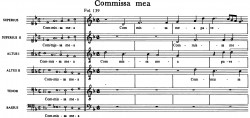
Music of the Iberian Peninsula, Part 3: More observations on the Golden Age
16th June 2026
Our last visit to the Iberian peninsula, a fortnight ago, was an insanely ambitious, necessarily broad-brush survey of the Spanish and Portuguese Golden Age, covering vocal and instrumental music, the sacred and the secular. This week, we take a more concise and (I hope) focussed look at a few of the sacred vocal masterpieces which exemplify the particular fervour and intensity of this remarkable period of musical history. They reflect the special place the peninsula had as a bulwark against the Reformation that had taken... read more
read more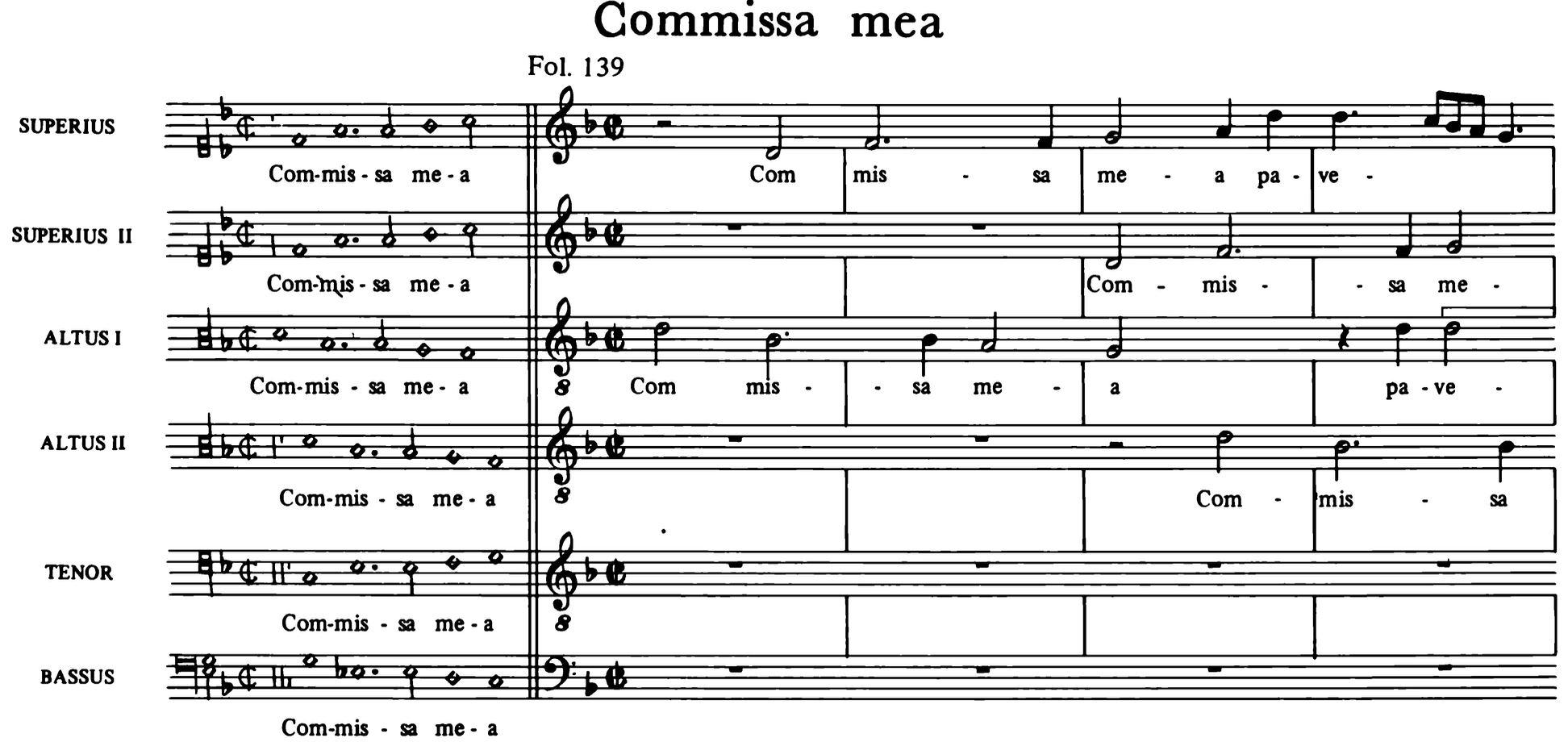
Music of the Iberian Peninsula, Part 3: More observations on the Golden Age
16th June 2026
Our last visit to the Iberian peninsula, a fortnight ago, was an insanely ambitious, necessarily broad-brush survey of the Spanish and Portuguese Golden Age, covering vocal and instrumental music, the sacred and the secular. This week, we take a more concise and (I hope) focussed look at a few of the sacred vocal masterpieces which exemplify the particular fervour and intensity of this remarkable period of musical history. They reflect the special place the peninsula had as a bulwark against the Reformation that had taken... read more
read more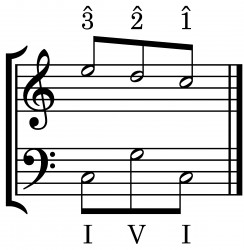
Carl Schachter, Arnold Whittall, and why music analysis matters
9th June 2026
Two recent deaths have robbed the world of music analysis of a pair of its most revered figures. Carl Schachter, who has died at the age of 93, was a pupil of (and subsequently collaborator with) Felix Salzer, himself one of Heinrich Schenker’s foremost students. Schachter continued to enrich and broaden the teaching of Schenkerian analysis, including important work on its application to issues of rhythm (which Schenker, focussing on harmonic and contrapuntal matters, largely bypassed). His influence went well beyond the... read more
read more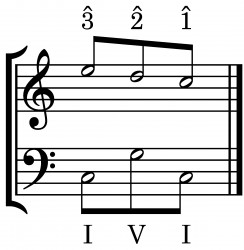
Carl Schachter, Arnold Whittall, and why music analysis matters
9th June 2026
Two recent deaths have robbed the world of music analysis of a pair of its most revered figures. Carl Schachter, who has died at the age of 93, was a pupil of (and subsequently collaborator with) Felix Salzer, himself one of Heinrich Schenker’s foremost students. Schachter continued to enrich and broaden the teaching of Schenkerian analysis, including important work on its application to issues of rhythm (which Schenker, focussing on harmonic and contrapuntal matters, largely bypassed). His influence went well beyond the... read more
read more
Music of the Iberian Peninsula, Part 2: ‘O quam gloriosum’ – The Spanish and Portuguese Golden Age
2nd June 2026
Over the past fortnight, I’ve been bathed in the most glorious, radiant, transformative light. Not the UK’s recent unseasonable heatwave, but the extraordinary vocal polyphony of the Siglo de Oro: the Spanish (and Portuguese) ‘Golden Century’. Extending from the late 15th to the early 17th century, this was a time of remarkable artistic flowering on the Iberian Peninsula, coinciding with the emergence of Spain and Portugal as global imperial powers with extensive colonial territories in the Americas, Africa and Asia. The... read more
read more