 FREE UK SHIPPING OVER £35!
The Spin Doctor Europadisc's Weekly Column
The Human Factor
19th July 2023
19th July 2023
 The recent swathe of headlines about the challenges presented by Artificial Intelligence (AI), including the current strike by Hollywood screenwriters and actors, will no doubt give many in the creative sector pause for thought. And it might resurrect memories of the famous joke (or urban myth?) about the Time and Motion coordinator who attended an orchestral concert and concluded – among other things – that the number of violins could be drastically reduced as they were all playing the same music. (That coordinator now works for the BBC…)
For those who think that the challenges posed by AI couldn’t possibly affect the rarefied world of classical music, the news is: they already do. Pitch-correction programmes are commonplace in recordings of popular music (the extent to which they are used in classical music is less clear), while some broadly ‘classical’ discs such as Paul Corfield Godfrey’s series of operas based on the works of Tolkien on the Prima Facie label already make use of a synthesised orchestra. (The cost of using a real orchestra would no doubt have proved prohibitive for the project, which uses a large cast of real-life singers.) And then there’s the vast field of electronic music composition which, since the post-war technological explosion, has made frequent use of sampling (of musical, everyday, natural and even cosmic sounds) to generate new works.
If anything, AI looks set to multiply these possibilities exponentially, like a synthesiser on steroids. Yet, because AI programs (sic) rely on the super-sampling of existing examples on which to base their algorithms, AI is only as good as both the examples with which it is fed, and the individual(s) inputting them. There are already many reported examples of AI-generated artworks fooling experts, but a key question remains: if art is an act of communication between artist and audience, what happens when there is no individual behind the work being perceived by the audience? Can we realistically talk of communication (or understanding) when there is no intent at one end of the equation? The age-old question – Does a book exist if it is never read? (or: Does a piece of music exist if it is not played?) – is here stood on its head.
Quite apart from the threats AI might pose to working composers, performers and others in the field of musical creation, a fundamental issue is whether art is art at all if there isn’t some thought (however hackneyed or original) behind it. This is true whether it’s Scarlatti or Stockhausen, Mozart, Tchaikovsky or Cage that floats your boat. However eloquent the AI output manages to be, if it’s merely the product of a set of computer algorithms, it arguably deserves nothing better than to be treated as muzak, preferably in a lift/elevator (machine speaking to machine, as it were). Or perhaps as a new parlour game: Spot the Real Composer. It’s true that, from the Aeolian harp of antiquity and the automata of the 17th and 18th centuries to the ‘Panharmonicon’ for which Beethoven originally wrote Wellington’s Victory and the player piano (pianola) of the late 19th and early 20th centuries, artificial means of ‘creating’ – or at least reproducing – music have always held a special fascination for listeners. But, even though they have been resurrected with varying degrees of success in more recent times, they remain rather fringe elements in the broader sweep of musical history.
If the growing influence of AI serves as a reminder that music has historically been an act of communication (even while its ability to communicate precisely has been the subject of endless aesthetic debate), it should also lead us to reflect on the essentially human aspect of art. We too readily set up composers and performers as demi-Gods: how often are Beethoven’s compositions or Glenn Gould’s recordings casually referred to as ‘iconic’? Yet musical history is liberally peppered with instances of human frailty, of falling short of the superhuman qualities we seek to invest in our favourite figures from the past and present. Gesualdo’s double homicide (of his wife and her lover, caught in flagrante), Bach’s quick temper, Beethoven’s well-known squalid living conditions and habits, and Debussy’s mistreatment of his wife are just four instances of musical giants showing the less appealing side of their characters.
Rather darker are Wagner’s notorious anti-semitism, and the tacit (or sometimes vocal) support of a number of well-known musical figures for the Nazi regime (mitigated to a greater or lesser degree in some instances by a range of individual acts of kindness). What, moreover, of the downright xenophobic nationalism of the Triumphlied (1872) composed by one Johannes Brahms? Music historians have debated such cases for close on eight decades, and the merits of such avowedly anti-fascist artists as Toscanini (politically progressive but a martinet in front of the orchestra, and something of a womaniser in his private life) and Klemperer (another famous skirt-chaser) are open to legitimate debate by the post-#MeToo generation. Do we have a right to hold artists and others in the public eye to standards higher than the rest of humanity? Can we separate art from politics in periods such as World War II – and, if not, can they ever be fully disentangled?
Latest Posts
Music of the Iberian Peninsula, Part 3: More observations on the Golden Age
16th June 2026
Our last visit to the Iberian peninsula, a fortnight ago, was an insanely ambitious, necessarily broad-brush survey of the Spanish and Portuguese Golden Age, covering vocal and instrumental music, the sacred and the secular. This week, we take a more concise and (I hope) focussed look at a few of the sacred vocal masterpieces which exemplify the particular fervour and intensity of this remarkable period of musical history. They reflect the special place the peninsula had as a bulwark against the Reformation that had taken... read more
read more
Music of the Iberian Peninsula, Part 3: More observations on the Golden Age
16th June 2026
Our last visit to the Iberian peninsula, a fortnight ago, was an insanely ambitious, necessarily broad-brush survey of the Spanish and Portuguese Golden Age, covering vocal and instrumental music, the sacred and the secular. This week, we take a more concise and (I hope) focussed look at a few of the sacred vocal masterpieces which exemplify the particular fervour and intensity of this remarkable period of musical history. They reflect the special place the peninsula had as a bulwark against the Reformation that had taken... read more
read more
Carl Schachter, Arnold Whittall, and why music analysis matters
9th June 2026
Two recent deaths have robbed the world of music analysis of a pair of its most revered figures. Carl Schachter, who has died at the age of 93, was a pupil of (and subsequently collaborator with) Felix Salzer, himself one of Heinrich Schenker’s foremost students. Schachter continued to enrich and broaden the teaching of Schenkerian analysis, including important work on its application to issues of rhythm (which Schenker, focussing on harmonic and contrapuntal matters, largely bypassed). His influence went well beyond the... read more
read more
Carl Schachter, Arnold Whittall, and why music analysis matters
9th June 2026
Two recent deaths have robbed the world of music analysis of a pair of its most revered figures. Carl Schachter, who has died at the age of 93, was a pupil of (and subsequently collaborator with) Felix Salzer, himself one of Heinrich Schenker’s foremost students. Schachter continued to enrich and broaden the teaching of Schenkerian analysis, including important work on its application to issues of rhythm (which Schenker, focussing on harmonic and contrapuntal matters, largely bypassed). His influence went well beyond the... read more
read more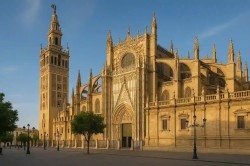
Music of the Iberian Peninsula, Part 2: ‘O quam gloriosum’ – The Spanish and Portuguese Golden Age
2nd June 2026
Over the past fortnight, I’ve been bathed in the most glorious, radiant, transformative light. Not the UK’s recent unseasonable heatwave, but the extraordinary vocal polyphony of the Siglo de Oro: the Spanish (and Portuguese) ‘Golden Century’. Extending from the late 15th to the early 17th century, this was a time of remarkable artistic flowering on the Iberian Peninsula, coinciding with the emergence of Spain and Portugal as global imperial powers with extensive colonial territories in the Americas, Africa and Asia. The... read more
read more