 FREE UK SHIPPING OVER £35!
The Spin Doctor Europadisc's Weekly Column
Two Great 20th-century Maestri + A (Short) Report on the Party and Guests
5th July 2023
5th July 2023
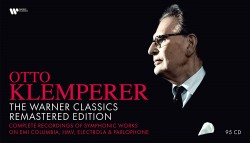 This week marks the 50th anniversary of the deaths of two of the greatest conductors of the 20th century. One of them was a giant of post-war music-making in Britain: Otto Klemperer. Born on 14 May 1885 in the Silesian city of Breslau (now Wrocław, Poland), he spent most of his childhood in Hamburg. His first music teacher was his mother Ida, herself an accomplished pianist. He studied at Hoch’s Conservatory in Frankfurt, and although he harboured early ambitions to become an actor, his career path was set on music by the time he followed his piano teacher Johannes Kwast to Berlin, where his other teachers included Hans Pfitzner.
A decisive moment in Klemperer’s career came in 1905 when he directed the offstage brass in a performance of Mahler’s Second Symphony in a performance conducted by Oskar Fried, and met Mahler himself. Mahler’s subsequent recommendation of Klemperer – which the latter carried with him ever after – secured a string of conducting posts. His podium debut in 1906 was a fifty-performance run of Offenbach’s Orpheus in the Underworld (taking over from Fried) in Berlin. After a three-year stint at the New German Theatre in Prague, he became assistant conductor at the Hamburg State Opera, where (in his own words) he scored the greatest success of his career with Wagner’s Lohengrin, in which the sopranos Elisabeth Schumann and Lotte Lehmann made their stage debuts as two of the four pages. Klemperer subsequently formed a lifelong friendship with Lehmann, naming his own daughter after her.
Posts at the Strasbourg and Cologne operas followed, and in 1919 he married Johanna Geisler, a soprano with the Cologne Opera – converting from Judaism to Catholicism to do so. It was at the small State Theatre in Wiesbaden that he first gained the control he craved over opera productions, championing controversial, modernist stagings. From the mid-1920s to 1936 he guest-conducted regularly in the Soviet Union, where the theatre school of Stanislavsky made a lasting impression.
In 1927 came one of the most important appointments of his career, as music director of the Kroll Opera in Berlin. There he oversaw the establishment of a radical opera company that thrived on modern productions, both of new works by such composers as Stravinsky, Schoenberg, Hindemith, Křenek and Janáček, and standard repertoire works in bold new productions. The 1929 production of Wagner’s Flying Dutchman was a particularly notable one, sharply dividing opinion between progressive and reactionary camps. Although Klemperer’s original contract at the Kroll was to have run for ten years, in 1931 the conservative head of the State Opera, Heinz Tietjen (who had overall responsibility for Berlin’s three opera houses), announced its closure, while denying that anti-Semitism was a factor. But Nazism was on the rise, and in 1933 Klemperer, like many other Jews, fled Germany, initially for other countries in Europe, and then in 1934 to the United States, where he became principal conductor of the Los Angeles Philharmonic. At the time the LA Phil was a privately-owned vanity project of its rich owner, William Andrews Clark, but Klemperer nevertheless raised its music-making to unprecedented heights.
In 1939 an operation to move a benign brain tumour left Klemperer partially paralysed down his right side and increasingly prone to spells of manic-depression. It was only through a rigorous regime of self-discipline that Klemperer regained his conducting ability. In the immediate postwar years he returned to Europe for guest engagements – forging close ties with Amsterdam’s Concertgebouw Orchestra, as well as conducting Walter Felsenstein’s landmark production of Bizet’s Carmen at Berlin’s Komische Oper, and heading the Hungarian State Opera in Budapest.
A further turning point was his appointment in 1955 as conductor of Walter Legge’s Philharmonia Orchestra in London, which had already established a reputation under its previous de facto principal conductor Herbert von Karajan. There could hardly be a greater contrast between the jet-setting young Austrian and the rugged, granitic Klemperer, with his disdain for sentimentality and mere beauty of sound. Yet over the next decade-and-a-half Klemperer made his own indelible stamp on the Philharmonia’s style (and on London’s musical life), fostering a rich, continental-style string sound supporting a strikingly voiced wind section with immaculate attack which excelled in the Austro-German classics, from Mozart and Beethoven to Brahms, Bruckner and Mahler.
It is largely Klemperer’s Philharmonia legacy that is celebrated in the first volume of his complete EMI recordings on Warner Classics, comprising symphonic works and concertos. For those who associate him mostly with Beethoven and Brahms, there are plenty of surprises, including the last three Tchaikovsky symphonies and a distinctly individual account of Dvořák’s ‘New World’ Symphony. Orchestral works by Wagner and Richard Strauss (the latter of whom Klemperer knew personally) are among the many highlights, while earlier music includes resolutely old-school Bach’s Brandenburg Concertos and Orchestral Suites. Although there are few works truly representative of Klemperer’s earlier involvement with new music, his imposing account of Stravinsky’s Symphony in Three Movements is one of the essential items in this collection, along with the celebrated recordings of Mahler’s Second Symphony and Das Lied von der Erde, Bruckner’s Sixth, Brahms’s Third and the famous mono recordings of Beethoven’s Third, Fifth and Seventh symphonies.
Those wanting to delve deeper into the Klemperer phenomenon need to see Philo Bregstein’s two films Otto Klemperer’s Long Journey through his Times and Klemperer: The Last Concert, which come with a CD recording of the complete final concert from 26 September 1971 an a lavishly produced hardback book with further fascinating insights into Klemperer’s turbulent life, mind and times. Overcoming many health problems in his later years with the faithful assistance of his devoted daughter, and reembracing his Jewish faith as well as Israeli citizenship, Otto Klemperer died in Zurich at the great age of 88 on 6 July 1973.
Just three days earlier, a Jewish conductor of a younger generation passed away in Toronto: Karel Ančerl, the 65-year-old exiled Czech conductor who, after surviving horrendous wartime experiences in the Theresienstadt (Terezín) concentration camp and transportation to Auschwitz, endured the postwar Communist totalitarianism only to see the 1968 Prague Spring brutally suppressed. We have written previously about Ančerl’s outstanding leadership of the Czech Philharmonic (a relationship that was far from smooth). Although his music-making has the leaner feel of a younger generation than Klemperer, there is a similar gritty quality to his music-making, an eschewal of mere surface beauty in a quest for deeper truths, which comes out most strongly in Ančerl’s recordings of Janáček, Mahler and Stravinsky: three composers in whose music Klemperer also excelled. Although hard to come by, collectors should also look out for Ančerl’s later recordings with the Toronto Symphony Orchestra, of which he was chief conductor in his final years of exile. A forthcoming Ančerl box from Eloquence Classics includes his uniquely gripping account of Shostakovich’s Tenth Symphony, formerly available on DG, as well as his recordings with the Vienna Symphony Orchestra.
If this week’s Spin Doctor seems more rambling than usual, it’s because I’m fresh back from Decca Classics' summer party – the first since 2019 – which took place yesterday evening. A large gathering of record industry figures including Oliver Condy (formerly of BBC Music Magazine) and Martin Cullingford (editor of Gramophone) came together for drinks, snacks, plenty of chatter and – as the centrepiece – performances by two Decca artists. Violin prodigy Christian Li – whose new album ‘Discovering Mendelssohn’ is released this week – played Tchaikovsky and Mendelssohn with superb technical command, while stellar Norwegian soprano Lise Davidsen – fresh from Verdi’s Don Carlo at Covent Garden – stole the show with gleamingly powerful performances of Strauss’s Zueignung, Schubert’s Gretchen am Spinnrade and Grieg’s Ein Traum. The Europadisc delegation managed to bag front row seats for a performance which, though brief, will live long in the memory!
Recommended recordings and further reading:
Otto Klemperer: The Warner Classics Edition Vol.1: Symphonic Works & Concertos 5419725704
Beethoven - Fidelio (Covent Garden, live) SBT21328
Brahms - Symphonies & Overtures, Ein deutsches Requiem 4043382
Mahler - Symphony no.2 ‘Resurrection’ 2564609029
Mahler - Das Lied von der Erde (Ludwig, Wunderlich) 2564607598
Otto Klemperer’s Long Journey through his Times; Klemperer: The Last Concert (DVD + CD + Book) 109289
Peter Heyworth, Otto Klemperer: His Life and Times (Cambridge University Press) (2 vols.)
Peter Heyworth, Conversations with Klemperer (1973, R/1985)
Klemperer on Music: Shavings from a Musician's Workbench (Toccata Press, 1986)
Klemperer Stories (ed. Charles Osborne, Kenneth Thomson) (Robson Books, 1980)
Karel Ančerl Edition: Complete Recordings on Philips & DG ELQ4843778 (August release)
Ančerl Gold Edition Vol.33: Mahler - Symphony no.9 SU36932
Ančerl Gold Edition Vol.14: Stravinsky - Oedipus rex, Symphony of Psalms SU36742
Christian Li: Discovering Mendelssohn 4853987
Latest Posts
Music of the Iberian Peninsula, Part 3: More observations on the Golden Age
16th June 2026
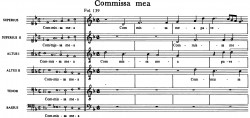
Our last visit to the Iberian peninsula, a fortnight ago, was an insanely ambitious, necessarily broad-brush survey of the Spanish and Portuguese Golden Age, covering vocal and instrumental music, the sacred and the secular. This week, we take a more concise and (I hope) focussed look at a few of the sacred vocal masterpieces which exemplify the particular fervour and intensity of this remarkable period of musical history. They reflect the special place the peninsula had as a bulwark against the Reformation that had taken... read more
read more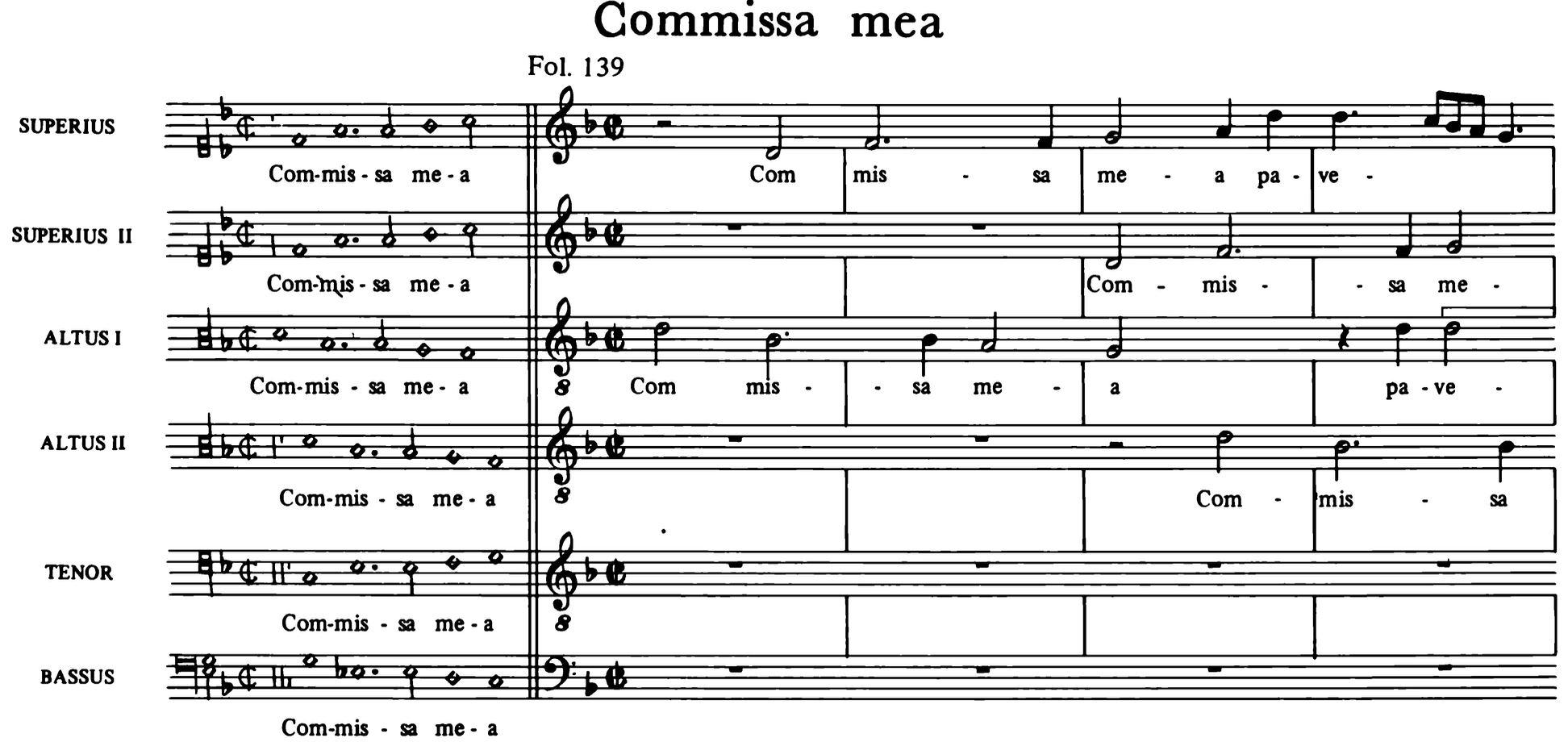
Music of the Iberian Peninsula, Part 3: More observations on the Golden Age
16th June 2026
Our last visit to the Iberian peninsula, a fortnight ago, was an insanely ambitious, necessarily broad-brush survey of the Spanish and Portuguese Golden Age, covering vocal and instrumental music, the sacred and the secular. This week, we take a more concise and (I hope) focussed look at a few of the sacred vocal masterpieces which exemplify the particular fervour and intensity of this remarkable period of musical history. They reflect the special place the peninsula had as a bulwark against the Reformation that had taken... read more
read more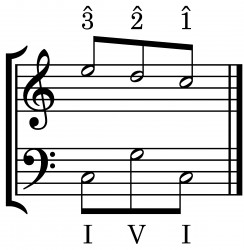
Carl Schachter, Arnold Whittall, and why music analysis matters
9th June 2026
Two recent deaths have robbed the world of music analysis of a pair of its most revered figures. Carl Schachter, who has died at the age of 93, was a pupil of (and subsequently collaborator with) Felix Salzer, himself one of Heinrich Schenker’s foremost students. Schachter continued to enrich and broaden the teaching of Schenkerian analysis, including important work on its application to issues of rhythm (which Schenker, focussing on harmonic and contrapuntal matters, largely bypassed). His influence went well beyond the... read more
read more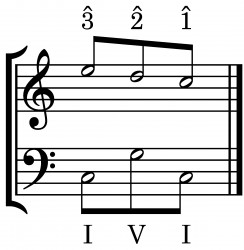
Carl Schachter, Arnold Whittall, and why music analysis matters
9th June 2026
Two recent deaths have robbed the world of music analysis of a pair of its most revered figures. Carl Schachter, who has died at the age of 93, was a pupil of (and subsequently collaborator with) Felix Salzer, himself one of Heinrich Schenker’s foremost students. Schachter continued to enrich and broaden the teaching of Schenkerian analysis, including important work on its application to issues of rhythm (which Schenker, focussing on harmonic and contrapuntal matters, largely bypassed). His influence went well beyond the... read more
read more
Music of the Iberian Peninsula, Part 2: ‘O quam gloriosum’ – The Spanish and Portuguese Golden Age
2nd June 2026
Over the past fortnight, I’ve been bathed in the most glorious, radiant, transformative light. Not the UK’s recent unseasonable heatwave, but the extraordinary vocal polyphony of the Siglo de Oro: the Spanish (and Portuguese) ‘Golden Century’. Extending from the late 15th to the early 17th century, this was a time of remarkable artistic flowering on the Iberian Peninsula, coinciding with the emergence of Spain and Portugal as global imperial powers with extensive colonial territories in the Americas, Africa and Asia. The... read more
read more