FREE UK SHIPPING OVER £35!

The Spin Doctor Europadisc's Weekly Column

Discs, Downloads and Streaming

  28th June 2023

28th June 2023
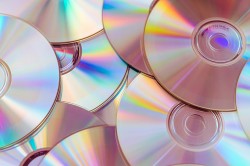

If you’re reading this, it’s safe to say that you will have some interaction with the internet, even if only as a means of accessing your emails. As a music lover, you may already have discovered the seemingly endless cornucopia of musical delights available via such resources as YouTube (very popular with many of our customers for its rich trove of archive and live performances), not to mention various streaming and download services (including podcasts). Or perhaps you use the internet merely to purchase more ‘old-fashioned’ items: books, compact discs, cassette tapes, vinyl, even shellac. Even so, it can’t have escaped your notice that a second digital revolution has taken place in the musical world. From the advent of digital recording in the late 1970s and the first commercially-released compact discs of the early 1980s, the world has now moved on from the digital capture of sound and its dissemination on physical ‘sound carriers’ (CDs, DVDs, and the short-live digital audio tape) to the direct access and distribution of audio files such as MP3s, FLACs and WAVs.

For those unused to the world of computers, and particularly to the various possibilities of playback via a home computer system, these new developments can seem daunting. Much depends not just on how you transmit your computer sound to your hi-fi system (wireless Bluetooth is the most common method), but also on factors like the compatibility of your sound system and its quality. Then there is the type and quality of the source material to consider. This can either be downloaded as a sound file (taking up storage space on your computer) or streamed (the sound file is transmitted to your computer but not stored on it). In either case, the higher quality the file is, the more memory space it will need. Downloads, once purchased, can be played whether or not you remain online; streaming usually has to be played while online.

Both downloads and streaming are available in a variety of formats. The once popular (and still fairly widespread) MP3 format is of lower audio quality than a CD, whether at 160kbps (kilobits per second) or 320kbps. These files are compressed, and they typically drop all sound data that is out of the range of hearing of most people. However, the compressed nature of the sound will be evident to most listeners when compared with a CD. Of the high-resolution formats with lossless compression, FLAC (Free Lossless Audio Codec) is the most popular, the sound comparable or superior to that on a CD, but compressed to avoid huge file sizes. Uncompressed lossless files like WAV (Waveform Audio File) are high quality but take up large amounts of disc space. Those with sensitive ears (especially at the extreme ends of the spectrum) will notice the superior quality of such high-res audio files, but as always much will depend on your playback equipment.

The advantages of downloads and streaming compared with physical discs are obvious. For record labels, producing digital files is far simpler (and less costly) than transferring them to the medium of a physical disc (the middle man, as it were). For the consumer, the benefits include saving on physical space, ease of access, and the possibility of longer continuous playing time. Why, then, do many listeners still prefer to stick to CDs? For starters, many find the technological leap a step too far. Although a far cry from the gramophones of the past, the basic elements of a modern CD player are still familiar: a physical disc is played on a machine which transmits the sound via speakers. And although the styli, cartridges and tone-arms of yesteryear are less widespread than they used to be, the essential chain of components: disc–playback machine–speakers remains the same.

Having a physical disc rather than an invisible digital file stored on a computer drive also confers a sense of ‘ownership’: not just in the obvious sense of being able to see and grasp what you’ve bought, but also of being part of the artistic ‘transaction’, from music, via performer, producer, engineers and manufacturer, to listener. Writers like Theodor Adorno would no doubt interpret this transaction in purely materialistic terms, but there is also the phenomenon of the collector, building up a personal library of music, a library which is given physical form by discs on the shelves in a way that a collection of sound files (however extensive) could not match. Related to this, there is also an aesthetic aspect to consider: the presentation of the disc, its cover and booklet artwork, the booklet text, even the type of packaging, can all enhance the experience of the music itself. And although the aesthetic qualities of CD packaging for the most part pale beside those of vinyl LPs, it is still possible to feel an attachment to discs that were perhaps bought on a significant occasion or received as a present. Such associations are virtually impossible with mere sound files, which is why for many they will never replace the disc format as a preferred option for listening.

And, even though lossless sound files now offer audio quality much higher than that of most CDs, the fact remains that for most listeners (what Tovey termed the ‘Ordinary Listener’) as well as many musicians the quality of CD sound – particularly on an average rather than ‘high-end sound’ system – is perfectly acceptable. Even for those with more sensitive ears and fancier equipment, the availability of SACDs (Super Audio discs) and Blu-ray Audio present attractive options for those still wedded to the idea of a physical product. While there has been enthusiastic uptake of streaming among younger listeners (who tend to ‘consume’ music rather than ‘invest’ in it), for the older demographic that  constitutes the majority of the classical audience, physical sound carriers still seem to be the preferred option, YouTube, new kids on the block like Apple Music Classical, and more established specialists like Pristine Classical notwithstanding.

For over a century now, physical sound carriers have been a hugely important means of bringing music to the masses. It would be premature to write them off just yet!

Latest Posts


Music of the Iberian Peninsula, Part 3: More observations on the Golden Age

16th June 2026

Our last visit to the Iberian peninsula, a fortnight ago, was an insanely ambitious, necessarily broad-brush survey of the Spanish and Portuguese Golden Age, covering vocal and instrumental music, the sacred and the secular. This week, we take a more concise and (I hope) focussed look at a few of the sacred vocal masterpieces which exemplify the particular fervour and intensity of this remarkable period of musical history. They reflect the special place the peninsula had as a bulwark against the Reformation that had taken... read more

read more
Music of the Iberian Peninsula, Part 3: More observations on the Golden Age

16th June 2026

Our last visit to the Iberian peninsula, a fortnight ago, was an insanely ambitious, necessarily broad-brush survey of the Spanish and Portuguese Golden Age, covering vocal and instrumental music, the sacred and the secular. This week, we take a more concise and (I hope) focussed look at a few of the sacred vocal masterpieces which exemplify the particular fervour and intensity of this remarkable period of musical history. They reflect the special place the peninsula had as a bulwark against the Reformation that had taken... read more

read more
Carl Schachter, Arnold Whittall, and why music analysis matters

9th June 2026

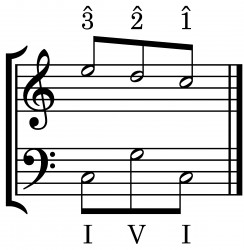
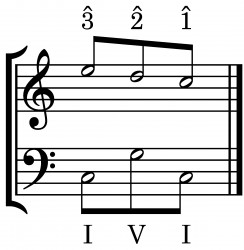
Two recent deaths have robbed the world of music analysis of a pair of its most revered figures. Carl Schachter, who has died at the age of 93, was a pupil of (and subsequently collaborator with) Felix Salzer, himself one of Heinrich Schenker’s foremost students. Schachter continued to enrich and broaden the teaching of Schenkerian analysis, including important work on its application to issues of rhythm (which Schenker, focussing on harmonic and contrapuntal matters, largely bypassed). His influence went well beyond the... read more

read more
Carl Schachter, Arnold Whittall, and why music analysis matters

9th June 2026

Two recent deaths have robbed the world of music analysis of a pair of its most revered figures. Carl Schachter, who has died at the age of 93, was a pupil of (and subsequently collaborator with) Felix Salzer, himself one of Heinrich Schenker’s foremost students. Schachter continued to enrich and broaden the teaching of Schenkerian analysis, including important work on its application to issues of rhythm (which Schenker, focussing on harmonic and contrapuntal matters, largely bypassed). His influence went well beyond the... read more

read more

Music of the Iberian Peninsula, Part 2: ‘O quam gloriosum’ – The Spanish and Portuguese Golden Age

2nd June 2026

Over the past fortnight, I’ve been bathed in the most glorious, radiant, transformative light. Not the UK’s recent unseasonable heatwave, but the extraordinary vocal polyphony of the Siglo de Oro: the Spanish (and Portuguese) ‘Golden Century’. Extending from the late 15th to the early 17th century, this was a time of remarkable artistic flowering on the Iberian Peninsula, coinciding with the emergence of Spain and Portugal as global imperial powers with extensive colonial territories in the Americas, Africa and Asia. The... read more

read more
View Full Archive