 FREE UK SHIPPING OVER £35!
The Spin Doctor Europadisc's Weekly Column
A Question of Style
21st June 2023
21st June 2023
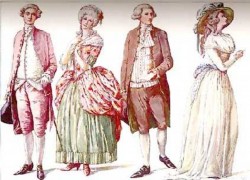 In the arts in general, the notion of ‘style’ can be used in an approving or pejorative sense. We can like someone’s particular style (of dress, deportment, delivery), or we can lament an artist’s clumsy style (self-conscious, affected, poorly executed) in representing certain objects or scenes. In music, however, style is more central and substantive: music is not (in and of itself) representational or meaningful. While certain historians have set up oppositions between style and form, or between style and idea (the title of a famous essay by Schoenberg), the fundamental inseparability of form and content in music means that style assumes a central part both in the history and the practice of music (composition, performance and reception).
Listeners of even relatively limited experience may be able to recognise a particular style after just a few bars (Baroque as distinct from Romantic, for instance, or Mozart from Beethoven), while performers will need some sense of stylistic awareness in performing music from different periods (application and execution of ornaments, use of portamento, vibrato, and so on). Some composers’ styles are so distinctive that they have even spawned their own adjectives: ‘Mozartian’, Beethovenian’, ‘Sibelian’. And, just as in our tastes for fashions and domestic décor, we all have stylistic preferences when it comes to music, whether for particular composers, performers, periods or genres.
Musical style encompasses a huge range of topics, from the overwhelmingly general to the microscopically particular. And it is in the relationship of the particular to the general (and vice versa) that most identifications of style, a style or styles are made. Such a potentially vast subject can be usefully broken down into various subdivisions, of which the most important (albeit far from mutually exclusive) are the historical, the geographical, the personal, the functional, and the practical.
Music history tends to be subdivided for ease of comprehension into certain periods, most of which have correspondences in wider cultural and societal periods. Traditionally, music history has identified crucial junctures at around 1000 (the beginnings of polyphony), 1600 (the move away from polyphonically- to harmonically-generated music) and 1900 (the breakdown of traditional tonality and the dawn of modernism. Within these vast generalities, the more customary musical periods are located: Medieval, Renaissance, Baroque, Classical, Romantic and modern. Each of these can be subdivided still further: the Medieval period in music contains, for instance, the Ars antiqua, Ars nova and Ars subtilior, while the Romantic period can be subdivided into early, middle, high, late and post-Romantic phases.
Simultaneously, various geographic styles can be discerned: the opposition between Italian and French styles (particularly in the realm of opera) was a driving force in the Baroque period, while particular local styles rose to importance in the Classical era (Mannheim, Vienna), and in the 19th century national styles were fostered across Europe (Italian, Russian, Czech). In the 20th century, Soviet ‘socialist realism’ was a dominant force in central and eastern Europe, and more recently distinctions (as well as points of contact) can be made between American and Scandinavian minimalists.
Musical styles are often most clearly apparent in the function of music. Sacred and secular repertoires were not always as mutually exclusive as they are sometimes made to appear (many Renaissance church masses were based on popular songs, and Bach reused several of his secular cantatas in his sacred choral works, notably the Mass in B minor and the Christmas Oratorio). Still, the Baroque distinction between da chiesa (‘of the church’) and da camera (‘of the chamber’) was an important one in the realm of the sonata and related genres, and is even influential as late as the symphonies of Haydn. Different styles were consciously adopted by composers depending on whether they were writing for the operatic stage, the concert hall, the salon or the private chamber, partly dependent on practicalities and partly on mood. And each of these distinctions has implications for such parameters as melody, texture and scoring.
One of the most pored-over aspects of musical style is that of individual composers. The ‘three-periods’ model postulated by traditional studies of Beethoven (early, middle and late) finds parallels in the work of many composers – or at least, those who live long enough! – in the natural progression from student/apprenticeship years, through maturity to a usually more refined or ‘essential’ (in the deepest sense) late style. Few composers, however, have made such conscious changes of style across their lifetime as Stravinsky, whose output can be divided into Russian, neoclassical and serialist phases. Schoenberg, meanwhile, moved from the lush post-Romanticism of Gurrelieder and Verklärte Nacht, through an atonal phase to the 12-tone serialism of his later music. The differences between him and his two most notable pupils Berg and Webern, who took similar journeys – Berg always the more catholic and romantic, Webern the most aphoristic – are themselves instructive in the minutiae of stylistic distinctions.
In studies of older music – particularly works with insecure attributions or no named composer – stylistic matters can be crucial in determining a work’s place in the repertoire. On stylistic grounds, for instance, it has been determined that Bach’s best-known work, the Toccata and Fugue in D minor, BWV 565, was probably not only conceived not for the organ but for the violin, but may well not be by Bach himself! At the same time, it needs to be recognised that composers – particularly gifted ones – can redefine a style almost with the single stroke of a pen, as was the case with Wagner’s ‘Tristan’ chord, which had occurred in music before but never in such an harmonic context or with such radical consequences.
Finally, in this whistlestop guide to the topic of musical style, we should consider performance. While the era of recording and globalisation has broken down many old distinctions in the timbral individuality of performers and ensembles, an increased awareness of historical performance styles has radically changed musicians’ approach to music of older and even relatively recent repertoires, expanding the range of interpretative possibilities in ways that were unimaginable even a few decades ago. A broader stylistic awareness, far from limiting creative possibilities, can be a force for constant enrichment…
Further reading:
Robert Pascall, ‘Style’, in Stanley Sadie & John Tyrrell (eds.), The New Grove Dictionary of Music and Musicians (London: Macmillan, 2001)
Latest Posts
Music of the Iberian Peninsula, Part 3: More observations on the Golden Age
16th June 2026
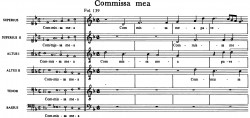
Our last visit to the Iberian peninsula, a fortnight ago, was an insanely ambitious, necessarily broad-brush survey of the Spanish and Portuguese Golden Age, covering vocal and instrumental music, the sacred and the secular. This week, we take a more concise and (I hope) focussed look at a few of the sacred vocal masterpieces which exemplify the particular fervour and intensity of this remarkable period of musical history. They reflect the special place the peninsula had as a bulwark against the Reformation that had taken... read more
read more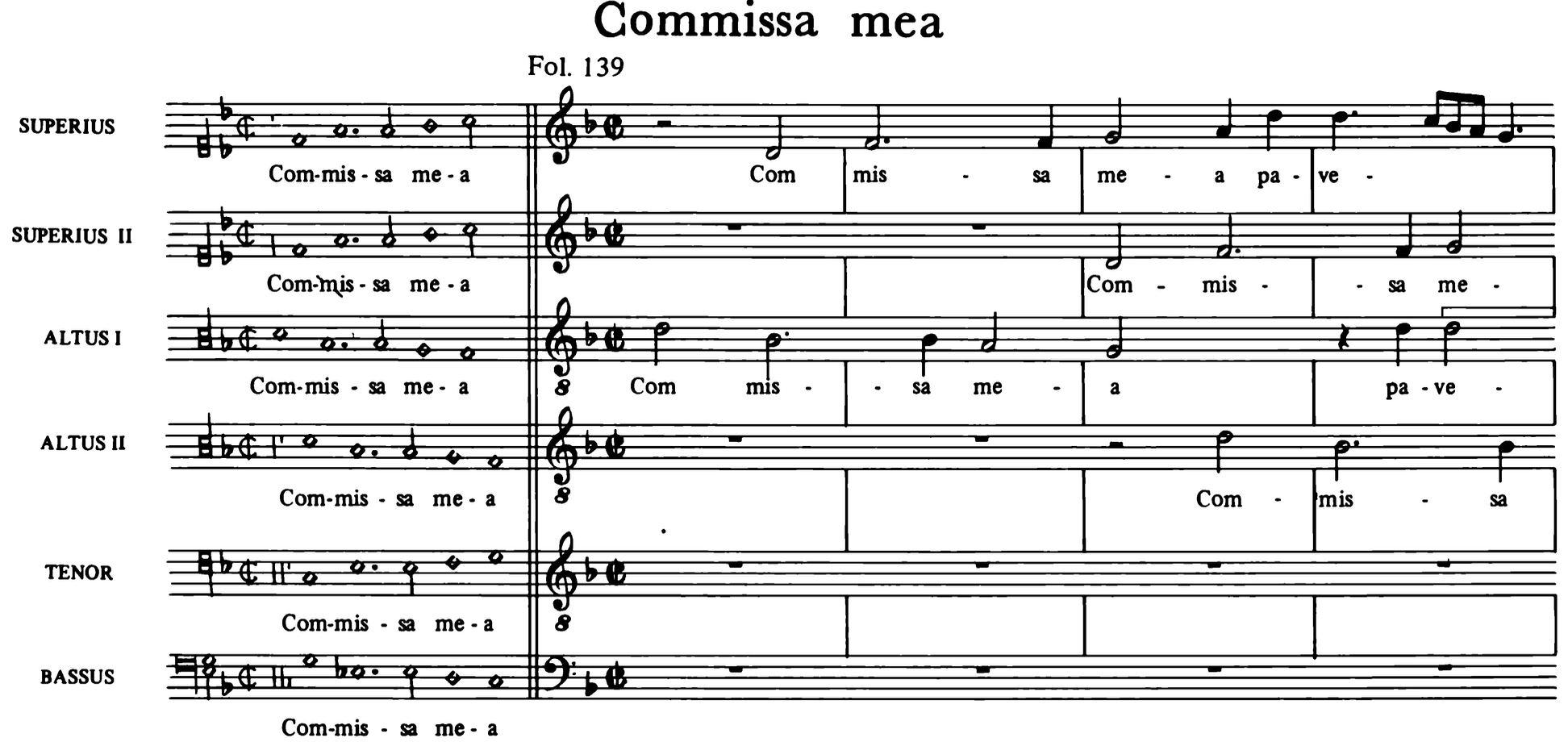
Music of the Iberian Peninsula, Part 3: More observations on the Golden Age
16th June 2026
Our last visit to the Iberian peninsula, a fortnight ago, was an insanely ambitious, necessarily broad-brush survey of the Spanish and Portuguese Golden Age, covering vocal and instrumental music, the sacred and the secular. This week, we take a more concise and (I hope) focussed look at a few of the sacred vocal masterpieces which exemplify the particular fervour and intensity of this remarkable period of musical history. They reflect the special place the peninsula had as a bulwark against the Reformation that had taken... read more
read more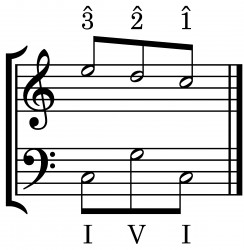
Carl Schachter, Arnold Whittall, and why music analysis matters
9th June 2026
Two recent deaths have robbed the world of music analysis of a pair of its most revered figures. Carl Schachter, who has died at the age of 93, was a pupil of (and subsequently collaborator with) Felix Salzer, himself one of Heinrich Schenker’s foremost students. Schachter continued to enrich and broaden the teaching of Schenkerian analysis, including important work on its application to issues of rhythm (which Schenker, focussing on harmonic and contrapuntal matters, largely bypassed). His influence went well beyond the... read more
read more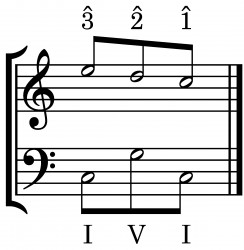
Carl Schachter, Arnold Whittall, and why music analysis matters
9th June 2026
Two recent deaths have robbed the world of music analysis of a pair of its most revered figures. Carl Schachter, who has died at the age of 93, was a pupil of (and subsequently collaborator with) Felix Salzer, himself one of Heinrich Schenker’s foremost students. Schachter continued to enrich and broaden the teaching of Schenkerian analysis, including important work on its application to issues of rhythm (which Schenker, focussing on harmonic and contrapuntal matters, largely bypassed). His influence went well beyond the... read more
read more
Music of the Iberian Peninsula, Part 2: ‘O quam gloriosum’ – The Spanish and Portuguese Golden Age
2nd June 2026
Over the past fortnight, I’ve been bathed in the most glorious, radiant, transformative light. Not the UK’s recent unseasonable heatwave, but the extraordinary vocal polyphony of the Siglo de Oro: the Spanish (and Portuguese) ‘Golden Century’. Extending from the late 15th to the early 17th century, this was a time of remarkable artistic flowering on the Iberian Peninsula, coinciding with the emergence of Spain and Portugal as global imperial powers with extensive colonial territories in the Americas, Africa and Asia. The... read more
read more