 FREE UK SHIPPING OVER £35!
The Spin Doctor Europadisc's Weekly Column
The bells, the bells…
14th June 2023
14th June 2023
 An email from one of our regular customers in response to last week’s column prompted us to give further thought to the subject of bells. The use and evocation of bells in classical music goes back a very long way. Indeed, with so many details unclear about exactly how medieval and renaissance music was performed (including whether and in what manner it was accompanied by instruments), modern performers have often given themselves a fair bit of leeway. David Munrow even memorably employed high-pitched bells/percussion to accompany (and add an extra, if anachronistic, charm to) his recordings of 12th-century organum on Archiv Produktion’s ‘Music of the Gothic Era’ (1975). Probably the best-known evocation of bells from the Baroque period is Marin Marais’s mesmerising Sonnerie de Sainte-Geneviève du Mont de Paris (‘The Bells of St Genevieve’), a passacaglia for viol, continuo and violin. Its repeated three-note bass pattern may bear little relation to the real-life peal at the Church of Saint-Étienne-du-Mont (where the shrine to St Genevieve is located), but this virtuosic series of variations exploring a veritable panoply of viol techniques vividly illustrates the musical attraction of bell-peals: as repeated patterns on which to hang all manner of subtle variation.
Bells – ranging in size from the miniscule to the enormous – can also frame a huge variety of moods. Sleighbells, for instance, immediately bring to mind bracing rides amid crisp winter scenery (as evoked by Mozart, Prokofiev and Leroy Anderson, among a host of others). In the baroque and classical eras, the Turkish crescent (or ‘jingling johnny’) – a portable bell-tree used by Ottoman Janissary bands – was eagerly taken up or emulated by composers including Lully (Le Bourgeois gentilhomme), Mozart (Die Entführung aus dem Serail), Haydn (Symphony no.100 ‘The Military’) and Joseph Martin Kraus (Soliman II), often in partnership with shrill fife-like high woodwind. The Turkish craze (particularly popular in the Habsburg capital since the 1683 Battle of Vienna between Christian and Ottoman forces) was even referenced in the alla marcia section of the finale to Beethoven’s Ninth Symphony.
Hour-bells, signifying a particular time of day or night (more often the latter) became part of common musical vocabulary in the 19th century, from Weber’s Der Freischütz (the Wolf’s Glen scene) and Berlioz’s Symphonie fantastique (‘Dream of a Witches’ Sabbath’) to Verdi’s Falstaff (the magically harmonised midnight chimes in Windsor Great Park, each stroke underpinned with a different chord). But it is the full peal of bells – whether in celebration or as part of a solemn ceremony – that is surely the most sonically seductive, and the outstanding example must be the Coronation Scene in Mussorgsky’s Boris Godunov. Particularly in its original orchestration – without the layers of gloss applied by Rimsky-Korsakov – this is a brilliantly-scored conjuration of the distinctively ‘layered’ sound of Orthodox bell-ringing with its mixture of high and low sounds magically intoned by the orchestra (including bells and gongs). Colourful as Rimsky-Korsakov’s own operatic scores are, he wrote nothing that quite matches this in its combination of memorable sonority and raw musical invention.
Alongside Mussorgsky, the most important Russian contribution to the repertoire of bell-themed classical music is undoubtedly Rachmaninov’s 1913 choral symphony The Bells, setting the eponymous verses by Edgar Allan Poe. Each movement of this monumental work – one of Rachmaninov’s own favourites among his compositions – illustrates a different kind of bell: sleigh bells in the first, ‘mellow wedding bells’ in the second, alarm bells in the Presto third movement, and bells of mourning in the fourth: a life-to-death cycle with more than a nod to Tchaikovsky’s ‘Pathétique’ Symphony, but incorporating Rachmaninov’s own talismanic obsession, the Dies irae plainchant. Of several fine recordings of the work, our own favourite is the live account of Evgeny Svetlanov’s final concert, given at the Barbican Hall in April 2002 with the BBC Symphony Orchestra, just weeks before his death. It’s steeped in the Slavic tradition, and vividly represented on a very special disc from ICA Classics.
Though millennia old, the sonority and evocative powers of bells continue to fascinate composers to this day. Arvo Pärt’s ‘tintinnabuli’ style, though founded principally on chant models, is clearly also indebted to the mesmeric, repetitive style of bell-ringing, as are many of the ‘spiritual’ (and indeed secular) minimalists. From Spiegel im Spiegel (1978) to the brief Darf ich (1995) with its optional solo bell part, the sound of bells is widely represented in his music. The tragically short-lived Czech composer Vítězslava Kaprálová (1915–1940) composed her own set of Variations on the bells of St-Étienne-du-Mont in 1938, an absorbing work combining expressionist harmonies and textures with a spiky neoclassicism.
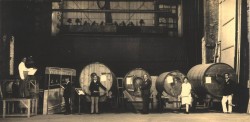
Finally, we turn to the Parsifal bells mentioned last week, and an admission: the bells heard on Karl Muck’s celebrated 1927 recording of Parsifal excerpts probably weren’t the originals, but more likely later replacements. The original bell mechanism for the work was akin to a giraffe piano with four huge strings per note and a four-note keyboard that resembles that of a giant toy keyboard. It was manufactured at Wagner’s request by the Bayreuth firm of Steingraeber. The same company made two subsequent devices for the same purpose: the first, like a giant hammered dulcimer, in 1914, and then in 1926 a larger, upended version of a similar device, all played by a single player. On the Muck recording, the last is heard along with four giant barrelled gongs, each played by a separate player (see photo), though it is unclear whether these gongs were used in the original performances in 1882; it seems more likely that they were first used in the late 1880s. In any event, they were apparently not heard after 1929. Their melting down for the later war effort is plausible but we have been unable so far to trace firm documentation. In any event, we hope that the link to a video demonstrating the Steingraeber instruments in action will be of interest. The sounds are certainly more convincing (and authentic!) than the notorious electronic Mixturtrautonium used at Bayreuth in the 1950s and 60s, and immortalised on many celebrated recordings from the era.
Demonstration of the Steingraeber Parsifal bells:
Latest Posts
Music of the Iberian Peninsula, Part 3: More observations on the Golden Age
16th June 2026
Our last visit to the Iberian peninsula, a fortnight ago, was an insanely ambitious, necessarily broad-brush survey of the Spanish and Portuguese Golden Age, covering vocal and instrumental music, the sacred and the secular. This week, we take a more concise and (I hope) focussed look at a few of the sacred vocal masterpieces which exemplify the particular fervour and intensity of this remarkable period of musical history. They reflect the special place the peninsula had as a bulwark against the Reformation that had taken... read more
read more
Music of the Iberian Peninsula, Part 3: More observations on the Golden Age
16th June 2026
Our last visit to the Iberian peninsula, a fortnight ago, was an insanely ambitious, necessarily broad-brush survey of the Spanish and Portuguese Golden Age, covering vocal and instrumental music, the sacred and the secular. This week, we take a more concise and (I hope) focussed look at a few of the sacred vocal masterpieces which exemplify the particular fervour and intensity of this remarkable period of musical history. They reflect the special place the peninsula had as a bulwark against the Reformation that had taken... read more
read more
Carl Schachter, Arnold Whittall, and why music analysis matters
9th June 2026
Two recent deaths have robbed the world of music analysis of a pair of its most revered figures. Carl Schachter, who has died at the age of 93, was a pupil of (and subsequently collaborator with) Felix Salzer, himself one of Heinrich Schenker’s foremost students. Schachter continued to enrich and broaden the teaching of Schenkerian analysis, including important work on its application to issues of rhythm (which Schenker, focussing on harmonic and contrapuntal matters, largely bypassed). His influence went well beyond the... read more
read more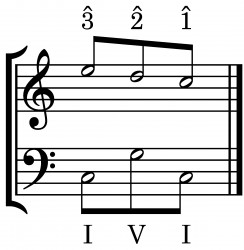
Carl Schachter, Arnold Whittall, and why music analysis matters
9th June 2026
Two recent deaths have robbed the world of music analysis of a pair of its most revered figures. Carl Schachter, who has died at the age of 93, was a pupil of (and subsequently collaborator with) Felix Salzer, himself one of Heinrich Schenker’s foremost students. Schachter continued to enrich and broaden the teaching of Schenkerian analysis, including important work on its application to issues of rhythm (which Schenker, focussing on harmonic and contrapuntal matters, largely bypassed). His influence went well beyond the... read more
read more
Music of the Iberian Peninsula, Part 2: ‘O quam gloriosum’ – The Spanish and Portuguese Golden Age
2nd June 2026
Over the past fortnight, I’ve been bathed in the most glorious, radiant, transformative light. Not the UK’s recent unseasonable heatwave, but the extraordinary vocal polyphony of the Siglo de Oro: the Spanish (and Portuguese) ‘Golden Century’. Extending from the late 15th to the early 17th century, this was a time of remarkable artistic flowering on the Iberian Peninsula, coinciding with the emergence of Spain and Portugal as global imperial powers with extensive colonial territories in the Americas, Africa and Asia. The... read more
read more