 FREE UK SHIPPING OVER £35!
The Spin Doctor Europadisc's Weekly Column
A Slice of History
7th June 2023
7th June 2023
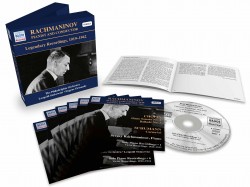 What do we listen to when we play a record? It might seem like a stupid question with an obvious answer. But think about it a little and ponder: are we listening to a performance, to a carefully manufactured and stage-managed simulacrum of a performance, or a mere approximation/imitation/echo of performance? What we hear when the disc starts spinning is a set of information, put together by musicians, producers and engineers, artists’ managers and label executives, often carefully marketed to appeal to our tastes. The very act of taking the disc out of its case and into the machine (or, in the days of older technology, onto the platter) may be a performance in itself. It certainly was with an elderly gentleman of my acquaintance back in the 1970s, who lovingly removed the vinyl from its sleeve, carefully inspecting it for traces of dust before placing it carefully on the turntable of an imposing-looking – and rather expensive – gramophone, with an old Shure cartridge and huge Wharfedale speakers. (My own set-up was rather more modest, a cheap-and-cheerful out-of-the-box stereo LP player, and the ritualistic aspect was dispensed with in my eagerness hear as much music as possible, and the sooner the better.)
If our own individual listening habits are subject to such variation, consider the recordings themselves. From the barely audible efforts of the earliest acoustic recordings, through the electric and LP eras, the digital and compact disc eras to present-day Dolby Atmos immersive sound experiences, the history of recorded music covers a huge range of technologies, each deployed in unique configurations for every recording that has been made. Each generation believes itself to be at the cutting edge of technology, but the unspoken goal (of recreating a ‘perfect’ performance in the comfort of one’s own home) is as elusive as ever.
We have written before about the attractions of historic performances: the legendary names, the seductiveness of no-longer-fashionable playing and singing styles, the first recordings of now-familiar repertoire. To which we would add, the very audible smoke-and-mirrors by which the recording itself is made and transmitted. For all their obvious sonic shortcomings, historic recordings are no less ‘realistic’ than their present-day equivalents: they are simply more open in their artificiality. We delude ourselves if we fancy that we can ever recreate a performance in the confines of our own home. In fact, let’s shorten that sentence: We delude ourselves if we fancy that we can ever recreate a performance. The moment is gone forever, the instant the musicians reach the final bars (some would argue, even before then). Everything that follows is a mere chimera.
As Michael Corleone might have put it, we are all part of the same hypocrisy; aficionados of historic recordings are arguably just more knowing in their complicity. And so, too, are those dedicated souls whose expertise allows us continued access to the recordings of the past. Among them, two Pennsylvania-based experts have long led the field: Mark Obert-Thorn and Ward Marston. Their dedication to restoring vintage sound recordings, with the light touch of minimal intervention, has made available vast swaths of historic material, much of it available in the Naxos Historical series. From compilation discs of legendary singers to complete opera performances (studio and live), as well as symphonic, chamber and instrumental recordings, the Naxos back catalogue is a cornucopia of musical riches, valued by many collectors for its honesty of restoration.
It’s unsurprising that recordings with strong New England associations should feature strongly in the naxos Historical stable (Rachmaninov in Philadelphia, Koussevitsky in Boston), as well as fabled performances from the Metropolitan Opera. But there are also many recordings from the back catalogues of big labels like RCA, Decca and HMV, taken from carefully researched and selected sources. At a time when many of these performances are otherwise only available on disc in ever larger box sets (‘The Complete Columbia/RCA/Decca/Warner Recordings’ – delete as applicable), Naxos’s no-frills individual releases are still godsends for many collectors. And many of these warts-and-all performances really are historic: Karl Muck’s recording of Parsifal excerpts with the original Bayreuth bells (subsequently melted down for the war effort), Robert Heger’s abridged Rosenkavalier with Lotte Lehmann and Elisabeth Schumann, Giovanni Martinelli’s viscerally thrilling Otello at the Met, several composers (Elgar, Vaughan Williams and Stravinsky among them) performing their own music.
Of course, no restoration process has a monopoly on truth (whatever that might be in this thorny subject), and several other labels – such as APR, Biddulph, Dutton, SOMM and Testament – overlap in the area of historic recordings. But few can match the broad sweep of Naxos’s achievements in this area. With their latest 9-disc compilation of Rachmaninov recordings from 1919–42 timed perfectly for this year’s anniversary celebrations, we hope that Naxos continues to flourish in this field.
Below, we offer a few of our own highlights from the series, which we now have on special offer. For those who want to delve more deeply into the many questions raised by the subject of historical recordings, we recommend The Cambridge Companion to Recorded Music (Cambridge University Press, 2009) for a variety of in-depth approaches, some of a more academic slant than others, all well worth reading. Happy browsing!
A few recommendations:
Bartók plays Bartók: 8111343
Beethoven - Symphonies 5 & 7 (NYPO / Toscanini): 8110840
Mahler - Symphony no.9 (VPO / Walter): 8110852
Mozart - Gran Partita (VPO / Furtwängler): 8110994
Rachmaninov - Pianist and Conductor: Legendary Recordings, 1919-1942: 8109001
Wagner - Parsifal excerpts (Muck): 811004950
Latest Posts
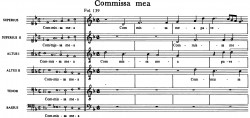
Music of the Iberian Peninsula, Part 3: More observations on the Golden Age
16th June 2026
Our last visit to the Iberian peninsula, a fortnight ago, was an insanely ambitious, necessarily broad-brush survey of the Spanish and Portuguese Golden Age, covering vocal and instrumental music, the sacred and the secular. This week, we take a more concise and (I hope) focussed look at a few of the sacred vocal masterpieces which exemplify the particular fervour and intensity of this remarkable period of musical history. They reflect the special place the peninsula had as a bulwark against the Reformation that had taken... read more
read more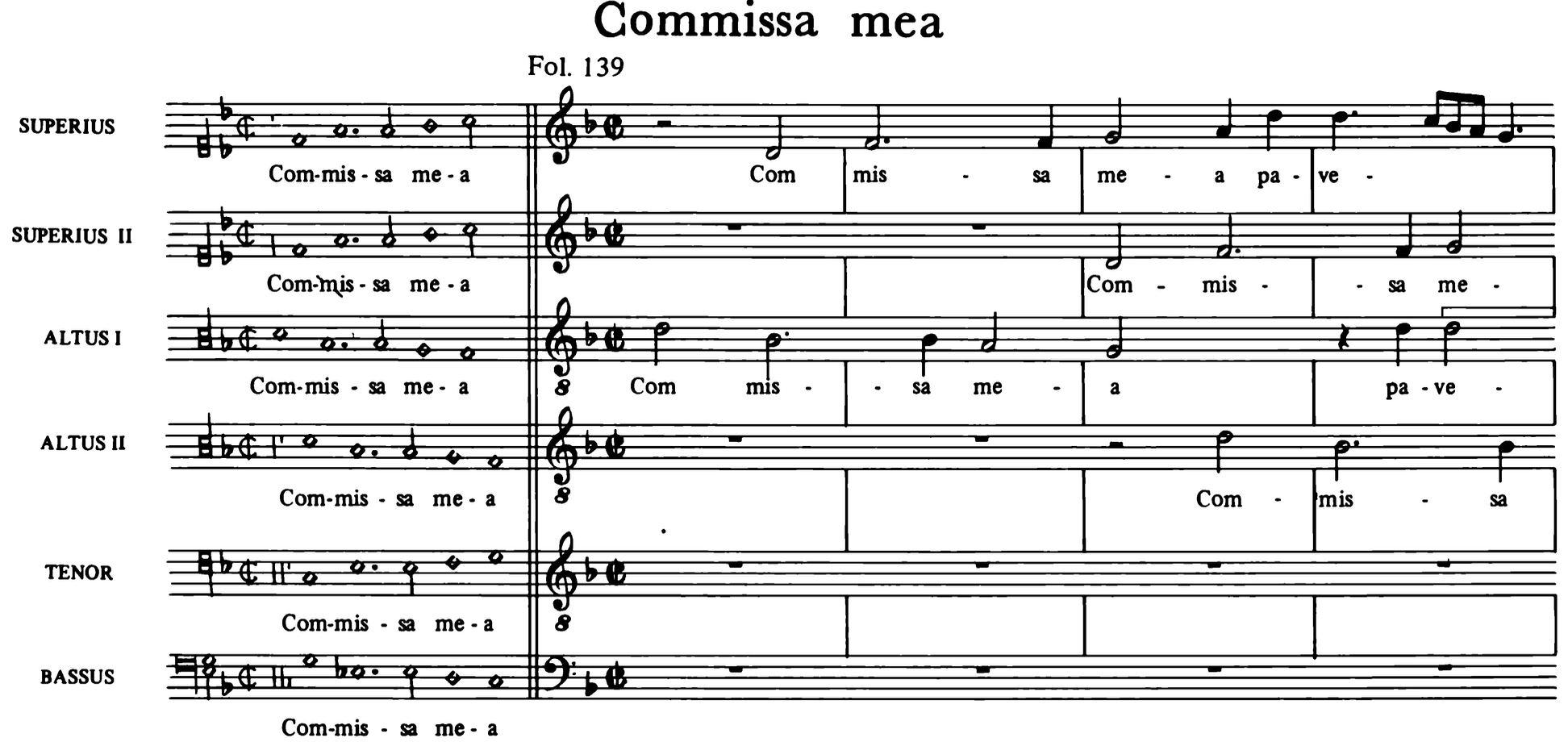
Music of the Iberian Peninsula, Part 3: More observations on the Golden Age
16th June 2026
Our last visit to the Iberian peninsula, a fortnight ago, was an insanely ambitious, necessarily broad-brush survey of the Spanish and Portuguese Golden Age, covering vocal and instrumental music, the sacred and the secular. This week, we take a more concise and (I hope) focussed look at a few of the sacred vocal masterpieces which exemplify the particular fervour and intensity of this remarkable period of musical history. They reflect the special place the peninsula had as a bulwark against the Reformation that had taken... read more
read more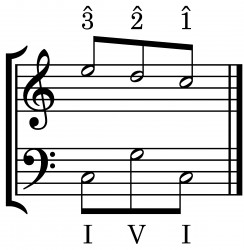
Carl Schachter, Arnold Whittall, and why music analysis matters
9th June 2026
Two recent deaths have robbed the world of music analysis of a pair of its most revered figures. Carl Schachter, who has died at the age of 93, was a pupil of (and subsequently collaborator with) Felix Salzer, himself one of Heinrich Schenker’s foremost students. Schachter continued to enrich and broaden the teaching of Schenkerian analysis, including important work on its application to issues of rhythm (which Schenker, focussing on harmonic and contrapuntal matters, largely bypassed). His influence went well beyond the... read more
read more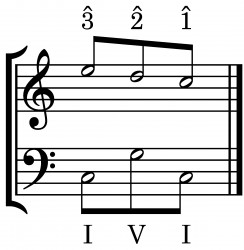
Carl Schachter, Arnold Whittall, and why music analysis matters
9th June 2026
Two recent deaths have robbed the world of music analysis of a pair of its most revered figures. Carl Schachter, who has died at the age of 93, was a pupil of (and subsequently collaborator with) Felix Salzer, himself one of Heinrich Schenker’s foremost students. Schachter continued to enrich and broaden the teaching of Schenkerian analysis, including important work on its application to issues of rhythm (which Schenker, focussing on harmonic and contrapuntal matters, largely bypassed). His influence went well beyond the... read more
read more
Music of the Iberian Peninsula, Part 2: ‘O quam gloriosum’ – The Spanish and Portuguese Golden Age
2nd June 2026
Over the past fortnight, I’ve been bathed in the most glorious, radiant, transformative light. Not the UK’s recent unseasonable heatwave, but the extraordinary vocal polyphony of the Siglo de Oro: the Spanish (and Portuguese) ‘Golden Century’. Extending from the late 15th to the early 17th century, this was a time of remarkable artistic flowering on the Iberian Peninsula, coinciding with the emergence of Spain and Portugal as global imperial powers with extensive colonial territories in the Americas, Africa and Asia. The... read more
read more