 FREE UK SHIPPING OVER £35!
The Spin Doctor Europadisc's Weekly Column
Reading Music
17th May 2023
17th May 2023
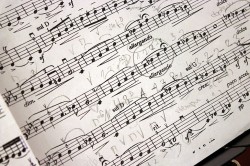 The recent news that primary school children in England now rank fourth for reading in an international literacy table has been announced in the media this week with much fanfare, and is to be welcomed (even if Wales, Scotland and Northern Ireland are not yet part of the same table). Those interested in the arts, however, may wonder what the result would be like in equivalent rankings of musical literacy. Ever since being sidelined in the National Curriculum, the fate of music in the British education system has been a recurrent theme of complaint for those working in the classical music sector. To be sure, musical literacy – the ability not just to play or sing music, but to read it in some form or other – is not the be all and end all for creative artists, and there are several examples of star names who have made their mark without learning the skill. But in a genre that relies so heavily on written transmission (via manuscripts and printed editions), a significant majority of practitioners – from orchestral musicians and accompanists to recording producers and orchestral librarians – need such a skill to be able to function. Yet with even some leading universities now dropping such literacy from their basic requirements for entry on music courses, what sort of future does it have? And what will happen to the vast archives of written and printed music – much of it still little explored – when there’s no-one left to decipher it all?
Hopefully we’re a long way off from such a situation. But the continual labelling of classical music by some populist politicians as something only for ‘the elite’ is hardly likely to help. Generations of musicians and music lovers – many of them from less-than-affluent backgrounds – have had their passion for the art nurtured through education programmes. And education remains the key: not through forced learning by rote, but by offering every child the opportunity to experience live music-making and learning of high quality, regardless of their origins. It’s a recurring theme from a range of musicians in today’s Guardian, with pianist Isata Kaneh-Mason and Meurig Bowen (chief executive and artistic director of Britten Sinfonia) most vocal in their enthusiasm. Other themes emerge, too, from breadth of access to the fostering ‘grass roots’ music-making and a sense of cultural pride and ambition that is common across much of Europe but is too often seen as a very un-British way of behaving. And yet, with politicians continually exhorting us to take pride in all sorts of things, from British industry to our ruling family, why not our centuries-old creative traditions too?
Like most other skills, musical literacy becomes harder to acquire the older you get. Just as learning an instrument to professional standard is easier the earlier you start, so is the art of reading music. Even without reverting to the bad old ways of doing things (‘Every Good Boy Deserves Favours’ clearly won’t do any more, for all sorts of reasons), there are enough imaginative ways of teaching for this skill to be fostered from an early stage among future generations. When the current Prime Minister exhorts us all to greater aspirations in mathematics, perhaps some enlightened adviser could whisper in his ear the ancient connections between maths and music (‘numbers made audible’)? Then again, yoking the two subjects too closely together might frighten some people off…
Just as basic literacy can unlock a huge range of possibilities, so can musical literacy. It is not for everyone, but should be within the reach of all, whatever their background. Like music itself (whether folk, pop, rock, rap or classical), access to it should not be dependent on one’s socio-economic class, nor should assumptions be made on the basis of whether or not you have acquired it. If music really is a ‘universal language’ (as we keep being told), then nobody should be pigeonholed because of how they access it, any more than what kind of music they enjoy. (Try telling the opera-goer who saves for months just to be able to buy a seat in the gods that they’re a member of ‘the elite’!) Just to be able to listen to good music is one of life’s great joys, but being able read it opens up so many other avenues – from amateur music-making with others (a local choir or chamber music with friends) to a range of professional possibilities. Next time you take a glance at what Eric Morecambe called ‘all these squiggly lines’, ponder not just the centuries of change that brought such notation into being, but also the skills of those who read and teach them.
Latest Posts
Music of the Iberian Peninsula, Part 3: More observations on the Golden Age
16th June 2026
Our last visit to the Iberian peninsula, a fortnight ago, was an insanely ambitious, necessarily broad-brush survey of the Spanish and Portuguese Golden Age, covering vocal and instrumental music, the sacred and the secular. This week, we take a more concise and (I hope) focussed look at a few of the sacred vocal masterpieces which exemplify the particular fervour and intensity of this remarkable period of musical history. They reflect the special place the peninsula had as a bulwark against the Reformation that had taken... read more
read more
Music of the Iberian Peninsula, Part 3: More observations on the Golden Age
16th June 2026
Our last visit to the Iberian peninsula, a fortnight ago, was an insanely ambitious, necessarily broad-brush survey of the Spanish and Portuguese Golden Age, covering vocal and instrumental music, the sacred and the secular. This week, we take a more concise and (I hope) focussed look at a few of the sacred vocal masterpieces which exemplify the particular fervour and intensity of this remarkable period of musical history. They reflect the special place the peninsula had as a bulwark against the Reformation that had taken... read more
read more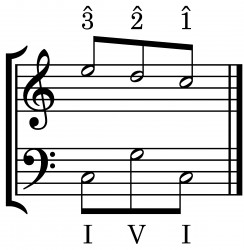
Carl Schachter, Arnold Whittall, and why music analysis matters
9th June 2026
Two recent deaths have robbed the world of music analysis of a pair of its most revered figures. Carl Schachter, who has died at the age of 93, was a pupil of (and subsequently collaborator with) Felix Salzer, himself one of Heinrich Schenker’s foremost students. Schachter continued to enrich and broaden the teaching of Schenkerian analysis, including important work on its application to issues of rhythm (which Schenker, focussing on harmonic and contrapuntal matters, largely bypassed). His influence went well beyond the... read more
read more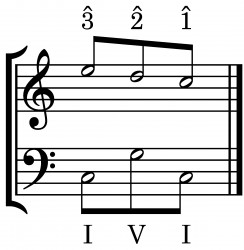
Carl Schachter, Arnold Whittall, and why music analysis matters
9th June 2026
Two recent deaths have robbed the world of music analysis of a pair of its most revered figures. Carl Schachter, who has died at the age of 93, was a pupil of (and subsequently collaborator with) Felix Salzer, himself one of Heinrich Schenker’s foremost students. Schachter continued to enrich and broaden the teaching of Schenkerian analysis, including important work on its application to issues of rhythm (which Schenker, focussing on harmonic and contrapuntal matters, largely bypassed). His influence went well beyond the... read more
read more
Music of the Iberian Peninsula, Part 2: ‘O quam gloriosum’ – The Spanish and Portuguese Golden Age
2nd June 2026
Over the past fortnight, I’ve been bathed in the most glorious, radiant, transformative light. Not the UK’s recent unseasonable heatwave, but the extraordinary vocal polyphony of the Siglo de Oro: the Spanish (and Portuguese) ‘Golden Century’. Extending from the late 15th to the early 17th century, this was a time of remarkable artistic flowering on the Iberian Peninsula, coinciding with the emergence of Spain and Portugal as global imperial powers with extensive colonial territories in the Americas, Africa and Asia. The... read more
read more