 FREE UK SHIPPING OVER £35!
The Spin Doctor Europadisc's Weekly Column
Of Coronations, Monarchs, and Final Curtains
10th May 2023
10th May 2023
Our recent suggestions for an alternative coronation playlist generated a fair amount of interest and debate from our regular correspondents. One of them noted the omission of Monteverdi’s L’incoronazione di Poppea (1643): a grievous oversight on our part! Though the attribution of the music solely to Monteverdi remains contested, this last work from the great Cremonan pioneer of opera is a significant milestone in the early development of the genre. One of the first operas on an historical (as opposed to mythological) subject, it follows the various machinations surrounding the Emperor Nero’s rejection of his empress Ottavia in favour of his mistress, the Roman noblewoman Poppea. The stylistic flexibility of the music – transitioning between recitative, arioso and aria – lend it a free-flowing dramatic trajectory that still has a very ‘modern’ feel. The pared-down scoring led many musicians during the 20th-century Monteverdi revival to conclude that the score was incomplete: several composers have attempted their own completions, but one of the most influential was that prepared by Raymond Leppard for Glyndebourne in 1962. With its full orchestration and lush strings, it now comes across as highly anachronistic. Our own preference is for the lean but immensely characterful recording on Glossa by La Venexiana under Claudio Cavina, with Emanuela Galli in the title role. More than many starrier recordings, it allows full appreciation of the remarkable level of characterisation inherent in the music’s vocal lines, especially when sung by a group of artists so steeped in the Monteverdian idiom.
Other omissions from last week’s column include Benjamin Britten’s decidedly unsycophantic yet sympathetic portrayal of the first Queen Elizabeth in Gloriana, composed to coincide with Elizabeth II’s coronation in 1953, at a difficult point in Britten’s career. It was far from an overnight success, and took many years to gain a foothold in the repertoire, let alone a complete recording. In the current absence of Charles Mackerras’s excellent Welsh National Opera recording for Argo/Decca (starring Josephine Barstow), DVD recordings from English National Opera (Sarah Walker, conducted by Mark Elder in 1984) and from Covent Garden (Susan Bullock, conducted by Paul Daniel in 2013) are more than acceptable alternatives.
Shakespeare’s King Lear – the mythological elderly king of Britain who divides his realm between his daughters, with tragic consequences – is one of the great what-ifs of Verdi’s workbench (especially in the light of his late Shakespearean masterpieces Otello and Falstaff). Although Aulis Sallinen’s 2000 operatic setting was well received, it is Aribert Reimann’s Lear (1978) – composed as a vehicle for Dietrich Fischer-Dieskau, and recorded by Deutsche Grammophon – that has so far proved most durable. Currently, the only available recording is a DVD from Hamburg State Opera in 2014, conducted with great assurance by Simone Young, and with Bo Skovhus as a remarkably virile Lear, driven into isolation not by decrepitude but by an overactive ego.
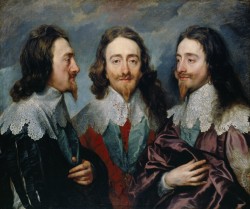
Over the last few days, several commentators have mentioned ‘spine-tingling’ moments from Saturday's lavish ceremony at Westminster Abbey, including (inevitably) the names of Parry and Handel. My own personal royal spine-tinglers are rather different, and somewhat earlier. William Lawes’s Royall Consort, a series of ten suites (or ‘Setts’) composed for Charles I are among the great jewels of the viol consort repertoire. The recording by Phantasm on Linn (frustratingly unavailable at present!) does them handsome justice, demonstrating quite how powerful this apparently modest idiom can be in the right hands: well worth seeking out, and in dire need of reissue! Back in 1987, my first visit to Notre Dame Cathedral in Paris was for a putative reconstruction of the 10th-century coronation of Hugues Capet, the founder of France’s Capetian dynasty. The crisp afternoon beams of a setting sun in early winter seemed to animate the rose of the great west window, as an augmented Ensemble Organum under the direction of Marcel Pérès intoned the ancient chant, replete with cavernous drones, and enlivened with the rhythmic shaping that this group made a speciality. It was a far cry from the anaemic ‘purity’ of most modern-day plainchant performances, and it has remained lodged in my soul ever since. Although broadcast by Radio France, that performance has never been issued commercially, but Ensemble Organum’s recordings of the repertoire known as Old Roman Chant come closest to matching the unforgettable experience of a ceremony with origins over 1000 years ago.
Away from the recent celebrations and festivities, the past week has also seen some final musical bows. A casualty of the recent slashes to Arts Council England’s budgets has brought about the demise of one of England’s most vibrant new-music ensembles, Psappha. Based in Manchester and particularly active in North West England, this group has finally been forced to close (so much for ‘levelling up’ – and at a time when the importance of music to the nation’s life has been vividly demonstrated). However, their recordings on the NMC label – particularly of their late patron, Peter Maxwell Davies – remain a testimony to their expertise and vivid musicality, and should be a thorn in the side of ACE’s policy makers. The whole episode smacks rather of levelling down: we wish the group’s musicians and audiences better fortune as they face uncertain futures.
The passing of Menahem Pressler – former pianist of the Beaux Arts Trio, who reinvented himself as a distinguished nonagenarian soloist and respected adviser to younger musicians – at the grand old age of 99 has brought an outpouring of tributes in the musical world. The recorded legacy of the Beaux Arts Trio is huge: as a sampler, try their Schubert Trios on a Double Decca (formerly Philips), but Pressler’s Indian summer of recordings embraced performances of Mozart concertos that seemed to combine a lifetime’s wisdom with eternal freshness, as well as a range of solo and chamber works. The 4-DVD Euroarts set ‘Menahem Pressler: The Pianist’ makes an excellent tribute to this much-loved musician, a fixture for generations of audiences and listeners.
Two distinguished mezzo-sopranos have also passed away this week: Soňa Červená (1925-2023) established herself in her native Czechoslovakia before finding wider fame in West Germany and Austria, and then further afield in the United States. Her outstanding achievements included Mahler’s Third Symphony under Hermann Scherchen, as well as featuring on recordings from Bayreuth in the 1960s (Rossweisse in Böhm’s Ring, a Flower Maiden on Knappertsbusch’s Parsifal, both released by Philips). Best known to audiences in her native land, her name will nevertheless be familiar many collectors. A more high-profile loss is that of Grace Bumbry at the age of 86: a member of the great wave of African-American singers who thrilled opera audiences in the 1960s and 70s, she came to prominence as the ‘Black Venus’ of Bayreuth in Wieland Wagner’s 1961 production of Tannhäuser, and other notable roles included Princess Eboli in Visconti’s Covent Garden Don Carlo (conducted by Giulini), and Lady Macbeth opposite Dietrich Fischer-Dieskau. She also ventured into dramatic soprano territory with such parts as Jenufa and Salome, and later still was an admired exponent of the lieder repertoire as well as a respected teacher. Like that of Pressler, her death has prompted many high-profile tributes from across musical world.
Latest Posts
Music of the Iberian Peninsula, Part 3: More observations on the Golden Age
16th June 2026
Our last visit to the Iberian peninsula, a fortnight ago, was an insanely ambitious, necessarily broad-brush survey of the Spanish and Portuguese Golden Age, covering vocal and instrumental music, the sacred and the secular. This week, we take a more concise and (I hope) focussed look at a few of the sacred vocal masterpieces which exemplify the particular fervour and intensity of this remarkable period of musical history. They reflect the special place the peninsula had as a bulwark against the Reformation that had taken... read more
read more
Music of the Iberian Peninsula, Part 3: More observations on the Golden Age
16th June 2026
Our last visit to the Iberian peninsula, a fortnight ago, was an insanely ambitious, necessarily broad-brush survey of the Spanish and Portuguese Golden Age, covering vocal and instrumental music, the sacred and the secular. This week, we take a more concise and (I hope) focussed look at a few of the sacred vocal masterpieces which exemplify the particular fervour and intensity of this remarkable period of musical history. They reflect the special place the peninsula had as a bulwark against the Reformation that had taken... read more
read more
Carl Schachter, Arnold Whittall, and why music analysis matters
9th June 2026
Two recent deaths have robbed the world of music analysis of a pair of its most revered figures. Carl Schachter, who has died at the age of 93, was a pupil of (and subsequently collaborator with) Felix Salzer, himself one of Heinrich Schenker’s foremost students. Schachter continued to enrich and broaden the teaching of Schenkerian analysis, including important work on its application to issues of rhythm (which Schenker, focussing on harmonic and contrapuntal matters, largely bypassed). His influence went well beyond the... read more
read more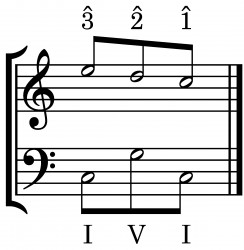
Carl Schachter, Arnold Whittall, and why music analysis matters
9th June 2026
Two recent deaths have robbed the world of music analysis of a pair of its most revered figures. Carl Schachter, who has died at the age of 93, was a pupil of (and subsequently collaborator with) Felix Salzer, himself one of Heinrich Schenker’s foremost students. Schachter continued to enrich and broaden the teaching of Schenkerian analysis, including important work on its application to issues of rhythm (which Schenker, focussing on harmonic and contrapuntal matters, largely bypassed). His influence went well beyond the... read more
read more
Music of the Iberian Peninsula, Part 2: ‘O quam gloriosum’ – The Spanish and Portuguese Golden Age
2nd June 2026
Over the past fortnight, I’ve been bathed in the most glorious, radiant, transformative light. Not the UK’s recent unseasonable heatwave, but the extraordinary vocal polyphony of the Siglo de Oro: the Spanish (and Portuguese) ‘Golden Century’. Extending from the late 15th to the early 17th century, this was a time of remarkable artistic flowering on the Iberian Peninsula, coinciding with the emergence of Spain and Portugal as global imperial powers with extensive colonial territories in the Americas, Africa and Asia. The... read more
read more