 FREE UK SHIPPING OVER £35!
The Spin Doctor Europadisc's Weekly Column
An Alternative Coronation Playlist
3rd May 2023
3rd May 2023
 For some, it's an historic event; for others, a colossal waste of public money. As media coverage of the forthcoming coronation of Charles III reaches saturation point, spare a thought for those (you may be among them!) who are either supremely indifferent to (or bored stiff from hearing about) regalia, processions, oaths and the like, or whose political and social convictions lie elsewhere. Elsewhere on this site, you'll find that our Disc of the Week is an album of coronation anthems by Purcell and Handel. Here, however, we offer a sanctuary of sorts with some alternatives to the musical paraphernalia surrounding the events of this coming Saturday.
Alongside the oft-invoked 'centuries of tradition' that prop up the British establishment, there has always been a strong contrarian vein running through British history, from the 14th-century Peasants' Revolt, via Puritanism and Catholic Recusancy, to 20th-century pacifism and even punk rock. These movements are every bit as embedded in the national psyche as conformism (religious or political), and the music associated with them dates back just as far.
Ironically, one of the items to be performed in Westminster Abbey on Saturday is the Gloria from William Byrd's Mass for Four Voices, which also appears on a disc of the composer's music composed for clandestine performance during the turbulent years of the Elizabethan Reformation. Sung with real verve and sensitivity by the Marian Consort under Rory McCleery, this album, entitled 'Singing in Secret: Clandestine Catholic Music by William Byrd', contains some of the composer's most beautifully intimate music. It serves as a reminder of days when 'inclusivity' most certainly wasn't the watchword, but – if you haven't already heard it – it's also a fine way to mark the 400th anniversary of Byrd's death this July.
If a classic example of an anti-establishment composer is what you're looking for, Beethoven is frequently cited as the first 'punk rocker' in classical music. Yet his often invoked revolutionary credentials are at odds with his close friendships among the Austro-Hungarian aristocracy and landed gentry, on whom he depended for much of his patronage. Looking a little further back to Mozart, his setting Beaumarchais's controversial play La Folle Journée, ou Le Mariage de Figaro (1778) as Le nozze di Figaro (The Marriage of Figaro, 1786) is a brilliant send-up of the feudal droit du seigneur (or ius primae noctis). Its place in the operatic canon has somewhat blunted its sharp edge, but in an intelligent production like that by David McVicar for Covent Garden (updated to 1830s France), the critical subtext still has an elegant sting – a reminder to all those who use their superior social position to satisfy their sexual appetite at the expense of others.
Surely the greatest anti-coronation spectacle on the operatic stage comes in Mussorgsky's Boris Godunov (1869/72) when, amid the splendour of his own lavish coronation ceremony, the titular anti-hero, having usurped the rightful throne, is already tormented by feelings of foreboding. The work culminates in one of the greatest of operatic mad scenes and the death of Boris. Mussorgsky's music – especially when heard in its raw original form, unadorned by the reorchestration of Rimsky-Korsakov and others – is decades ahead of its time, and the plot is enough to give even the most blameless monarch (are there any, we wonder?) pause for thought before accepting the crown.
Before returning to British shores, one more classic opera deserves mention here: Verdi's Un ballo in maschera (1859) originally fell foul of the censors for portaying the politically sensitive regicide of Swedish king Gustav III in 1792. A series of revisions saw the opera relocated to colonial Boston, in which form it became an immediate hit, with Gustavo becoming Riccardo, Earl of Warwick. Occasionally, however, the opera has been given under its original title, and of the two recordings available on the Dynamic label, the earlier – conducted by Maurizio Barbacini, in (of all places) Gothenburg – drew on Verdi's early sketches to reconstruct a plausible working version of the opera as it might have been had the censor not intervened.
In modern times, the British tradition of protest and resistance to the establishment has often found sympathetic responses among composers, however much part of the establishment they may appear (for example, the explicit pacificism of Britten and Tippett). Ethel Smyth is a particularly notable example, having been a leading member of the women's suffrage movement, composing its anthem The March of the Women (1911), and even served two months in prison for stone-throwing (and was visited there by Thomas Beecham). Her cantata The Prison (1930) is a philosophical work centred on the writings of a prisoner in solitary confinement, but no doubt drew on Smyth's own brief experience of jail, and it received a highly sympathetic recording on Chandos in 2020.
Another radical figure from 20th-century British music was Alan Bush (1900-1995), the son of a prosperous middle-class family, whose own socialist convictions eventually led him in the 1930s to join the Communist Party. Bush at one stage looked set for a career as a piano virtuoso, but was drawn more strongly to composition. His early music embraced elements of modernism, but his post-war music was more accessible, according with his belief that music should be for the people rather than individual expression or mere intellectual musing. His political convictions led to his effective ostracising by the British musical establishment, but in 1948 he was approached by the Co-Operative Society of Nottingham (Europadisc's home turf, and renowned for its contrarian leanings) to write a symphony for the city's quincentennial celebrations. The resulting 'Nottingham' Symphony celebrates some of the most famous sites of the city and surrounding area – Sherwood Forest, Clifton Grove, Castle Rock and the annual Goose Fair – in music that ranges from picturesque pastoralism to urgent vibrancy.
For an edgier expression of genuine left-wing commitment, the songs of Hanns Eisler – exiled in the USA from his native Germany in the 1930s and 40s, and later returning to East Germany (where he was far from immune to official criticism) – are required listening. Of the four volumes released by baritone Holger Falk and pianist Steffen Schleiermacher on MDG, the first perhaps best encapsulates the unique mixture of political conviction and Berlin humour that is such a quintessential trait of this composer.
It might seem that anyone who's anyone in British classical music has been roped in to perform or compose for the forthcoming coronation. Yet there's no shortage of classical musicians who, to various degrees, interrogate the foundations of – for want of a better term – the British establishment. Among these, composer Michael Finnissy has long been an outstanding example, in music that embraces a rich musical hinterland and a compendious knowledge of the repertoire while nevertheless remaining uncompromising in its modernist language. Given the current unavailability of Finnissy's classic (and mischievously titled) English Country Tunes for virtuoso solo piano, we recommend the comparably virtuosic Beat Generation Ballads (coupled with the more explicitly anti-Thatcherite First Political Agenda) as the final pick in this list of antidotes to officially-organised silliness.
These, then, are our Alternative Coronation Picks: what are yours?
Recommended recordings:
Byrd - Singing in Secret (Marian Consort / McCleery) DCD34230
Mozart - Le nozze di Figaro (ROH / Pappano) OA0990D (DVD)
Mussorgsky - Boris Godunov (highlights in English) (Tomlinson, Opera North / Daniel) CHAN3007
Verdi - Gustavo III (Gothenburg Opera / Barbacini) CDS426
Smyth - The Prison (Brailey, Burton / Blachly) CHSA5279
Bush - 'Nottingham' Symphony (RSNO / Yates) CDLX7306
Eisler - Lieder & Ballads Vol.1 (Falk, Schleiermacher) MDG6132001
Finnissy - Beat Generation Ballads (Philip Thomas) HCR11CD
Latest Posts
Music of the Iberian Peninsula, Part 3: More observations on the Golden Age
16th June 2026
Our last visit to the Iberian peninsula, a fortnight ago, was an insanely ambitious, necessarily broad-brush survey of the Spanish and Portuguese Golden Age, covering vocal and instrumental music, the sacred and the secular. This week, we take a more concise and (I hope) focussed look at a few of the sacred vocal masterpieces which exemplify the particular fervour and intensity of this remarkable period of musical history. They reflect the special place the peninsula had as a bulwark against the Reformation that had taken... read more
read more
Music of the Iberian Peninsula, Part 3: More observations on the Golden Age
16th June 2026
Our last visit to the Iberian peninsula, a fortnight ago, was an insanely ambitious, necessarily broad-brush survey of the Spanish and Portuguese Golden Age, covering vocal and instrumental music, the sacred and the secular. This week, we take a more concise and (I hope) focussed look at a few of the sacred vocal masterpieces which exemplify the particular fervour and intensity of this remarkable period of musical history. They reflect the special place the peninsula had as a bulwark against the Reformation that had taken... read more
read more
Carl Schachter, Arnold Whittall, and why music analysis matters
9th June 2026
Two recent deaths have robbed the world of music analysis of a pair of its most revered figures. Carl Schachter, who has died at the age of 93, was a pupil of (and subsequently collaborator with) Felix Salzer, himself one of Heinrich Schenker’s foremost students. Schachter continued to enrich and broaden the teaching of Schenkerian analysis, including important work on its application to issues of rhythm (which Schenker, focussing on harmonic and contrapuntal matters, largely bypassed). His influence went well beyond the... read more
read more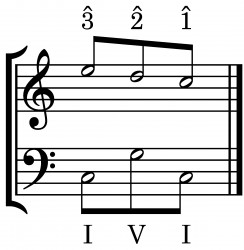
Carl Schachter, Arnold Whittall, and why music analysis matters
9th June 2026
Two recent deaths have robbed the world of music analysis of a pair of its most revered figures. Carl Schachter, who has died at the age of 93, was a pupil of (and subsequently collaborator with) Felix Salzer, himself one of Heinrich Schenker’s foremost students. Schachter continued to enrich and broaden the teaching of Schenkerian analysis, including important work on its application to issues of rhythm (which Schenker, focussing on harmonic and contrapuntal matters, largely bypassed). His influence went well beyond the... read more
read more
Music of the Iberian Peninsula, Part 2: ‘O quam gloriosum’ – The Spanish and Portuguese Golden Age
2nd June 2026
Over the past fortnight, I’ve been bathed in the most glorious, radiant, transformative light. Not the UK’s recent unseasonable heatwave, but the extraordinary vocal polyphony of the Siglo de Oro: the Spanish (and Portuguese) ‘Golden Century’. Extending from the late 15th to the early 17th century, this was a time of remarkable artistic flowering on the Iberian Peninsula, coinciding with the emergence of Spain and Portugal as global imperial powers with extensive colonial territories in the Americas, Africa and Asia. The... read more
read more