 FREE UK SHIPPING OVER £35!
The Spin Doctor Europadisc's Weekly Column
Celebrating Pejačević
26th April 2023
26th April 2023
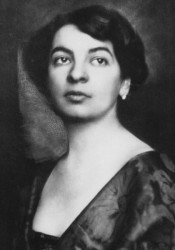 In most countries, women composers are still overshadowed by their male colleagues. Ethel Smyth and Ruth Gipps have to be content with playing second fiddle to Elgar and Vaughan Williams. In France, Cecile Chaminade, Lili Boulanger and Mel Bonis are far behind Debussy and Ravel in the consciousness of music lovers, even after recent classy anthologies have raised their profiles. In smaller nations, the odds are less stacked against the distaff side. Although the founders of Croatian musical identity – Vatroslav Lisinski (1819–54) and Ivan Zajc (1832–1914) – were indeed male, they are rivalled by their female successor, Theodora (‘Dora’) Pejačević (1885–1923), the centenary of whose death fell last month. She was not only one of the first Croatian composers of orchestral songs, but also wrote what is regarded as the first modern Croatian symphony.
Born into a distinguished aristocratic family with Bulgarian roots, Pejačević enjoyed a privileged upbringing in the family’s palatial residences (her father was civil governor of Croatia, Slavonia and Dalmatia), and from an early age was influenced by the artistic tastes of her mother (herself a talented pianist, and Dora’s first music teacher) and paternal grandfather. When it became evident that the young girl’s talents exceeded those of a mere gifted amateur, she was sent for more formal musical education first to Zagreb, then to Dresden and Munich. Dissatisfied with the limits of her conservatoire training, Dora embarked on an autodidactic education, helped by her voracious appetite for reading (in several different languages, including English). Travelling to the cultural hubs of central Europe, she encountered the likes of Rainer Maria Rilke and the Austrian writer Karl Kraus, forming an enduring friendship with the latter.
It would have been easy for Pejačević to have become yet another gifted but low-profile amateur composer for the aristocracy’s salons (and indeed, many of her earliest compositions have the perfume of the salon about them). But, catching the spirit of the times, she came to despise her aristocratic upbringing, and was evidently eager to take on new challenges, not just in music but in life (during the First World War she worked as a nurse). In 1913 she wrote her Piano Concerto in G minor, a work which commands attention from the very outset with a theme redolent of the Slavic soul, and which – quite apart from extremely deft and expressive solo writing – is remarkable for its skilful orchestration, a tribute to her programme of self-education.
Her other large-scale work (a planned opera was never completed) is the Symphony in F sharp minor, composed during the war years and dedicated to her mother. Some may detect the anxieties of the time lying beneath the surface: although in an assured late-Romantic idiom, there is careful deployment of dissonance. At the work’s centre are an Andante and Scherzo which carry Brucknerian echoes, and there are traces, too, of Strauss and Debussy, but combined in a highly individual and confident manner.
Pejačević’s later orchestral works comprise a Phantasie concertante and Overture (both composed in 1919 and cast in D minor), but other highlights of her output are her orchestral songs – not least her orchestral version of Karl Kraus’s Verwandlung, op.37b – as well as two piano sonatas (the later one in a single movement), a swath of chamber works, and some winning cycle of miniatures which (as early as the six Phantasiestücke, op.17, of 1903) easily outstrip the drawing-room conventions of a young female composer and enter a dreamworld of heightened emotions typical of the era’s braoder artistic currents.
Dora Pejačević died at the age of 37 following complications from the birth of her only child. One is constantly left wondering what she might have achieved had she avoided this unfortunate fate. Happily, much of her output is now available thanks to a pioneering series of recordings on the CPO label, and Chandos’s recent release of the Symphony and Piano Concerto, with Peter Donohoe as the outstanding soloist in a work that demands a big personality at the keyboard, has raised her profile still further. (It also includes some excellent liner notes by Pamela Blevins.) Several of her works (including the Symphony, and a clutch of orchestral songs performed by Sarah Connolly) will feature prominently at this year’s BBC Proms. In the meantime, marking the recent centennial of her death, we’re pleased to offer a shortlist of recommended recordings.
Chamber Works (Triendl/Quatuor Sine Nomine) 7774212
Orchestral Songs (Ingeborg Danz) 7779162
Complete Piano Works (Nataša Veljković) 5550032
Piano Concerto & Symphony (Donohoe) CHSA5299
Latest Posts
Music of the Iberian Peninsula, Part 3: More observations on the Golden Age
16th June 2026
Our last visit to the Iberian peninsula, a fortnight ago, was an insanely ambitious, necessarily broad-brush survey of the Spanish and Portuguese Golden Age, covering vocal and instrumental music, the sacred and the secular. This week, we take a more concise and (I hope) focussed look at a few of the sacred vocal masterpieces which exemplify the particular fervour and intensity of this remarkable period of musical history. They reflect the special place the peninsula had as a bulwark against the Reformation that had taken... read more
read more
Music of the Iberian Peninsula, Part 3: More observations on the Golden Age
16th June 2026
Our last visit to the Iberian peninsula, a fortnight ago, was an insanely ambitious, necessarily broad-brush survey of the Spanish and Portuguese Golden Age, covering vocal and instrumental music, the sacred and the secular. This week, we take a more concise and (I hope) focussed look at a few of the sacred vocal masterpieces which exemplify the particular fervour and intensity of this remarkable period of musical history. They reflect the special place the peninsula had as a bulwark against the Reformation that had taken... read more
read more
Carl Schachter, Arnold Whittall, and why music analysis matters
9th June 2026
Two recent deaths have robbed the world of music analysis of a pair of its most revered figures. Carl Schachter, who has died at the age of 93, was a pupil of (and subsequently collaborator with) Felix Salzer, himself one of Heinrich Schenker’s foremost students. Schachter continued to enrich and broaden the teaching of Schenkerian analysis, including important work on its application to issues of rhythm (which Schenker, focussing on harmonic and contrapuntal matters, largely bypassed). His influence went well beyond the... read more
read more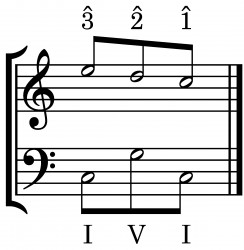
Carl Schachter, Arnold Whittall, and why music analysis matters
9th June 2026
Two recent deaths have robbed the world of music analysis of a pair of its most revered figures. Carl Schachter, who has died at the age of 93, was a pupil of (and subsequently collaborator with) Felix Salzer, himself one of Heinrich Schenker’s foremost students. Schachter continued to enrich and broaden the teaching of Schenkerian analysis, including important work on its application to issues of rhythm (which Schenker, focussing on harmonic and contrapuntal matters, largely bypassed). His influence went well beyond the... read more
read more
Music of the Iberian Peninsula, Part 2: ‘O quam gloriosum’ – The Spanish and Portuguese Golden Age
2nd June 2026
Over the past fortnight, I’ve been bathed in the most glorious, radiant, transformative light. Not the UK’s recent unseasonable heatwave, but the extraordinary vocal polyphony of the Siglo de Oro: the Spanish (and Portuguese) ‘Golden Century’. Extending from the late 15th to the early 17th century, this was a time of remarkable artistic flowering on the Iberian Peninsula, coinciding with the emergence of Spain and Portugal as global imperial powers with extensive colonial territories in the Americas, Africa and Asia. The... read more
read more