 FREE UK SHIPPING OVER £35!
The Spin Doctor Europadisc's Weekly Column
Classical Music’s Image Problem
19th April 2023
19th April 2023
 In the latest edition of the London Review of Books (vol. 45 no.8, 13 April), one review begins, ‘Literary fans, as Alan Bennett once remarked, can be off-putting for the rest of us.’ The same could well be said of classical music. Recent posts in an online group dedicated to great conductors of the vintage era are a case in point, with Karajan fans in particular heaping superlatives on just about everything he ever set down, demonstrating (or at least so it might seem to a dispassionate outsider) the triumph of presentation over substance. When the Spin Doctor worked as an usher at English National Opera back in the 1980s, there were two kinds of audience we particularly feared: ballet audiences (a completely different kettle of fish from opera buffs) and, above all, Wagnerians. (And that was in the days before there was a danger of encountering Michael Gove or George Osborne among their number.)
If certain fanbases can strike terror into the hearts of even the enthusiastic young music-lover, imagine how it must look from the outside. Each with their own set of reference points and jargon, classical music fans can be enormously off-putting to potential new audiences. Add to that the scowls and tuts when one commits the ultimate faux pas of clapping in the wrong place, or of trying to sneak a look at one’s programme when the person in the next seat is trying to commune with genius, and it’s surprising that concert halls aren’t emptying at an even faster rate than is already the case. Of course, there are instances – some high-profile ones have been mentioned in the media over just the past few weeks – of audience members deliberately disrupting performances for others. But that’s not really what we’re considering here.
The Spin Doctor has been attending live classical performances for the best part of half a century, yet frequently still feels among the younger members of any given audience. And the demographics have, if anything, got worse over the past decade or so, with the overwhelming number of attendees being white, comfortably middle-class, and fairly advanced in years. (The ‘thinning out’ effected by post-Covid anxieties seems to have changed relatively little in audience make-up.)
The difficulty of reaching out to wider audiences must be a constant headache for concert and opera planners around the world: how to attract new visitors without upsetting those already signed up to the cause? It must be like treading on eggshells… And there’s always a danger that it can be used as justification for the kind of cack-handed cost-cutting exercises we’ve written about recently in regard to ENO and the BBC (to which many of you have responded).
Although no-one would argue that forcing schoolchildren to attend classical performances is a good idea, the decline of the schools matinées of old is a source of regret which outreach projects cannot always compensate for. Reduced-price concerts rely on levels of subsidy or sponsorship that are simply no longer there, while the post-war workplace concerts took place in an era of mass-production factories and community spirit that has similarly passed, giving way to the individualistic mores of the post-modern world.
If reaching out to wider audiences needs greater levels of subsidy, not yet more arts funding cuts, there are also ‘softer’ levers that could also be deployed. Making the concert experience a more ‘welcoming’ one is often trotted out by arts administrators, and as often sneered at; yet the promenade, pleasure-garden and coffee-house concerts of old (when audiences could move about freely) may yet have much to teach us. If even the more modestly-priced country-house operas are beyond the reach of many, the public-park concert could have a part to play. Usually associated with tub-thumping popular potboilers, it would be sheer fantasy to imagine that they could suddenly be given over to twelve-tone masterpieces or even Mahler or Brahms symphonies. And open-air performances of Debussy would probably get lost in translation… Still, there might still be some intelligent programmers out there who could come up with a better mixture of the popular and the (mildly) challenging than yet more Dambusters-and-Tchaikovsky. And the same could be said of the numerous Vivaldi- or Mozart-by-Candlelight gigs that seek to pull in the tourists of our capital cities.
Presentation is also an issue. It isn’t just that, in the third decade of the 21st century, white-tie-and-tails (and even DJs) can be ludicrously anachronistic. Concerts with running commentary won’t float everyone’s boat, but when done with a mixture of engagement and insight (if possible, by the artists themselves) they can be enormously enlightening. The cost of a programme at many classical events will often seem prohibitive to the ‘uninitiated’: a free flyer – along the lines of the Covent Garden cast lists, perhaps with a brief listening guide – might be a solution, in addition to the regular programme.
And classical music also needs young, high-profile champions (we’ve mentioned certain names before) who can reach out across class and racial boundaries without sounding cringingly out-of-place, and who have made it as performers despite all the obstacles which these days face anyone but the very well-heeled. (A similar problem is afflicting the acting profession, where the door is steadily closing on aspiring working- and lower middle-class talent.)
Perhaps, in the end, classical music as we know it is doomed to fail, which would be shame, as the recent outpouring of anger at proposed cuts has shown this particular community at its best. But it’s worth pondering what we can do, as a society and as individuals, to keep it going in some form. From injecting much-needed funds to simply being more tolerant of and welcoming to newcomers (and being more conscious of the classical jargon we use and the sort of behaviour we take for granted), we all have our bit to play. Next time you’re at a performance – or simply sharing your views on music – just try asking yourself: am I a good advert for this stuff?
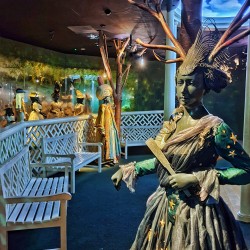
Picture: Recreation of Vauxhall Pleasure Gardens (Wikimedia Commons)
Latest Posts
Music of the Iberian Peninsula, Part 3: More observations on the Golden Age
16th June 2026
Our last visit to the Iberian peninsula, a fortnight ago, was an insanely ambitious, necessarily broad-brush survey of the Spanish and Portuguese Golden Age, covering vocal and instrumental music, the sacred and the secular. This week, we take a more concise and (I hope) focussed look at a few of the sacred vocal masterpieces which exemplify the particular fervour and intensity of this remarkable period of musical history. They reflect the special place the peninsula had as a bulwark against the Reformation that had taken... read more
read more
Music of the Iberian Peninsula, Part 3: More observations on the Golden Age
16th June 2026
Our last visit to the Iberian peninsula, a fortnight ago, was an insanely ambitious, necessarily broad-brush survey of the Spanish and Portuguese Golden Age, covering vocal and instrumental music, the sacred and the secular. This week, we take a more concise and (I hope) focussed look at a few of the sacred vocal masterpieces which exemplify the particular fervour and intensity of this remarkable period of musical history. They reflect the special place the peninsula had as a bulwark against the Reformation that had taken... read more
read more
Carl Schachter, Arnold Whittall, and why music analysis matters
9th June 2026
Two recent deaths have robbed the world of music analysis of a pair of its most revered figures. Carl Schachter, who has died at the age of 93, was a pupil of (and subsequently collaborator with) Felix Salzer, himself one of Heinrich Schenker’s foremost students. Schachter continued to enrich and broaden the teaching of Schenkerian analysis, including important work on its application to issues of rhythm (which Schenker, focussing on harmonic and contrapuntal matters, largely bypassed). His influence went well beyond the... read more
read more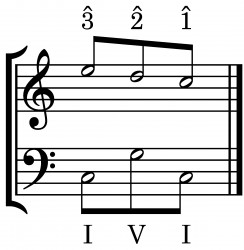
Carl Schachter, Arnold Whittall, and why music analysis matters
9th June 2026
Two recent deaths have robbed the world of music analysis of a pair of its most revered figures. Carl Schachter, who has died at the age of 93, was a pupil of (and subsequently collaborator with) Felix Salzer, himself one of Heinrich Schenker’s foremost students. Schachter continued to enrich and broaden the teaching of Schenkerian analysis, including important work on its application to issues of rhythm (which Schenker, focussing on harmonic and contrapuntal matters, largely bypassed). His influence went well beyond the... read more
read more
Music of the Iberian Peninsula, Part 2: ‘O quam gloriosum’ – The Spanish and Portuguese Golden Age
2nd June 2026
Over the past fortnight, I’ve been bathed in the most glorious, radiant, transformative light. Not the UK’s recent unseasonable heatwave, but the extraordinary vocal polyphony of the Siglo de Oro: the Spanish (and Portuguese) ‘Golden Century’. Extending from the late 15th to the early 17th century, this was a time of remarkable artistic flowering on the Iberian Peninsula, coinciding with the emergence of Spain and Portugal as global imperial powers with extensive colonial territories in the Americas, Africa and Asia. The... read more
read more